




On an unassuming morning in Muscat, while most passersby hurry between errands and meetings, Laith al Shiyadi unfolds a small chair, opens his sketchbook and begins to look, really look.
For al Shiyadi, urban sketching is not a hobby. It is a quiet act of resistance against disconnection.
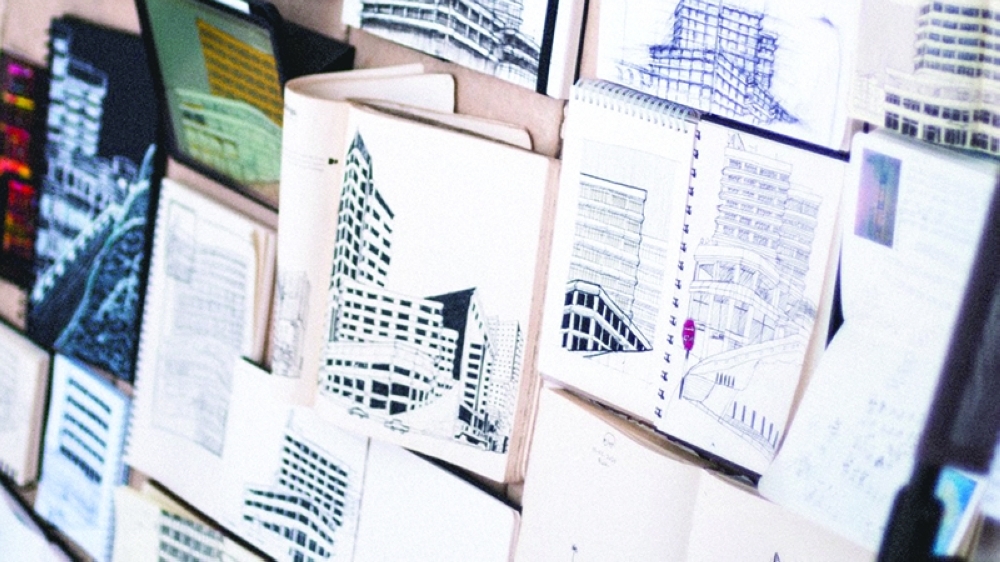
Trained in urban planning and deeply immersed in architectural history, he sees buildings not as isolated objects, but as events in space and time. “Photographs freeze a moment”, he says. “Sketching allows me to experience duration, the shifting light, the sounds of the street, the human presence”. His practice is rooted in one intention, helping people feel closer to their city.
Sketching on location has changed the way he inhabits Muscat. It has made him less shy in public spaces and more attentive to alignments, proportions and the rhythm between solids and voids. Over time, he began recognising architectural signatures across the city, the work of Ayoub Issa Oghana in Ruwi, including the General Telecommunications Organisations Tower, also known as GTO Tower and its “siblings.” In addition, he admired the distinct language of the highly influential British modernist architectural firm Yorke Rosenberg Mardall, YRM, in projects such as Sultan Qaboos University and the British Embassy in Al Qurum. All this led Al Shiyadi to discover the noble truth of architecture: it carries DNA, an indelible identity that grows and allows unique expression to be explored and experimented with.
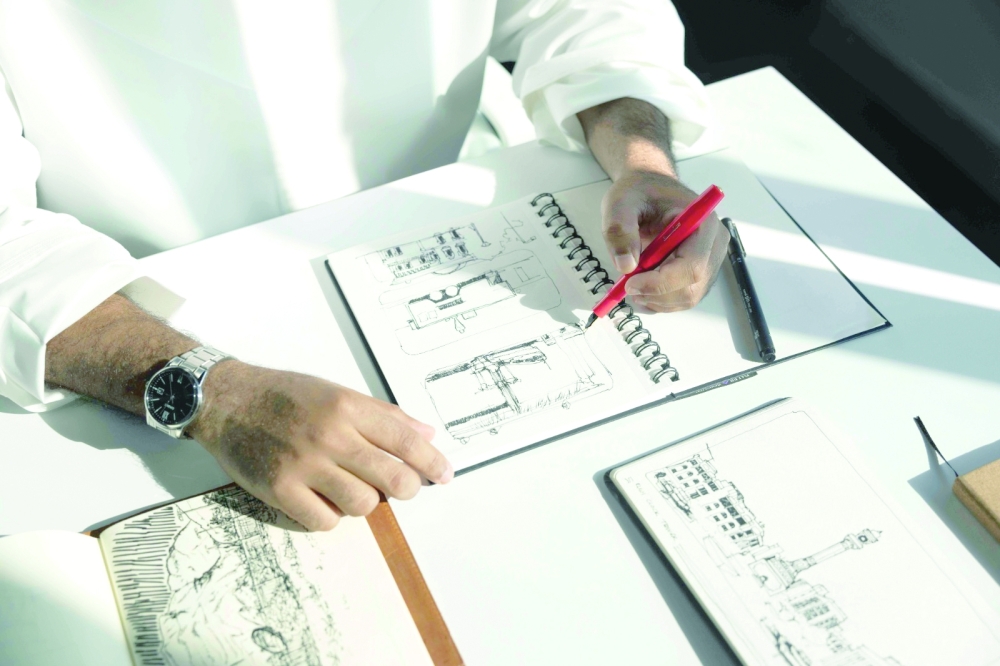
Laith is especially drawn to Oman’s modern architectural heritage, buildings constructed during the first 25 years of the Renaissance. He speaks of whitewashed walls catching light, of forts flirting with geometry, of subtle self-expression in old houses in Muttrah, Sur and Salalah. These details, he believes, reveal the cultural texture of contemporary Oman.
Through free sketching sessions at landmarks like Al Bustan Palace, a Ritz Carlton Hotel and districts such as Al Wadi Al Kabir, Al Shiyadi invites architects and non-architects alike to engage critically with space. His aim is not only artistic output, but awareness, of scale, symmetry, atmosphere and memory. Luxury landmarks offer grandeur and clarity, neighbourhoods like Al Khuwair and Ruwi reveal spontaneity and layered social complexity. Both tell different stories of Muscat.
Challenges such as shifting light or weather are embraced as part of the process. He anchors structural lines first, then allows the drawing to breathe through varied line weight and occasional watercolor. “The sketch is a response to a moment”, he says, “not a blueprint”.
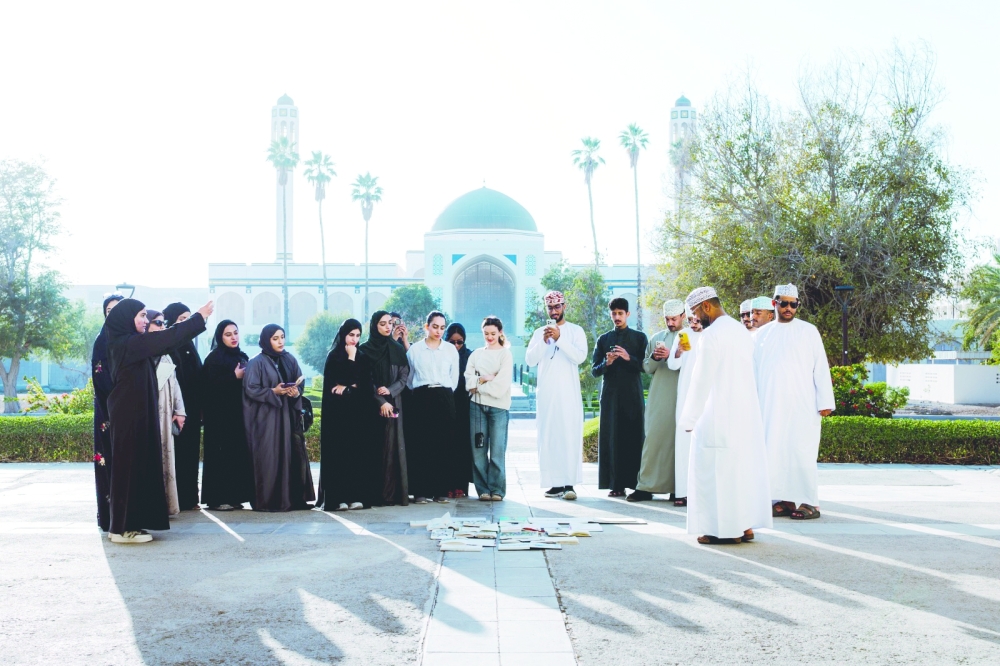
In a digital age obsessed with instant images, Al Shiyadi believes hand drawn lines still matter. Sketching protects attention. It transforms seeing into understanding. This is most evident during a session he held at Jibreen Castle in Bahla, as stories of scholars and rulers echoed through the halls, participants translated narrative into ink. The drawings became vessels of memory.
His advice to young artists is simple, start small. A 5 x 5 cm frame. Focus on massing before detail. “We are producing sketches, not perfection.”
Looking ahead, Al Shiyadi hopes to document Oman’s older coastal settlements from Al Seeb to Shinas, capturing modern heritage before it disappears. Cities evolve quietly, he says. Through his sketchbook, he is building not a postcard version of Oman, but a living, ever-evolving archive of invaluable substance.
Oman Observer is now on the WhatsApp channel. Click here