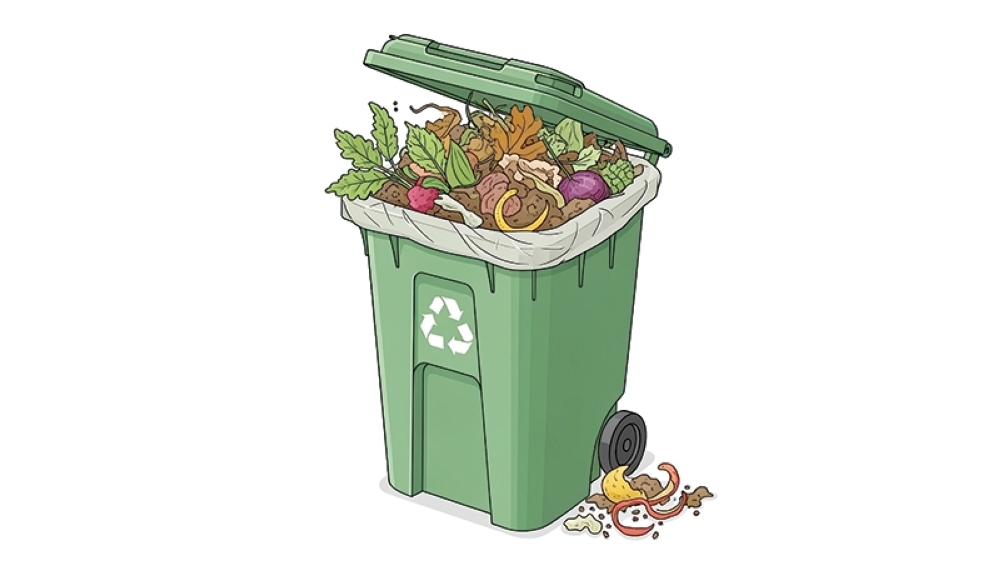
Festive food symbolises happiness, as loved ones come together to share a meal. However, despite these gatherings being central to celebrations, a large amount of food is discarded and ultimately ends up in landfills.
Reports indicate that festivals generate substantial food waste, with up to 50 per cent of prepared food at events going uneaten. This waste, driven by over-preparation, the social display of abundance, and improper storage, imposes significant environmental and economic costs.
Although many of us may not consider it important, this occurs at a time when more than 783 million people go to sleep on empty stomachs every night — figures that reveal the harsh reality of our contemporary society.
"In a world where one in eleven people goes hungry while tonnes of food are lost or wasted every day, it is time to end this troubling paradox. Reducing food loss and waste is critical, especially given the growing global population," laments a United Nations report.
The Food Waste Index report by the UN Environment Programme indicates that approximately 13.2 per cent of food produced globally is lost between harvest and retail. Additionally, an estimated 19 per cent of total global food production is wasted collectively in households, food service, and retail sectors.
“This number is even more striking, given the large number of hungry people in the world. Wasted food is not only inefficient, it's a social justice issue,” points out the UN report.
The Food and Agriculture Organisation reports that average food waste in the Middle East and North Africa region amounts to approximately 250 kilograms per person, which is equivalent to more than $60 billion annually.
It highlights that food waste is not merely an issue of inefficiency; it also represents a social justice concern, as all discarded food could be redirected to support the food recovery hierarchy and prevent perfectly edible food from being wasted.
It is ironic that although festivals promote compassion and empathy, they often result in food waste that could have benefited those in need. We frequently overlook how much food we purchase, prepare, and consume during this time.
“Between 15 and 20 per cent of all food purchased by consumers becomes rot and find its way to the garbage bin before even being used or eaten. This percentage increases to around 30 per cent during festivals,” points out a report by EcoMENA, a sustainability advocate in the Middle East.
Reports indicate that up to 50 per cent of prepared food is often discarded in some regions, driven by excessive purchasing and lavish, buffet-style parties.
Therefore, it is essential that during celebrations, we reflect on food waste and its impact on the community and the economy. Moreover, it is both environmentally and morally concerning that our society has become so apathetic towards the essential resources of life.
It has been reported that the average Omani household discards one-third of the food it purchases. Consumption influenced by social pressures and persuasive marketing leads to more items and products being brought into the home than family members can realistically use.
Recently, due to economic crises, many nations have started addressing the issue of food waste by channelling surplus food through donations to food banks and other charity organisations while maintaining its safety before distributing it to families in need.
For restaurants and suppliers, festivals present an opportunity to take the initiative in addressing food waste. They can significantly impact waste reduction and sustainability by implementing proactive strategies such as menu optimisation, responsible sourcing, creative food repurposing, charitable initiatives, and staff education.
Oman Observer is now on the WhatsApp channel. Click here