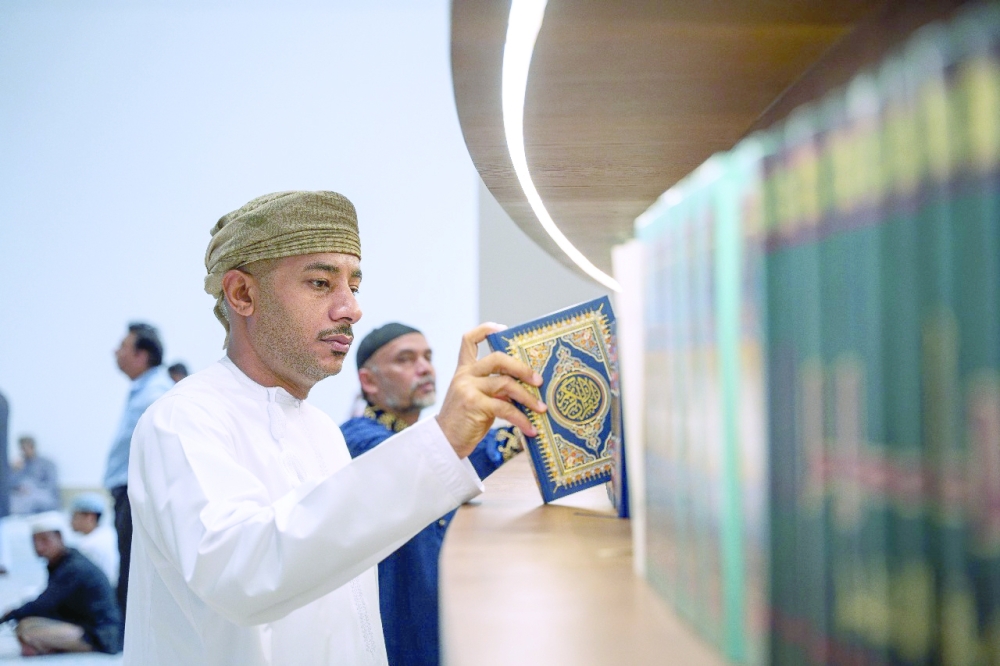
If this is your first time in Muscat during Ramadhan, you might make a common mistake. You might assume the city slows down.
It does. But only during the day.
After sunset, Muscat rearranges itself. The fast breaks. The air cools. The streets, briefly quiet at maghrib, begin to fill again. And if you are new here, the night is your invitation. The rhythm of the city changes in subtle ways. The stillness of the day gives way to a gentle hum, a quiet energy that is neither chaotic nor hurried. Muscat seems to stretch and breathe again, as if the day itself has been holding its breath.
Start simply. Accept an iftar invitation if one comes your way. It may be at a family home, where warmth and hospitality are offered with effortless ease, or at a long hotel table where strangers quickly become companions. The meal is not only about food; it is about pace, about ritual, about presence. Dates first. Water. Soup. A gentle unfolding. Do not rush it. Let the conversation flow slowly, let the laughter linger, let the pause between bites be as meaningful as the meal itself.
After prayers, step outside.
Head to a night market, the kind that appears in parks and open grounds with lanterns strung above modest stalls. Walk slowly. Observe. Watch families moving in clusters, children skipping lightly along paths, older relatives walking together with quiet smiles. Notice how children are allowed to stay up far later than usual. Buy something small, perhaps a sweet or a cup of coffee. Sit for a moment on a bench. The point is not consumption. It is presence, a deliberate act of being, of witnessing life moving around you in harmony with the month.
If you prefer something structured, check the evening programmes at the Oman Convention & Exhibition Centre or the Royal Opera House. During Ramadhan, these spaces lean into spiritually themed concerts and community-focused gatherings. Even if you are not Muslim, they offer a respectful window into the tone of the month: reflective, immersive, yet never austere. Here, the music, the words, and the shared silence form part of the city’s nighttime pulse.
Then there is the coastline. A late walk along Qurum Beach or the marina at Al Mouj after 10pm will reveal another Muscat entirely. Groups chat on benches. Young people take photographs beneath crescent decorations. Couples stroll hand in hand. The city feels unhurried, softened by the sound of gentle waves and the cooling night air. The energy is alive, yet calm, full of small moments that demand attention if you choose to see them.
What makes Ramadhan nights in Muscat distinct is their balance. There is activity, but not excess. Restaurants extend into suhoor. Cafés fill after Taraweeh prayers. Yet the atmosphere rarely tips into spectacle. The entertainment does not drown out the spirit of the month; it sits beside it, quietly enhancing it.
For a first-time visitor, that balance is the lesson.
Ramadhan here is not a festival in the conventional sense. It is a rhythm. The day teaches restraint. The night offers connection. Together, they reveal something essential about the city: its instinct for community, its ability to move gently yet decisively between reflection and celebration.
So if you arrive during this month, do not retreat to your hotel after iftar. Step into the night. Walk. Observe. Accept invitations. Listen to the quiet pulse of Muscat after sunset. Let the slower tempo guide you. Let the city, in all its nuanced motions, teach you the rhythm of Ramadhan.
Oman Observer is now on the WhatsApp channel. Click here