





MUSCAT, FEB 23
An Omani researcher has completed the first genomic study of the wild hare in the Sultanate of Oman and across the Arabian Peninsula, marking an important step forward in national biodiversity research and conservation efforts.
Asila bint Sulaiman al Naabi, a researcher at the Oman Animal and Plant Genetic Resources Center (Mawarid), affiliated with the Ministry of Education, earned her Master’s degree in Zoology after conducting a pioneering study on the genetic diversity and population structure of wild hares using advanced genomic techniques.
The research was carried out at the Department of Animal and Veterinary Sciences, College of Agricultural and Marine Sciences at Sultan Qaboos University and represents the first comprehensive genomic investigation of the species in Oman and the wider Arabian Peninsula.
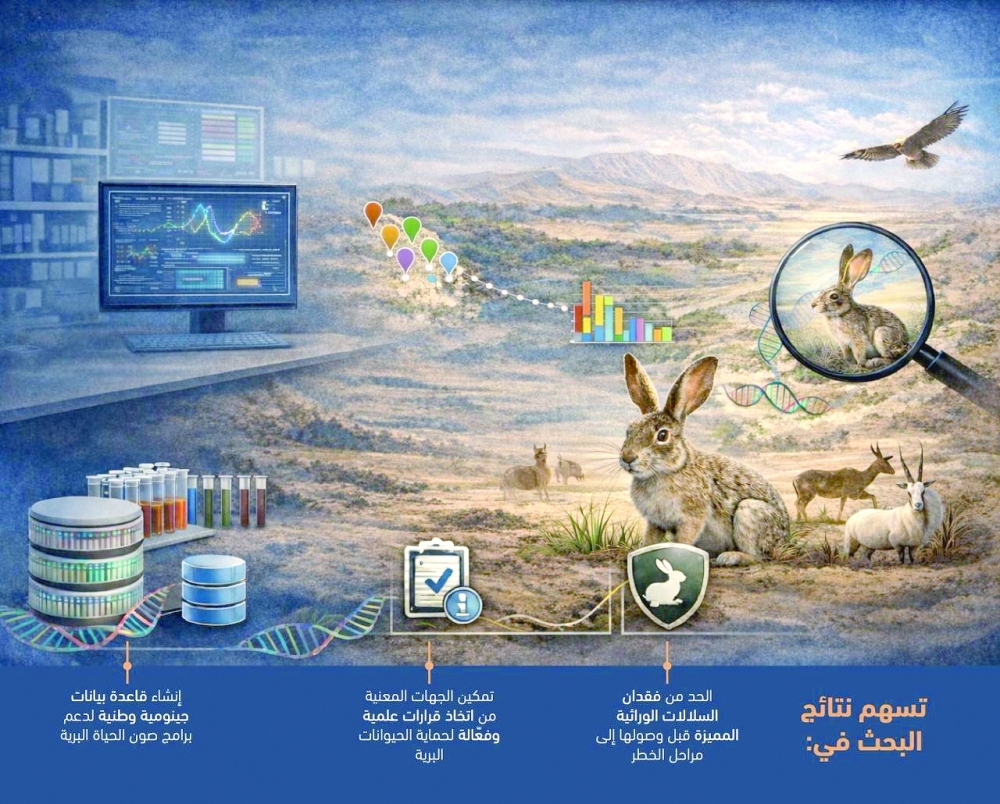
Using double-digest Restriction-site Associated DNA sequencing (dd-RAD), an advanced genomic technique capable of analysing thousands of genetic markers simultaneously, the study examined dozens of wild hare samples collected from several governorates across the country to ensure broad geographic representation.
The findings revealed that wild hare populations in Oman are not genetically uniform. Instead, distinct genetic differences were identified among populations, suggesting that conservation strategies should be tailored to specific groups rather than applying a single nationwide approach.
According to Al Naabi, the research was designed to build a clearer scientific understanding of the species’ genetic diversity. She noted that animals may appear similar physically yet vary significantly at the genetic level, making genetic preservation vital for long-term species survival and ecological stability.
One of the most notable discoveries concerns hares living on Masirah Island. The study found that the island population is genetically distinct from those on the mainland.
Researchers believe geographic isolation has restricted gene flow between Masirah Island and the mainland, resulting in a unique genetic structure. While this highlights the island’s ecological significance, it also raises conservation concerns, as limited genetic exchange can increase vulnerability to disease and environmental change.
The findings underline the need for carefully designed, science-based conservation strategies to safeguard this isolated population and prevent genetic erosion.
Al Naabi emphasised that the research aims to support evidence-based decision-making. Effective wildlife protection, she explained, depends on a clear understanding of genetic diversity, without which conservation efforts may overlook crucial differences among populations.
The outcomes of the research are expected to contribute to the development of a national genomic database that will serve as a reference for future conservation programmes and wildlife management strategies. Such a database would help authorities adopt proactive measures to protect wildlife and preserve unique genetic lineages before they become endangered.
The study reflects Oman’s growing focus on linking scientific research with national biodiversity and environmental sustainability goals. Through institutions such as Mawarid and the Ministry of Education, outcomes are increasingly being integrated into strategic planning.
By generating baseline genomic data on a native species, the project strengthens Oman’s capabilities in conservation genomics and reinforces its role in biodiversity research across the Arabian Peninsula.

Oman Observer is now on the WhatsApp channel. Click here