If you want to understand the new world economy, stop staring only at stock charts and start watching shipping risk. When risk rises, money moves. In today’s trade environment, insurance premiums, route diversions and delivery uncertainty are shaping investment decisions at least as much as interest rates.
Global firms are quietly shifting from “lowest cost” to “most reliable” and that single change is rewriting where factories expand, where inventories sit and where regional headquarters choose to base operations. The winners of 2026 will be the places that can keep production supplied and customers served when the old assumptions break.
That is why Oman’s moment is now. The Sultanate of Oman’s open‑ocean position outside the Strait of Hormuz is not just a geographic advantage; it is a credibility advantage in a nervous trading system. But geography alone does not create prosperity.
Prosperity comes when a country turns movement into transformation — processing, manufacturing, assembly and export-ready services that capture margin. Oman should stop marketing itself primarily as a safer passage and start selling itself as a safer place to make things, assemble things and export value‑added products with predictable lead times.
The right framework is a value network, not a single supply chain. Supply chains are linear: one weak link can break the entire sequence. Value networks are layered: multiple suppliers, multiple routes, shared infrastructure and shared standards that allow rerouting when shocks hit. In a volatile decade, resilience becomes a product and customers pay a premium for it.
Oman has begun strengthening the “software” that makes networks function: Royal Decree 38/2025 unified the legal framework for Special Economic Zones and Free Zones and is widely summarised as including a 10‑year income tax exemption for qualifying enterprises, plus streamlined approvals through a one‑stop shop. For investors, time saved on licensing, utilities and customs often matters more than marginal differences in rent.
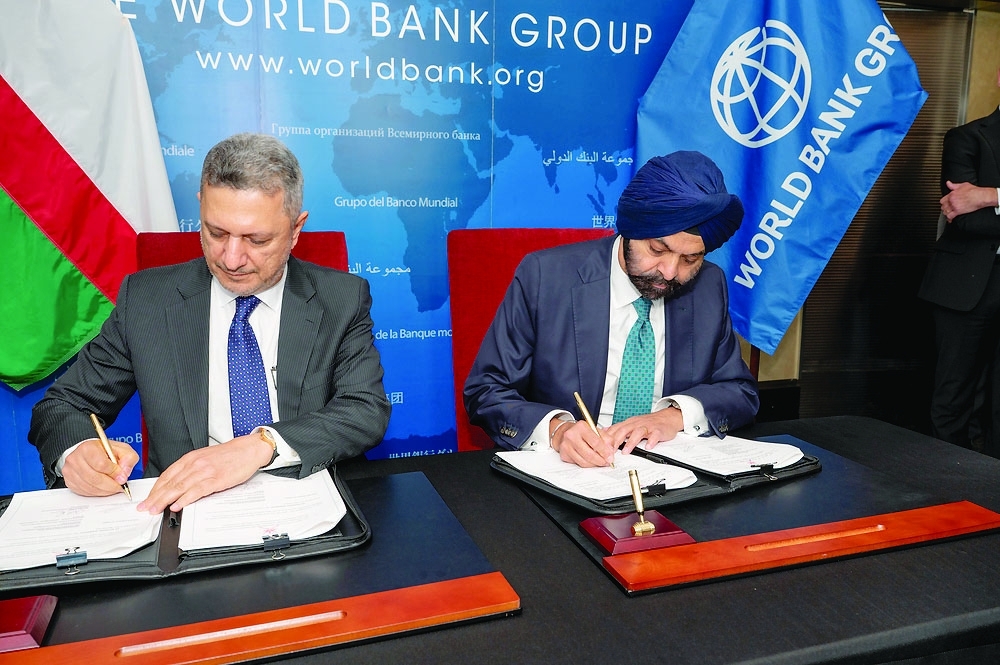
Just as important, Oman is starting to treat borders as seams rather than edges. Al Rawdah Special Economic Zone in Mahadha (Al Buraimi Governorate) is a clear signal. In May 2025, OPAZ signed an agreement with Mahdah Development Company — represented by DP World — to develop and operate the first phase. A global zone operator brings more than buildings; it brings operating discipline, tenant pipelines and customer relationships that local markets cannot easily replicate.
For Omani firms, the message is simple: build for a corridor, not a single city — design products, packaging and distribution with the UAE market in mind from day one, then scale outward.
Infrastructure then turns strategy into daily reality. Hafeet Rail’s main route between Suhar and Abu Dhabi is widely reported as 238 kilometres, connecting SOHAR Port and Freezone into the UAE’s rail system via Al Ain. This is not just transport — it is a new pricing of distance.
Reliable rail makes “twin‑plant” strategies practical: energy‑ and land‑intensive processing in Oman, with finishing, branding and distribution in the UAE. It also diversifies national risk. When maritime freight rates swing or schedules wobble, overland capacity helps keep factories running and shelves stocked. In an era of “just‑in‑case” inventory, continuity is a competitive advantage that markets reward.
Now add the industrial bets that can make Oman a producer, not merely a transit point. United Solar Polysilicon is building a plant in SOHAR Port and Freezone designed for 100,000 tonnes per year of high‑purity polysilicon, with late‑2025 coverage estimating investment above $1.6 billion.
One upstream anchor like this can pull an ecosystem behind it ,wafers, cells, modules, packaging, testing, maintenance and eventually recycling, because manufacturers prefer to cluster near critical inputs. The same logic applies to low‑carbon industry: global buyers increasingly prefer (and in some cases require) lower‑carbon steel, chemicals and fuels. Oman can use renewable power and zone infrastructure to produce “green molecules” and, more profitably, embed them into higher‑value industrial products.
This is where the private sector has the biggest and most practical opening. The headline projects may be large, but the durable job creation and profit pools sit in the middle: zone services (utilities operations, maintenance, labs, safety, cold chain), cross‑border logistics and compliance technology (customs workflows, cargo visibility, secure documentation, trade‑finance services), circular‑economy operators (scrap aggregation, by‑product processing, water reuse, heat recovery) and component manufacturing (valves, sensors, power electronics, precision machining, industrial gases, packaging). A smart target is to localise even a modest share of inputs and services; each percentage point captured locally thickens the network and reduces disruption risk for everyone in the cluster.
Oman’s choice is straightforward: be a bypass route, or be the workshop. The old model — moving cargo efficiently ,will always matter, but it will not be enough. The new model — building a trusted value network that keeps working under stress, creates pricing power, not just volume.
Government can keep improving rules and infrastructure, but the decisive move must come from entrepreneurs and established firms willing to invest in suppliers, standards, skills and export‑ready capabilities. In a world paying a premium for reliability, Oman can sell resilience like a product — if the private sector builds it like a business.
Oman Observer is now on the WhatsApp channel. Click here