New York: Policymakers, business leaders, economists and legal experts are parsing the implications of the Supreme Court’s landmark 6-3 ruling that overturned most of President Donald Trump’s sweeping tariffs on U.S. trading partners.
Trump’s tariff-based war has been the most significant shift in U.S. trade policy in decades. It reshaped relationships with longtime allies and forced an expansive redrawing of global supply chains. For over a year, the president used these duties as the ultimate form of leverage: a carrot-and-stick approach in which he extracted concessions by raising or lowering trade barriers at will.
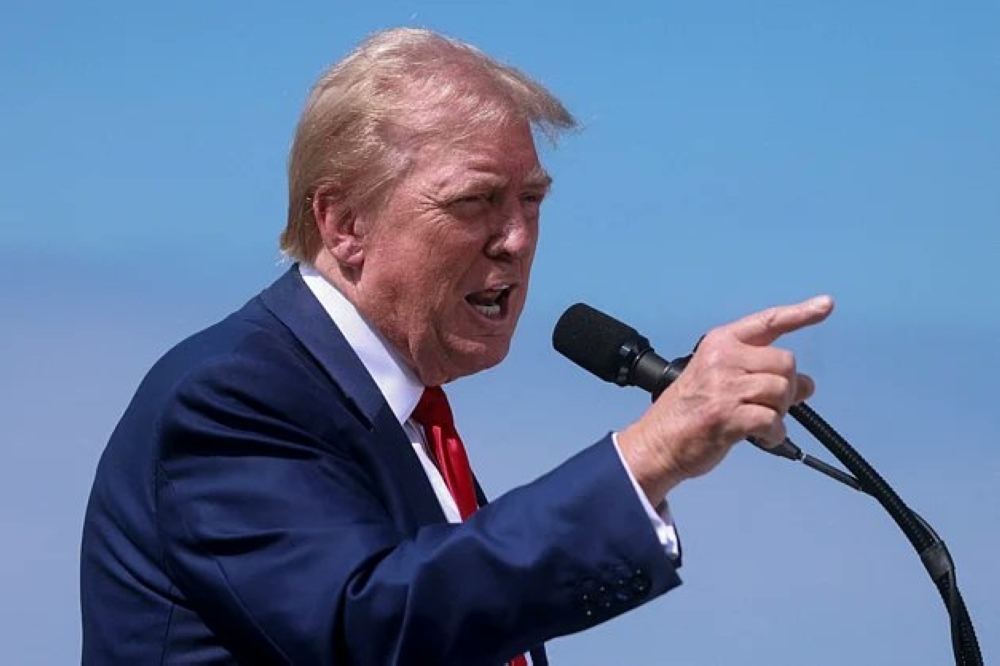
That cudgel is no longer his — at least not to wield so freely. Chief Justice John Roberts wrote that the words “regulate importation” in the law underpinning those levies, known as IEEPA, “cannot bear the weight” of giving a president the power to tax independent of Congress. Despite claiming the decision would have little impact, Trump was visibly frustrated at a White House news conference Friday, explicitly chastising conservative Justices Neil Gorsuch and Amy Coney Barrett — both of whom he appointed — who joined the majority ruling.
“I think it’s an embarrassment to their families, if you want to know the truth,” Trump said. And while Supreme Court justices traditionally attend the State of the Union, scheduled for Tuesday, Trump said of the majority: “They’re barely invited. Honestly, I couldn’t care less if they come.”
What Happens Now?
The administration says it won’t retreat. Shortly after the decision, Trump immediately announced that he would impose 10% global tariffs under Section 122 of the Trade Act of 1974. Then on Saturday, Trump, in a post on Truth Social, said that he would raise the tariffs to 15%.
These levies won’t last long: Unlike IEEPA, Section 122 has a strict 150-day limit. After that, Trump must get permission from a divided Congress to extend them. And while IEEPA raised over $133 billion in 2025 alone, Section 122 is expected to generate roughly $33 billion over its five-month window, according to the Tax Foundation, a nonpartisan tax policy advisory group — a drop in the $1.8 trillion federal budget deficit.
A Matter of Refunds
In a dissent, Justice Brett Kavanaugh warned that the ruling could put the U.S. Treasury in a serious bind. “The U.S. may be required to refund billions of dollars to importers who paid the IEEPA tariffs, even though some importers may have already passed on costs to consumers,” he wrote.
When asked on Fox News on Friday whether the government would actually pay out those refunds, Treasury Secretary Scott Bessent said, “If there is a payout, it’s just going to be the ultimate corporate welfare.” At the Economic Club of Dallas on Friday, he said he had a “feeling the American people won’t see it.”
Complex Questions Are Emerging
— Who is at the front of the line for refunds? Major multinationals — including Costco, Toyota, Goodyear and Alcoa — have already sued the government. Time is ticking: Under normal circumstances, companies face a complex formula and a tight deadline to seek reimbursement. If they miss that window, the right to a refund expires.
— How might the government challenge refunds? The Treasury Department is expected to argue in court that companies lack standing to claim a refund if they passed 100% of the tariff cost to consumers. If the company didn’t technically lose money, does the government get to keep the now-invalidated tax? This could take years to litigate. The issue came up in oral arguments, and as Kavanaugh wrote in his dissent, “the refund process is likely to be a ‘mess.’”
— What is Trump’s next backup plan? The Section 122 tariffs would expire in July. If Congress refused to extend them — especially with the midterm elections coming up — would the administration pivot to Section 301 (unfair trade practices) or Section 232 (national security)? The administration “will invoke alternative legal authorities to replace the IEEPA tariffs,” Bessent said Friday. He added that in addition to the 10% tariffs under 122 (which Trump later announced he would raise to 15%), the administration could turn to “potentially enhanced Section 232 and Section 301” levies that would “result in virtually unchanged tariff revenue” this year.
— Are Trump’s trade deals still valid? Tariffs were the leverage he used to reach pacts with China, Britain, the European Union and Japan. If the IEEPA levies are now invalidated, do those countries have a legal right to walk away from the concessions they made?
— Will companies risk Trump’s wrath? Friday’s ruling opened the door to a potential tariff refund windfall of more than $175 billion, according to the Penn Wharton Budget Model. But the claims process is hardly straightforward and could involve significant audits. Would companies want to risk that, or worse: a retaliatory investigation into them or their industry under Section 301?
Oman Observer is now on the WhatsApp channel. Click here