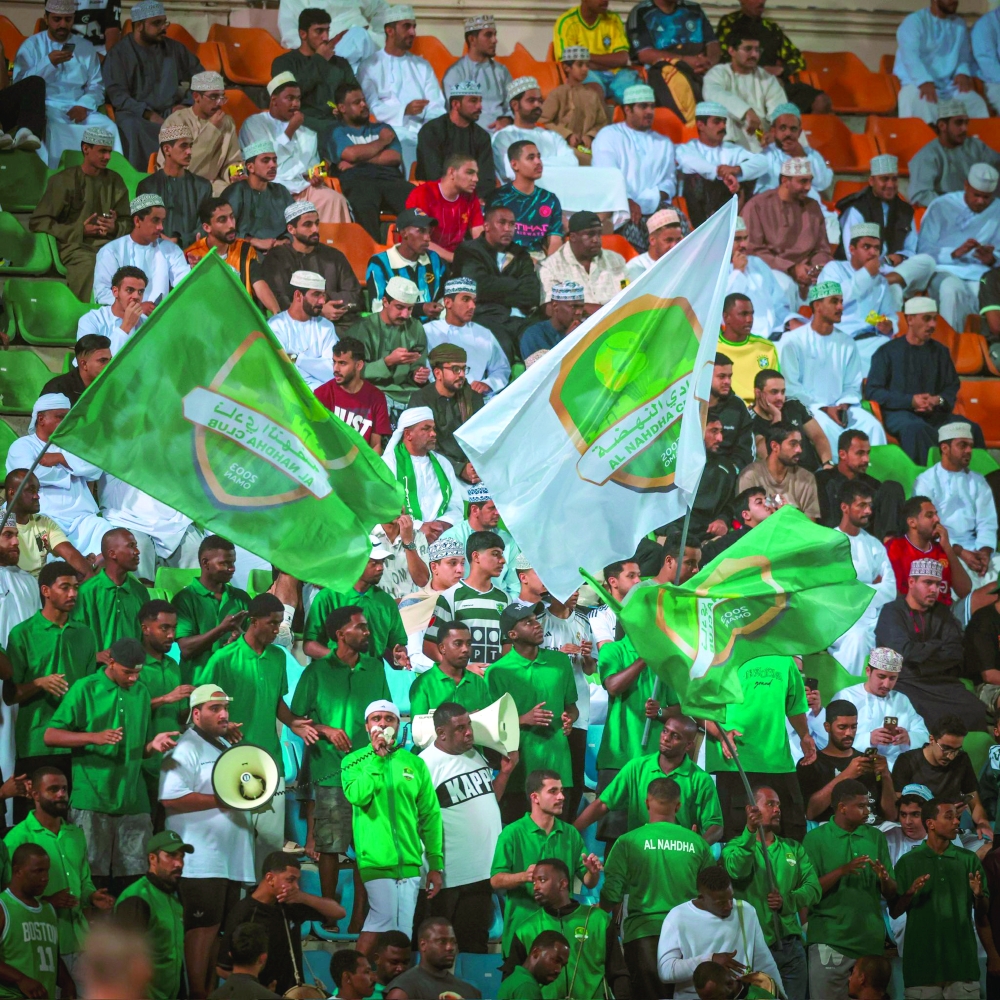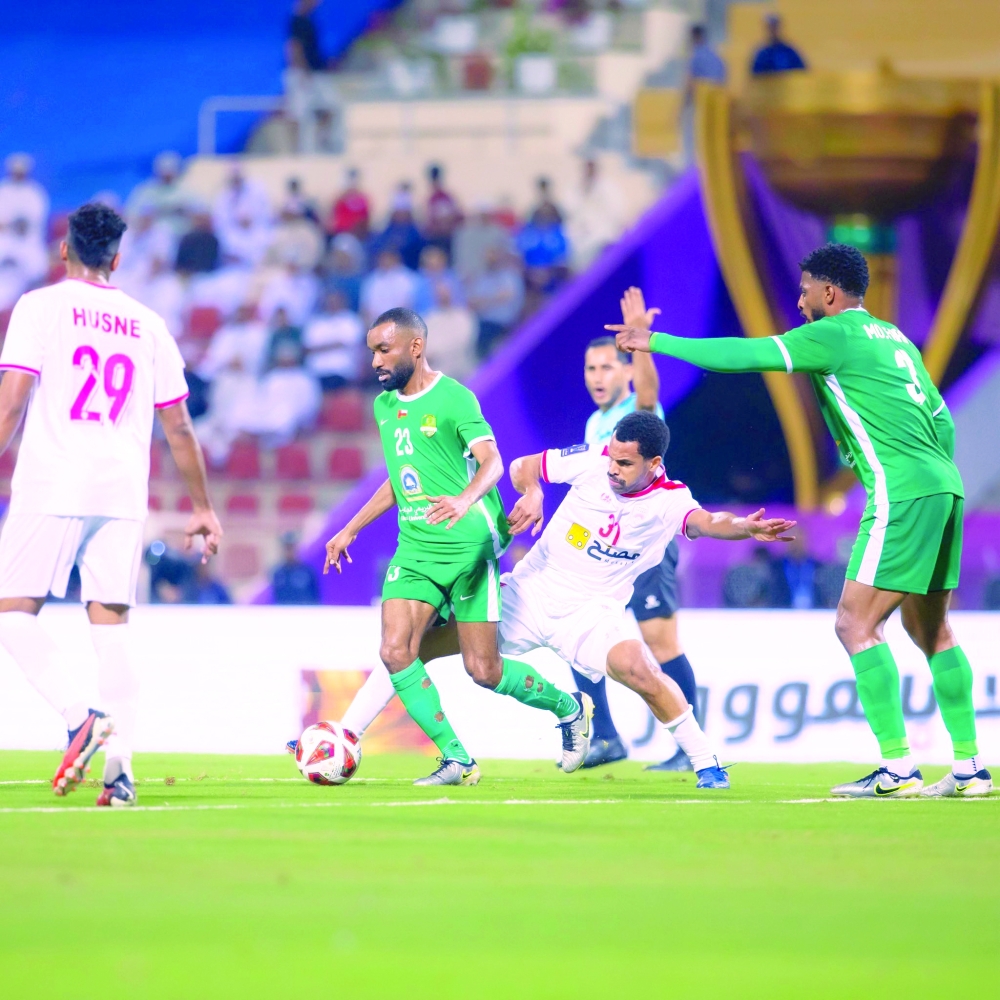





MUSCAT: Al Nahdha clinched their second HM Cup title after securing a decisive 2-0 victory over Oman Club in a thrilling final that took place on Saturday night at the Sultan Qaboos Sports Complex. Under the guidance of newly appointed head coach Andre Jasmins, Al Nahdha produced a performance defined by tactical discipline, mental resilience and clinical execution. On the grand stage, the players demonstrated superior composure and efficiency to deservedly lift the coveted trophy.
The domestic experienced coach Abdulaziz al Riyami analysed the tactical elements behind Al Nahdha’s triumph, highlighting the structured approach adopted by the champions.
“Al Nahdha entered the final with a clear 4-2-3-1 formation,” Al Riyami said. “The team emphasised attacking personality and high pressing to regain possession quickly. They maintained an excellent balance between defensive solidity and offensive intent, while managing the tempo like a side experienced in high-stakes encounters.”
Oman Club, led by coach Driss El Mrabet, adopted a 4-4-2 system.
“Oman Club initially deployed a high defensive line before occasionally retreating into a compact mid-block to close spaces,” Al Riyami explained. “Their approach relied on tactical discipline and quick transitions, with long direct balls played behind Al Nahdha’s defensive line.”
DEFINING MOMENT
The defining moment of the contest came late in the first half when Oman Club captain Mohammed al Mashari was shown a red card.
“The dismissal of Al Mashari was more than just a numerical disadvantage,” Al Riyami noted. “It deprived Oman Club of leadership and the crucial midfield link, resulting in physical and mental strain on the remaining players. Al Nahdha immediately capitalised on the momentum shift and intensified their pressure.”
Al Nahdha’s breakthrough came shortly before half-time following a well-constructed attacking sequence. A penetrating move through the centre was switched to the flank, where Ahmed al Kaabi delivered a precise cross that forced Oman Club defender Basil al Rawahi into an own-goal under sustained pressure.
CLINICAL EDGE
Al Riyami emphasised that Al Nahdha’s attacking philosophy was built on positive possession and effective wing play.
“Their defensive transitions were equally impressive. They executed immediate counter-pressing upon losing the ball, preventing Oman Club from building structured attacks,” he said.
Following the red card, Oman Club dropped into a low defensive block but struggled to withstand the continuous pressure.
“Their reliance on long balls became predictable and was effectively neutralised by Al Nahdha’s organised defensive line,” he added.
Transitions proved to be Al Nahdha’s strongest weapon. Their rapid switch from defence to attack repeatedly unsettled Oman Club’s structure.
The second goal arrived late in the match, again stemming from high pressing. A defensive error forced under pressure allowed substitute Mohammed al Ghafri to finish clinically, sealing the victory and extinguishing any hopes of a comeback.
“Al Nahdha used corners effectively as sustained pressure tools,” Al Riyami explained. In contrast, Oman Club failed to capitalise on their limited corner opportunities and struggled defensively when facing Al Nahdha’s deliveries.”
COACHING DECISIONS
Al Nahdha’s technical management proved decisive in closing out the match.
“Coach Andre Jasmins managed the game intelligently, making calculated substitutions to secure the result and reinforce midfield stability. The changes slowed the tempo and effectively killed the game,” Al Riyami said.
“In contrast, Oman Club’s substitutions were largely attacking and reactionary following the red card, but they failed to penetrate Al Nahdha’s defensive solidity.”
Oman Observer is now on the WhatsApp channel. Click here