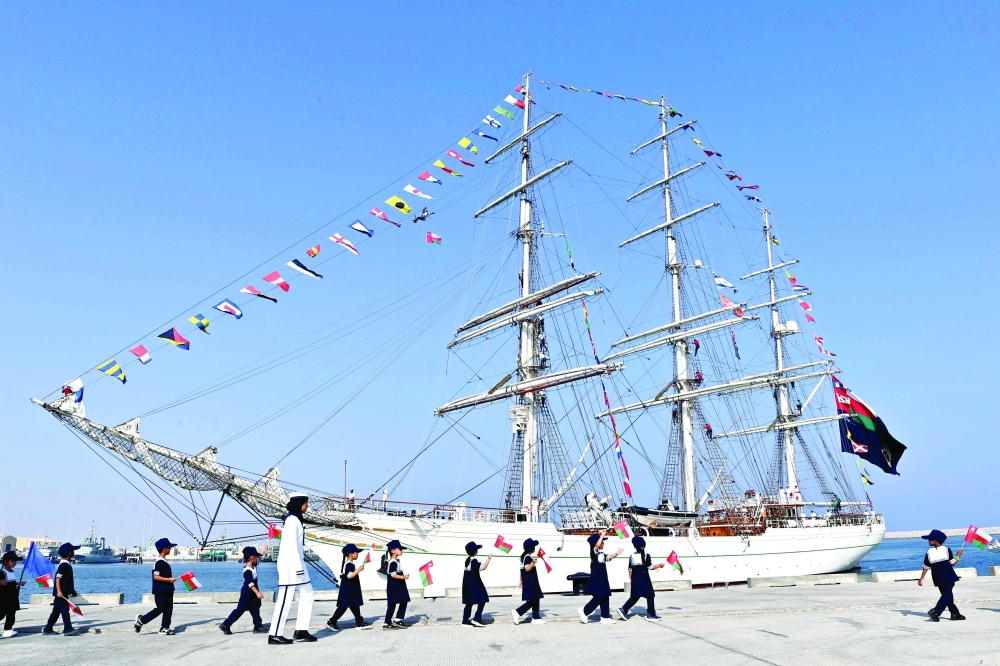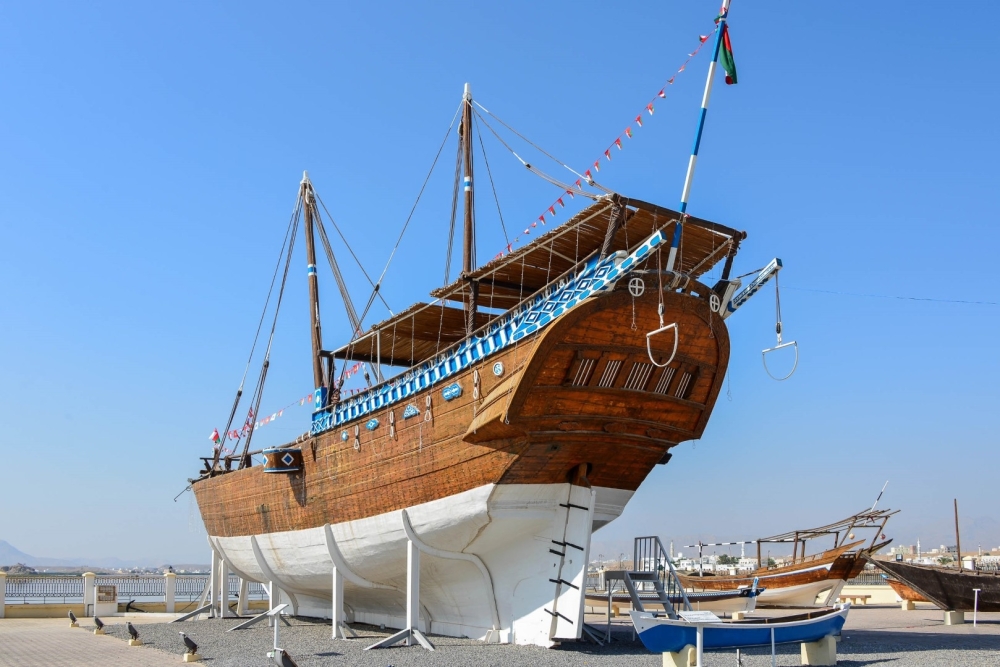





Some nations inherit geography; Oman inherited a vocation. Long before “globalisation” became fashionable, Omani seafarers were stitching together the Indian Ocean economy — from East Africa to India and the Gulf, guided by wind, tide and trust. That legacy was never only romantic. It was an operating system: navigation, commerce and mediation built on one idea that still matters more than ever — reliability.
Today, reliability is harder to defend. Escalations around the Red Sea and the Gulf have reminded the world that chokepoints can no longer be treated as stable assumptions. For Oman, the question is not whether maritime trade will remain central — it will — but whether Oman can again be seen as the region’s most dependable logistics and maritime platform as the global order fragments.
Maritime remains the backbone of globalisation: around four-fifths of world trade by volume moves by sea. Yet the economics of shipping have changed. The Suez–Red Sea route traditionally carries about 12% of seaborne-traded oil and around 8% of global LNG. When insecurity rises, carriers re-route, schedules slip, inventories rise and costs are passed down the chain.
The same material highlights a detail policymakers should treat as a macroeconomic fact: diversions around the Cape of Good Hope can add roughly 10–14 days to Asia–Europe voyages and around $1 million in additional fuel costs per round trip. That is before counting the knock-on effects on working capital and port congestion. In such conditions, insurance and war-risk premiums stop being technicalities and become a pricing mechanism for global trade. Maritime security becomes an economic variable.
The Berlin workshop agenda framed maritime resilience in a modern way: not merely as threat response, but as the intersection of security, trade flows, energy systems and digital infrastructure, with a focus on guardrails and early-warning practices that reduce miscalculation. Oman should adopt the same lens. Maritime leadership today is measured by the ability to absorb shocks and restore normality quickly.
Oman is well-positioned to offer a “reliability proposition”. It faces the Indian Ocean, sits beside the Strait of Hormuz and lies on the doorstep of Asia–Europe traffic. But the advantage is not only geography. It is credibility: a tradition of pragmatic diplomacy, broad acceptance across competing blocs and a clear interest in keeping sea lines open for all. In a world shaped by US–China rivalry and shifting supply chains, credibility is a tradable asset.
Reclaiming maritime leadership requires a modern agenda that is measurable and investable. Three priorities stand out.
First, treat maritime security as economic policy. Oman should champion a national reliability agenda with clear service-level commitments: incident communication protocols; trusted procedures for rapid rerouting; and performance metrics that signal continuity to carriers, insurers and investors. Security planning must be tied to commercial outcomes — time-to-recover after disruption, port turnaround reliability and the ability to handle surge volumes.
Second, build resilience “by design” through data, redundancy and governance. Oman should have a “corridor risk map” that combines geopolitical triggers, shipping patterns, insurance pricing signals and exposure of critical infrastructure such as ports, pipelines and subsea cables. Oman can lead regionally by convening public and private actors around a shared risk picture and agreed thresholds that trigger operational decisions. Early warning should blend AIS, satellite data and private feeds, backed by practical “rules of the road” and deconfliction channels.
Third, make ports into industrial ecosystems, not merely transit points. Oman’s ports outside immediate chokepoints, particularly Sohar, Salalah and Duqm, can be positioned as continuity nodes for transhipment, maintenance, bunkering, storage and value-added logistics when routes are disrupted. The prize is not only throughput; it is clustering. Ship repair, cold chain, packaging and re-export; and light manufacturing turn maritime activity into jobs, exports and capabilities that support Oman Vision 2040.
A maritime reset cannot be built on ports alone. A hub is only as strong as its hinterland connections. Oman should accelerate practical road-and-rail connectivity into GCC markets, especially links that reduce inland bottlenecks and make Omani ports the natural gateways for regional distribution. Sequencing matters: stable segments deliver quick wins, while higher-risk links demand longer timelines and stronger safeguards. Multimodal redundancy, sea–road–rail options should be designed from the start.
Oman should read the global map of corridors with discipline. Connectivity initiatives are multiplying, but Oman’s best tradition is to work with all major players rather than bet exclusively on one bloc. The objective is simple: keep Oman a dependable bridge for trade, investment and services between Asia, Africa and Europe, even as geopolitics becomes more fragmented.
Finally, Oman must invest in people, not only in concrete. Maritime and logistics careers should be restored as dignified, high-skill professions. Internationally recognised certifications, partnerships with global operators and training in port operations, supply-chain analytics, marine engineering and maritime law are not “soft” policies; they are the foundation of competitiveness.
Oman’s maritime legacy will not return through nostalgia. It will return through reputation: a place where ships can reroute, cargo can be processed, data can be trusted and disputes can be resolved predictably — even when the region is tense. In an era where reliability is scarce and corridor stress is the new normal, Oman can again be the Gulf’s anchor of continuity — and one of the region’s most credible logistics hubs.
Oman Observer is now on the WhatsApp channel. Click here