Conflict is an inevitable aspect of human life, arising from differences in viewpoints, beliefs, values, and priorities. Polarisation paralyses governments, disrupts communities, and erodes public trust. Moreover, it is not confined to any single region or ideology — the problem is global.
In politically divided societies, shouting the loudest does not necessarily resolve the issue at hand. In fact, the more people dig in their heels, the less likely anyone is to listen. However, to prevent conflicts from escalating into violence and to promote peace, engaging in dialogue is essential.
Although a relatively novel concept, dialogue has only recently gained recognition as a crucial peacebuilding activity, an important complement to mediation, and a preferred approach in reconciliation initiatives.
In diplomatic language, different terms are used to describe exchanges between two opposing parties. More broadly, the terms dialogue or negotiation are regularly used, or more indiscriminately, talks or discussions or, more ambiguously, exchange of views.
In recent years, the world has witnessed a rise in armed conflicts, often characterised by intense violence, divided armed factions, and significant impacts on civilians. Major conflicts in Ukraine, Gaza, Sudan, and Myanmar have resulted in widespread displacement and humanitarian emergencies.
In addition to these ongoing conflicts, reports indicate a growing US naval presence in the region, prompting speculation that the US could be preparing for another Middle East war, this time with Iran. Yet, despite the familiar rhetoric of escalation, much of what is unfolding appears to be more of a “good start” to talks than preparation for war.
The two nations held indirect talks on February 6 in the Sultanate of Oman regarding Tehran’s nuclear programme, agreeing to continue negotiations “in a very positive atmosphere.” These talks, the first since nuclear negotiations between Iran and the United States collapsed last year, also underscore the value of Oman’s discreet diplomacy.
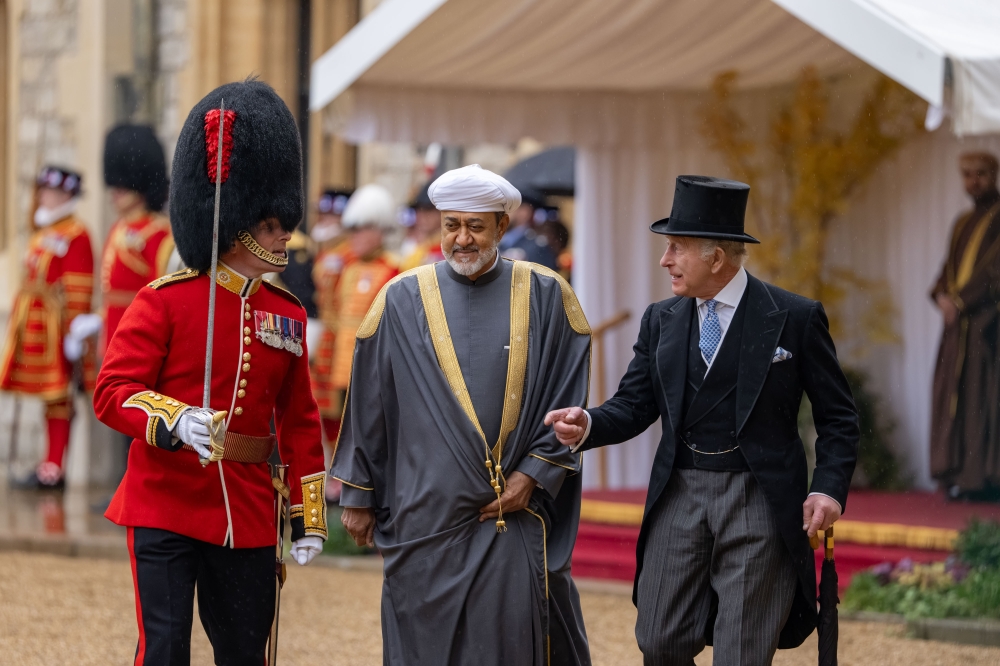
Oman's cordial ties with Iran will continue to be significant for all Gulf nations, specifically, and for the world more broadly. Oman has primarily acted as a mediator in discussions aimed at alleviating tensions among countries in the region and beyond.
Leveraging its GCC membership and unique ties with Tehran, Oman has created diplomatic opportunities for other Arab nations to engage with Iran during critical moments when direct involvement would have posed greater political challenges.
Although the exact details of the negotiations remain unclear, CNN quoted US President Donald Trump aboard Air Force One saying, “We likewise had very good talks on Iran. Iran looks like it wants to make a deal very badly. We have to see what that deal is. But I think Iran looks like they want to make a deal very badly.”
At the same time, Iran’s Foreign Minister, Abbas Araghchi, was quoted by Iranian media as saying, “Our discussions are focused exclusively on the nuclear issue, and we are not addressing any other subjects with the Americans.”
What is significant is that, after years of stalled negotiations, abandoned agreements, and punitive posturing, even limited engagement represents a shift away from the reflexive reliance on threats and sanctions.
Just as noteworthy about the Muscat discussions is that their significance lies more in what they prevented than in what they accomplished. A collapse would likely have intensified military concerns at a time when the region is already saturated with troops. Continuing, even cautiously, allows time to explore options for peace.
This suggests that negotiations, despite their imperfections, remain the only enduring means to address conflicts with significant regional consequences. In addition to regional instability, these conflicts also significantly impact markets, global security, and the lives of many people.
Those advocating for military action against Iran should confront the reality rather than merely engaging in rhetoric. Any assault would not be a neat, limited operation; it would very likely cause innocent casualties, escalate regional conflicts, and perpetuate cycles of retaliation.
Samuel Kutty
The writer is a freelance journalist and author who worked in Oman and India
Oman Observer is now on the WhatsApp channel. Click here