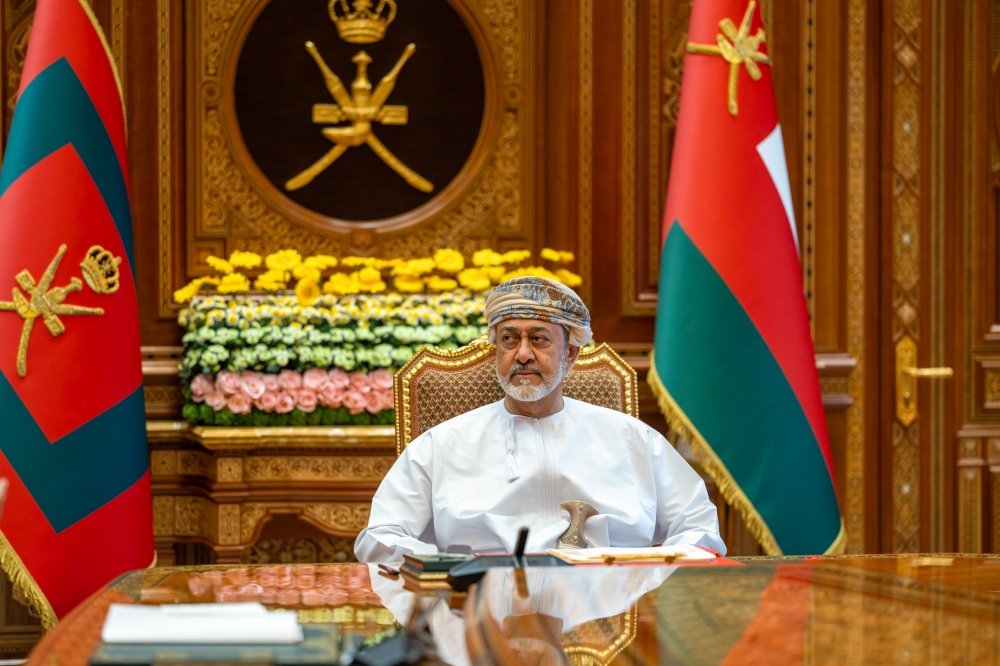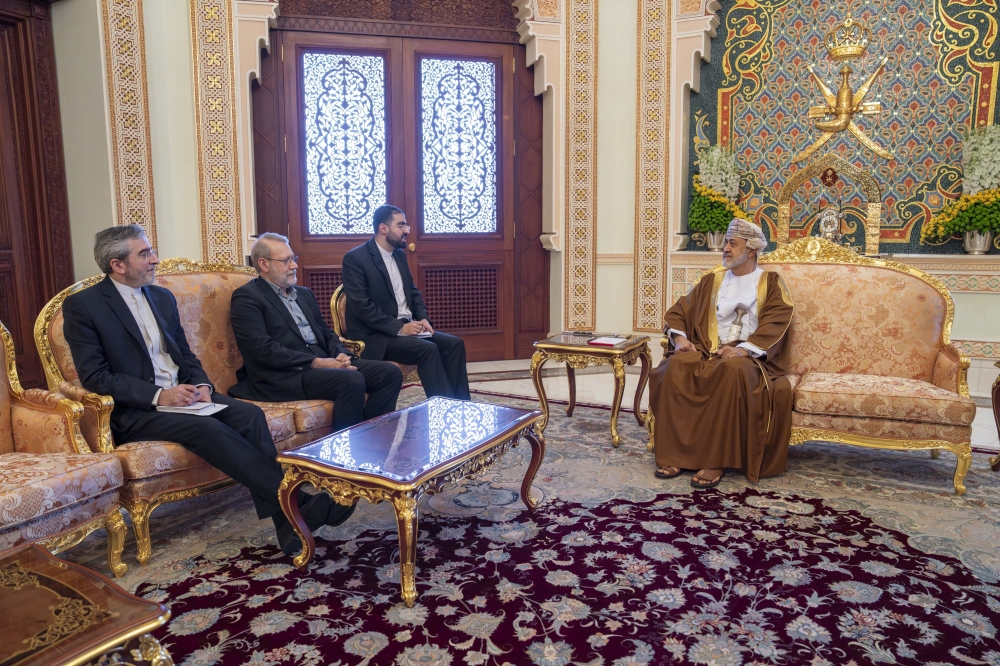
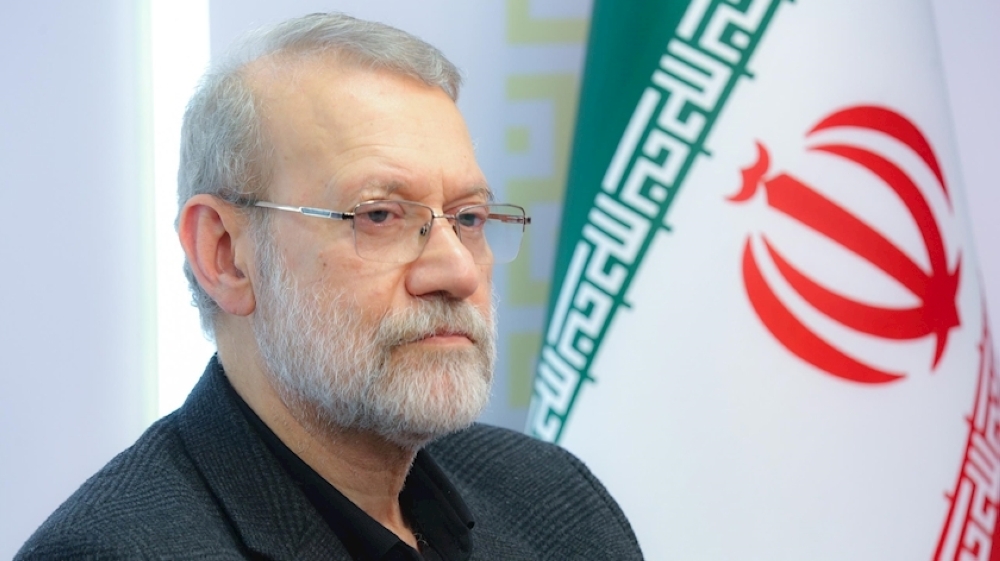





Muscat: His Majesty Sultan Haitham bin Tarik received at Al Barakah Palace on Tuesday Dr Ali Larijani, Secretary of Iran’s Supreme National Security Council, who is visiting the Sultanate as head of a high-level delegation.
During the audience, the two sides reviewed the latest developments in the Iranian-American negotiations and discussed ways to reach a balanced and fair agreement that serves the interests of both parties. The discussions also underscored the importance of returning to the dialogue and negotiation table as a means to bridge differences and resolve disputes through peaceful means, in support of regional and international peace and security.
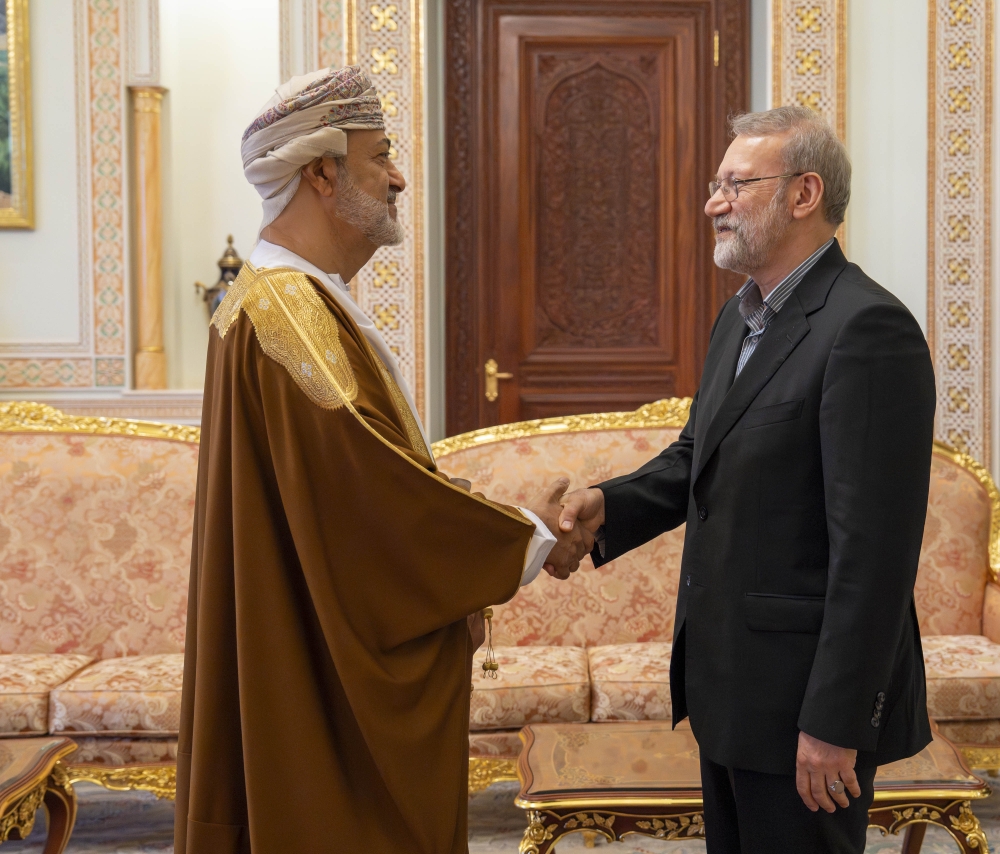
The meeting took place within the framework of ongoing consultations between the Sultanate of Oman and the Islamic Republic of Iran on regional and international issues of mutual concern, reflecting Oman’s continued role in supporting dialogue and diplomatic solutions.
Dr Larijani arrived in Muscat earlier on Tuesday, accompanying a senior delegation, as part of an official visit aimed at holding talks with Omani officials. His programme includes high-level meetings to discuss regional and international developments, as well as ways to enhance bilateral cooperation between the two countries.
The visit follows the first round of indirect talks between the United States and Iran on nuclear and sanctions-related issues, which were hosted in Muscat, amid heightened military activity in the region.
Oman Observer is now on the WhatsApp channel. Click here