In a world where trade routes can change overnight, investors are no longer chasing the cheapest address. They are chasing the most reliable one. When risk rises — through shipping disruptions, insurance spikes and delivery uncertainty — capital flows to places that can keep production supplied and customers served.
Industrial maps are being redrawn around resilience; and reliability is becoming a product that markets will pay a premium for.
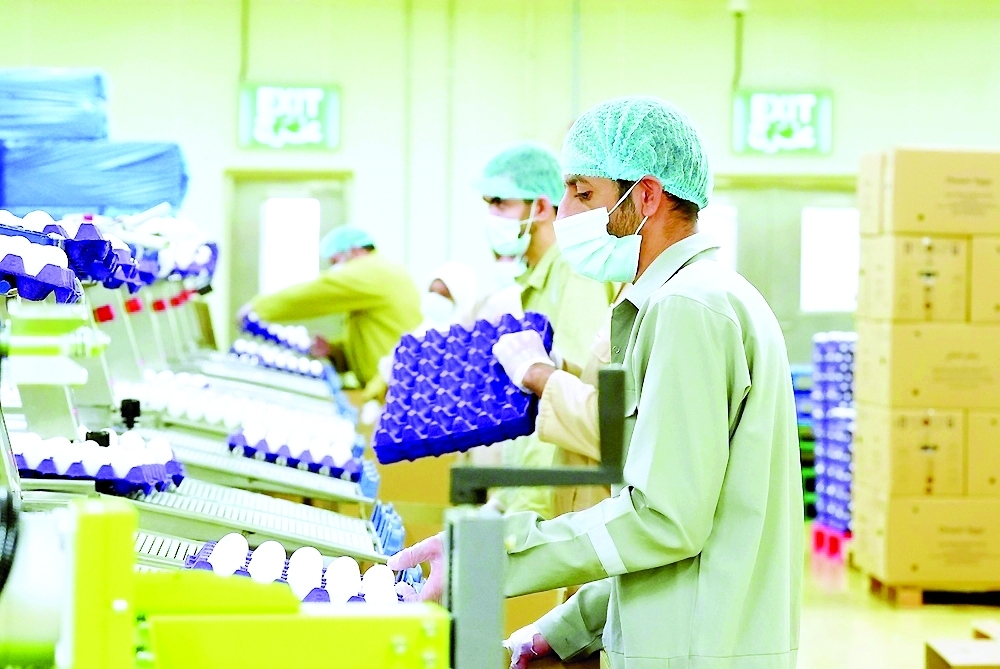
Oman is built for this moment.Its open‑ocean position outside the Strait of Hormuz is a credibility advantage in a nervous trading system. But geography alone does not create prosperity. Prosperity comes when a country turns movement into transformation — processing, manufacturing, assembly and export‑ready services that capture margin and create skilled jobs.
The real question is not whether Oman can move cargo safely; it is how quickly Oman can convert logistics strength into industrial value.
That is where the Public Authority for Special Economic Zones and Free Zones (OPAZ) sits at the heart of national value creation.
Established in 2020, OPAZ brings Oman’s Special Economic Zones, Free Zones and Industrial Estates under one national platform.
It oversees 23 zones spanning more than 2,200 square kilometres, with total investment volumes across affiliated zones estimated at $54.5 billion (as of December 2024).
These are not just industrial plots; they are the physical and regulatory backbone of ecosystems that can convert trade flows into higher-value exports, better jobs and deeper local supplier bases.
Value is not created by land and infrastructure alone. It is created by predictable rules, fast decisions, shared services and clusters where suppliers and customers can co‑locate with confidence. OPAZ’s strategic role is to make that system work: unify policy, reduce friction and shorten “time‑to‑operate” compared with competing locations.
In today’s environment, time saved on licensing, utilities and customs can matter more than marginal differences in rent or incentives. When approvals are clear and predictable, firms invest earlier, scale faster and commit capital for longer.
The global economy is steadily shifting from “just‑in‑time” to “just‑in‑case”. That shift rewards countries that can offer multiple routes, multiple suppliers and stable operating conditions. In practice, this is the difference between a single supply chain and a value network. Supply chains are linear — one weak link can break the sequence.
Value networks are layered — shared infrastructure, common standards and alternative routes that allow rerouting when shocks hit. Oman’s competitiveness will increasingly depend on how effectively it builds such networks and OPAZ’s zones are where those networks are designed, governed and scaled.
Policy alignment is a major part of the value equation. Royal Decree 38/2025 unified the legal framework for Special Economic Zones and Free Zones and is widely summarised as including a 10‑year income tax exemption for qualifying enterprises, alongside streamlined approvals through a one‑stop shop. For investors, that combination — clarity, speed and credible incentives — reduces execution risk.
For Oman, it increases the odds that projects move from announcements to operation, which is where jobs, exports and knowledge transfer actually materialise. Border‑adjacent development is another lever for value creation and OPAZ is leaning into it. Al Rawdah Special Economic Zone in the Wilayat of Mahadha, Al Buraimi Governorate, signals an intent to build for corridors, not only cities.
In May 2025, OPAZ signed an agreement with Mahdah Development Company — represented by DP World—to develop and operate the first phase. A global zone operator brings more than buildings; it brings operating discipline, tenant pipelines and customer relationships that can accelerate occupancy and international credibility.
Strategically, the message to businesses is clear: design products, packaging and distribution with the GCC market in mind from day one, then scale outward.
Connectivity turns strategy into daily reality. Hafeet Rail’s main route between Sohar and Abu Dhabi is widely reported as 238 kilometres, linking Suhar to the UAE rail network via Al Ain. This is not only transport; it is a new pricing of distance. Reliable rail makes “twin‑plant” strategies practical — energy‑ and land‑intensive processing in Oman, with finishing, branding and distribution closer to end markets.
It also diversifies national risk: when maritime freight rates swing or schedules wobble, overland capacity can help keep factories running and shelves stocked. In a decade defined by volatility, continuity becomes a sellable advantage.
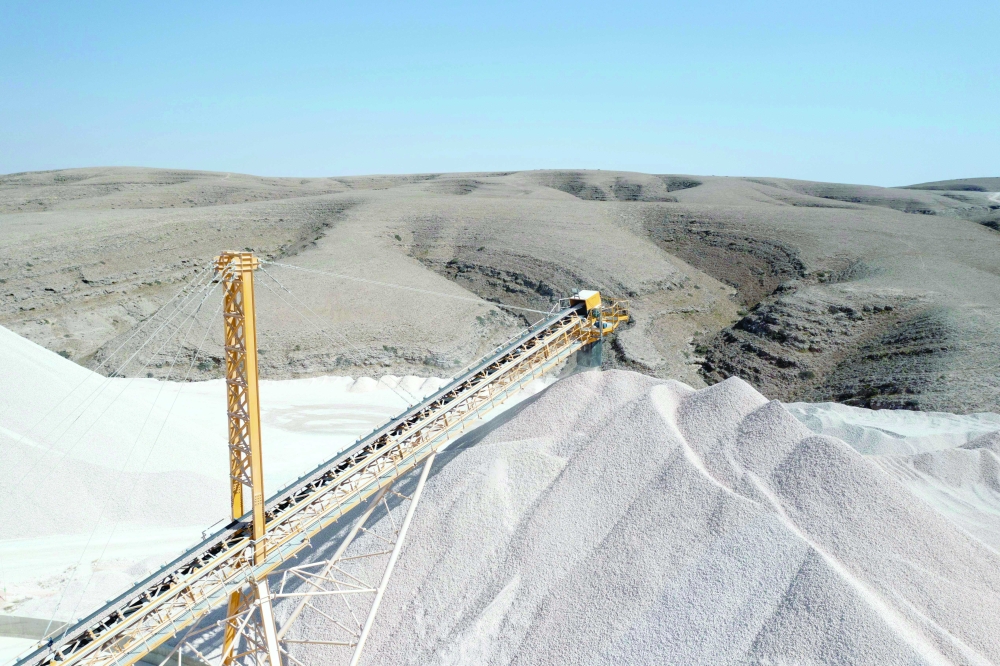
Then come the industrial anchors that can shift Oman from transit to production. One example is United Solar Polysilicon in SOHAR Port and Freezone, designed for 100,000 tonnes per year of high‑purity polysilicon, with late‑2025 coverage estimating investment above $1.6 billion.
A single upstream anchor like this can pull an ecosystem behind it — specialised maintenance, testing, packaging, logistics and eventually downstream manufacturing — because industrial firms prefer to cluster near critical inputs.
Oman Observer is now on the WhatsApp channel. Click here