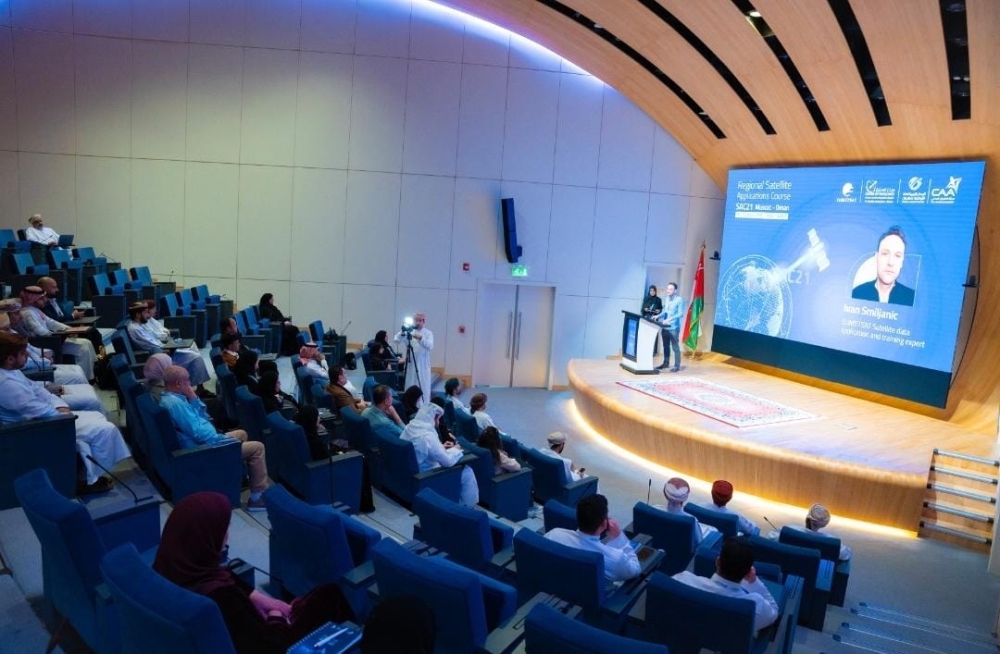
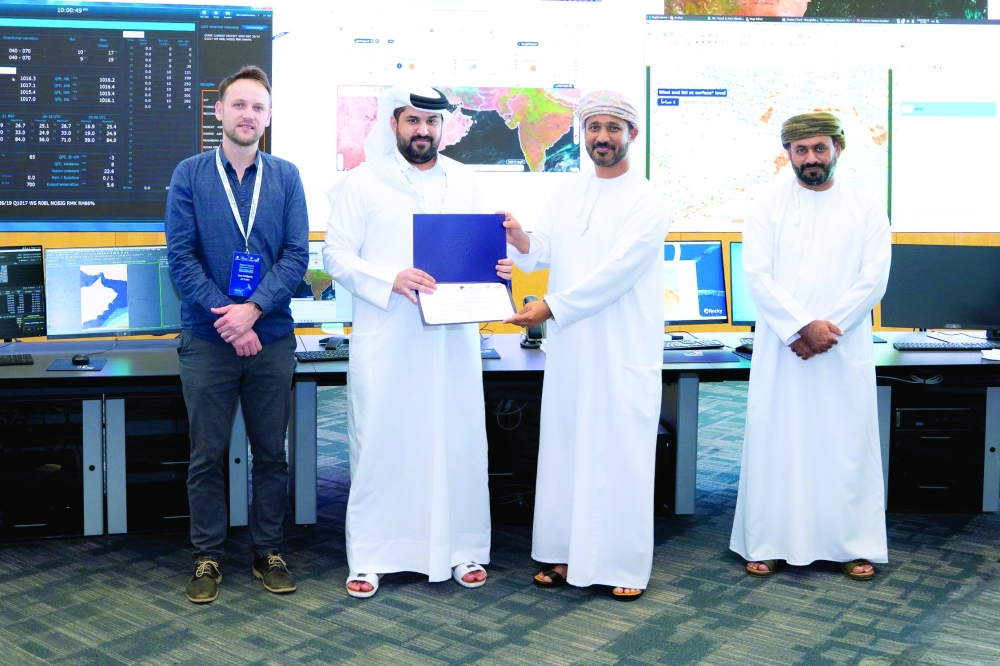
The 21st Satellite Applications Workshop, organized by the Center of Excellence for Satellite Applications, in cooperation with the European Satellite Applications Association, commenced on Sunday in Muscat.
The workshop aims to equip participants with a comprehensive understanding of satellite fundamentals, remote sensing systems, and their various applications. It will run for five days.
Twenty-four trainees representing 11 countries from the Middle East and North Africa are participating: the Sultanate of Oman, the United Arab Emirates, the Kingdom of Saudi Arabia, the State of Qatar, the Republic of Yemen, the Republic of Iraq, the Hashemite Kingdom of Jordan, the Syrian Arab Republic, the Lebanese Republic, the Arab Republic of Egypt, and the State of Libya.
The workshop aims to train specialists on the latest satellite applications, including third-generation applications, which are characterized by their efficiency and high quality in covering the Arabian Peninsula and the Indian Ocean region. It also seeks to enhance their capabilities in analyzing and studying various environmental and atmospheric phenomena, as well as to facilitate the exchange of expertise and broaden the horizons of international cooperation among the participating countries.
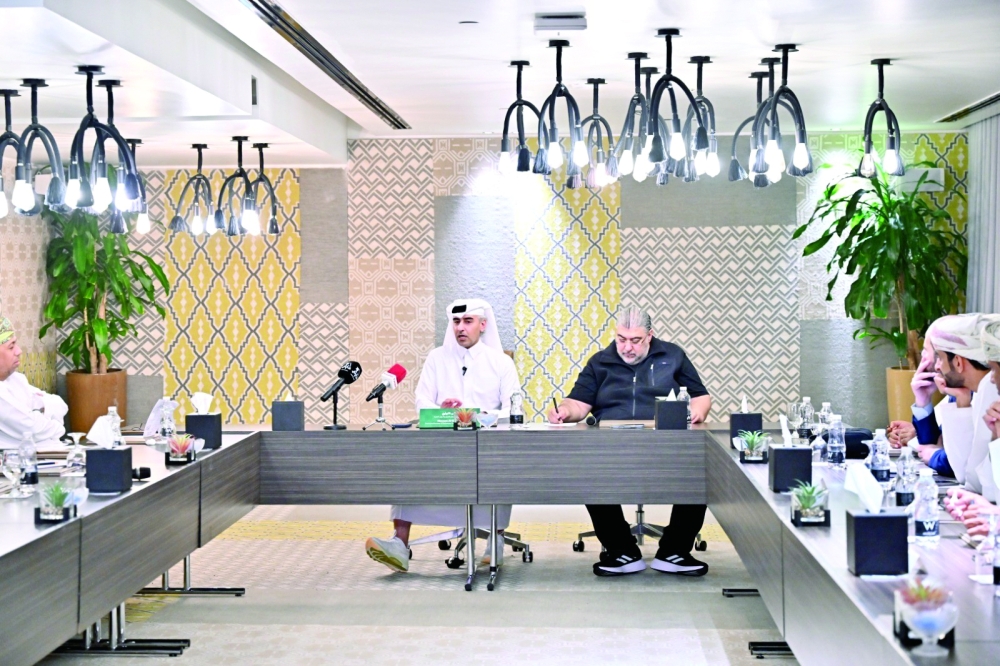
Abdullah bin Rashid Al Khadouri, Director General of Meteorology at the Civil Aviation Authority, affirmed that the workshop represents a significant regional milestone in the field of satellite applications and meteorological sciences.
He further explained that this workshop serves as an advanced regional platform for exchanging expertise and transferring knowledge. It contributes to strengthening regional integration and cooperation in utilizing the latest satellite technologies, which positively impacts the quality of meteorological services and supports efforts to prepare for and mitigate risks associated with weather and climate phenomena across the region.
It is worth noting that the Center of Excellence for Satellite Applications has been selected by the World Meteorological Organization as an accredited center for teaching satellite applications sciences, thanks to its qualified and specialized Omani personnel in this field.
The center celebrates its twentieth anniversary this year, having achieved numerous significant accomplishments throughout its history. It trains over 500 trainees annually from 27 countries in the Middle East, West Asia, and North Africa. The center offers 10 diverse training programs encompassing distance learning, blended learning, and in-person instruction. It covers more than 10 different areas of satellite applications, such as climate, marine, and data services, and fosters collaboration with over 10 local entities, including Sultan Qaboos University, the German University of Technology in Oman, the Royal Navy of Oman, and the National Space Program. It also coordinates with three other organizations.