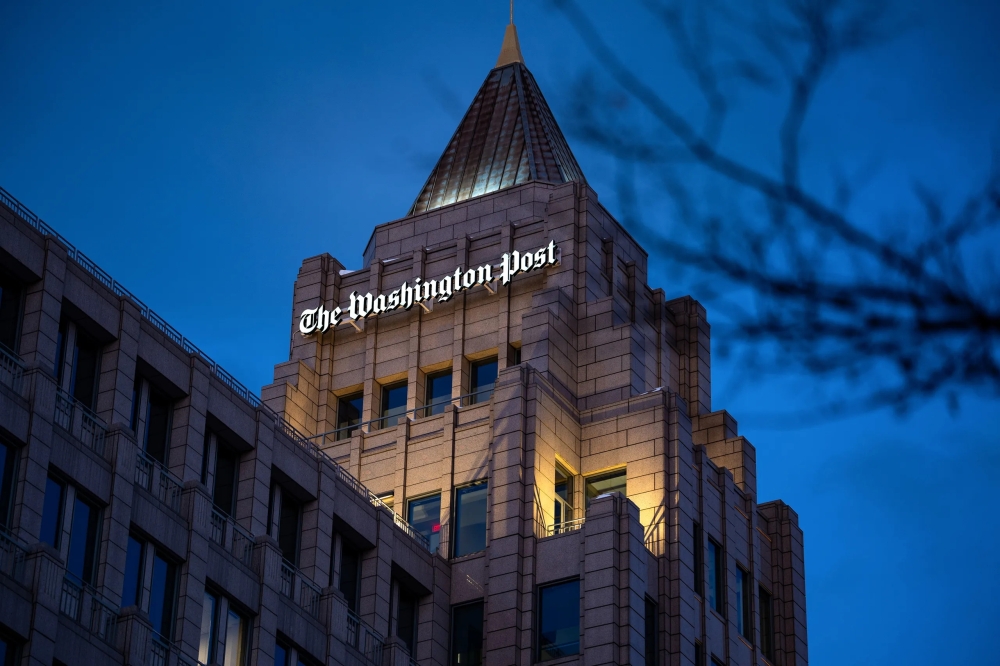
The media world was taken aback last week when the iconic newspaper The Washington Post laid off more than one-third of its entire pool of employees.
It completely cut out its sports and book reviews section. It also closed almost all its foreign bureaus, including those in Asia and the Middle East.
The news of this drastic cut in this legacy media organisation has been met by surprise, even shock. But The Washington Post is not the only major newspaper to be facing closure or downsizing.
While the role of such papers remains central to our lives, such drastic changes in media institutions are a reminder that innovation is the only way forward.
One of the most significant obstacles facing traditional written media is the dwindling of revenue streams. Print advertising was once a reliable source of income for newspapers. However, this has now been replaced by digital platforms like Google and YouTube which dominate online advertising. These companies have large data on consumers and are able to produce more targeted and effective advertisements, leaving print media far behind in its quest for income.
The swift evolution of digital technologies has fundamentally altered how audiences consume content. This has resulted in legacy media being under immense pressure, having to find alternative forms of generating reader interest and viewership.
There is also the issue of audience fragmentation. Readership is so polarised today that different groups tend to follow their preferred news sources. Unlike in previous times, when large portions of the population consumed news from a small number of shared sources, today’s audiences are dispersed across countless digital platforms which have their own interests.
The popularity of online formats like social media feeds, streaming services and independent creators means that they now command significant attention.
Traditional media must now also compete with unverified sources that can circulate and spread fake news. Journalists have to maintain credibility while operating in a high-speed digital environment, often compromising on depth and quality.
These seem to be insurmountable challenges for mainstream media today. But undoubtedly, such institutions are well worth preserving. Newspapers have been the main source of information, discussion and exchange of ideas for centuries. At the same time, this traditional format is unlikely to stay relevant without innovation.
Many organisations are experimenting with subscription models, podcasts, frequent newsletters, and video platforms to diversify revenue and reconnect with audiences. The real challenge will be in balancing commercial survival with the core mission of engaging with the public.
Today, the information ecosystem is undergoing change at a supersonic speed. Survival in such a scenario demands technological relevance, but more importantly, it requires a renewed commitment to quality reporting, transparency and audience engagement.
Having the capacity to evolve without abandoning the original principles on which media rests will be the final test of success.
Dr Sandhya Rao Mehta
The writer is Associate Professor, Sultan Qaboos University
Oman Observer is now on the WhatsApp channel. Click here