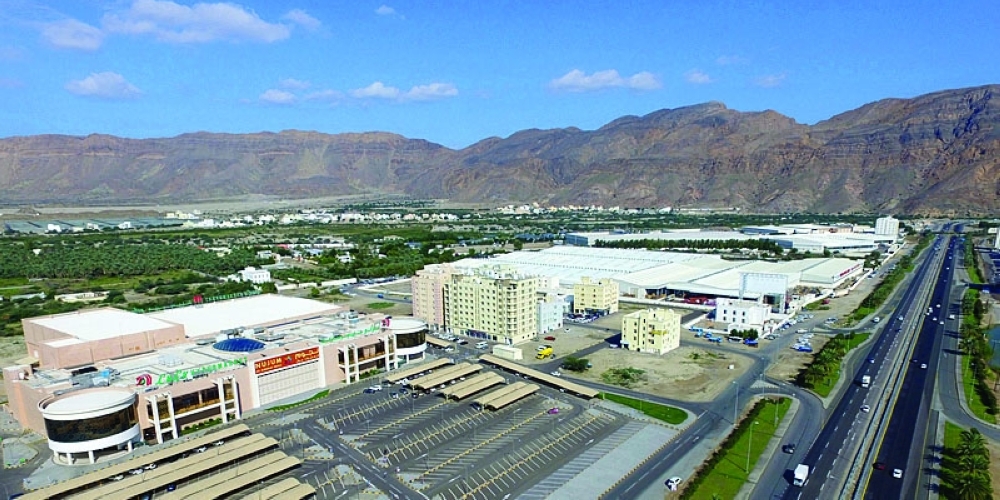





MUSCAT: The Sultanate of Oman, represented by the Ministry of Commerce, Industry and Investment Promotion (MoCIIP), celebrates Omani Industry Day, observed annually on February 9. This year’s theme, “From Oman to the World: Competitive Industry and International Vision”, sheds light on the geographical and economic advantages of industrial cities and their role in boosting exports. It also showcases the MoCIIP’s efforts, together with relevant authorities, to provide enablers, incentives and facilitation measures that support industrial growth.
The occasion reviews achievements in Omani industrial exports across international markets, encourages national factories to enhance product development and quality in line with internationally recognised standards and promotes export-oriented industrial investment, market expansion and the sharing of success stories of Omani companies that have reached international markets.
It further underscores coordination and integration between government entities, manufacturers and exporters to address challenges, strengthen the export ecosystem; and leverage the outcomes and recommendations of Omani Industry Day 2025 in shaping future policies and initiatives.
In 2026, Omani Industry Day places particular emphasis on the crucial role of industrial exports in strengthening Oman’s international economic presence, highlighting the quality, distinction and competitiveness of Omani products in regional and international markets. The day also reflects joint public-private efforts to facilitate access to international markets and foster a competitive environment for national industries, in line with Oman Vision 2040 goals to achieve economic diversification and enhance In-Country Value (ICV).
The Omani industrial sector continues to take on a growing role in supporting the national economy. Industrial exports reached approximately RO 1.618 billion in Q1 2025, accounting for nearly 28% of total exports, with key sectors such as electrical equipment manufacturing and metal products recording strong growth rates. The sector contributes around 19.5% of GDP, alongside continued growth in non oil industrial exports, which reached about RO 6.2 billion in 2024. This underscores the sector’s role in enhancing economic competitiveness, reducing reliance on oil and expanding the range of Omani products in international markets.
The Ministry of Commerce, Industry and Investment Promotion will host an event on Sunday, February 15, under the theme “From Oman to the World: Competitive Industry and International Vision”, under the auspices of Abdulsalam bin Mohammed al Murshidi, Chairman of Oman Investment Authority (OIA), along with several senior officials from the public-private sectors, at Al Bustan Palace Hotel.
The MoCIIP stated that by 2025, the industrial sector recorded tangible achievements reflecting the strength of its performance and its expanding contribution to the country’s economy. The contribution of manufacturing industries to GDP reached RO 3.879 billion, marking 7.2% growth compared to 2024, when it stood at RO 3.620 billion.
In terms of investment, foreign investment in the industrial sector rose to RO 3.490 billion in 2025, representing an increase of 24.6% compared to 2024, when it amounted to RO 2.800 billion, reflecting growing investor confidence in the sector and its investment environment.
Non-oil exports increased to RO 6.885 billion in 2025, recording 10.5% growth compared to 2024, when they stood at RO 6.232 billion, indicating the expanding presence of national products in international markets.
The number of workers in the industrial sector rose to 248,000 in 2025, up 3% from 2024, when employment stood at 240,761, highlighting the sector’s growing role in job creation.
By 2025, 166 industrial establishments had obtained the National Product Identity, while 439 exemption applications were approved, reflecting the effectiveness of incentives and facilitation measures aimed at supporting industrial activity and enhancing the competitiveness of national products.
Ghalib bin Said al Maamari, Under-Secretary of the Ministry of Commerce, Industry and Investment Promotion for Commerce and Industry, affirmed that the results achieved in 2025 reflect the success of government policies in strengthening the industrial business environment and the effectiveness of incentives and facilities provided to investors. He noted that growth in manufacturing contribution, foreign investment and non-oil exports prove the sector’s ability to meet economic diversification targets.
He added that the MoCIIP will continue developing the legislative and regulatory framework for the industrial sector, improving procedural efficiency and strengthening partnerships with the private sector, in order to enhance the competitiveness of national products and attract quality, value added and technology driven investments, in line with Oman Vision 2040 goals.
INDUSTRIAL STRATEGY 2040
Oman’s industrial sector continues to move steadily towards consolidating its position as a key driver of economic diversification, guided by the Industrial Strategy 2040. The strategy aims to build a modern manufacturing base driven by advanced technologies, Omani creative capabilities and innovative production techniques, contributing to improved quality of national industrial products and strengthening their competitiveness at the local, regional and international levels.
Industrial Strategy 2040 is founded on a clear vision to develop a modern manufacturing sector supported by four strategic programmes and seeks to achieve five main goals. These include diversifying manufacturing and transforming it into technology and knowledge based activities, developing distinctive industrial products that contribute to improving public health and well being, expanding the regional presence of Omani industry and entering new markets, upgrading manufacturing industries to advanced and leading technologies; and fostering a culture of industrial innovation.
PROMISING INDUSTRIAL SECTORS
Industrial Strategy 2040 focuses on three promising industrial sectors: resource based industries, capital intensive industries and knowledge based industries. These include oil refining, food industries, metals and mining, as well as electrical and mechanical industries, marine equipment and transport. The strategy also covers solar panels, hydrogen and recycling industries.
It encompasses a package of 90 strategic initiatives, implemented in partnership with 125 entities from the Ministry of Commerce, Industry and Investment Promotion and 140 strategic partners. Progress indicators show that 7% of initiatives have been completed, while 13% are currently under implementation.
Eng Khalid bin Salim al Qasabi, Director General of Industry at the MoCIIP, said that the positive performance of the industrial sector in 2025 reflects the integration of programmes and initiatives implemented under Industrial Strategy 2040. He noted that recorded indicators demonstrate tangible progress in production expansion, export growth, investment attraction and job creation. He added that the Directorate General of Industry is focusing on enabling national factories to adopt modern technologies, accelerating the shift towards smart and green industries, developing industrial value chains and supporting industrial innovation to enhance production efficiency, achieve sustainable growth and strengthen the presence of Omani industries in regional and international markets.
INDUSTRIAL SECTOR CONTRIBUTION
Economic indicators suggest that the industrial sector is expected to increase its contribution to GDP to around RO 7.250 billion. The strategy targets raising the contribution of manufacturing industries to GDP from 5.25% to higher levels, achieving growth of up to 7%, with target contribution ranges between 9.54%, 14%, and 7.37%. Performance indicators for 2024 point to reaching 9.5%, according to data from the National Centre for Statistics and Information.
In terms of investment, Foreign Direct Investments (FDIs) in the industrial sector increased from RO 1.705 billion in 2021 to RO 2.800 billion in 2024, with expectations to reach RO 3.490 billion in 2025 and RO 8.490 billion by 2030. Industrial Strategy 2040 aims to reduce the share of government investment to 12% by 2040, while increasing the contribution of FDI to 34% and local investment to 54%, alongside achieving 39% growth in non-oil merchandise exports every five years starting from 2025.
Data recorded between 2021 and 2024 confirm the sector’s positive performance. The industrial sector accounted for 9.4% of GDP in 2024, up from 8.9% in 2020. FDIs in the sector reached RO 2.8 billion by 2024, while non-oil merchandise exports recorded growth of approximately 5.8%.
The contribution of manufacturing industries at constant prices rose from around RO 2.81 billion in 2020 to over RO 3.62 billion in 2024. Customs exemption decisions grew by 41.6% between 2020 and 2025; and approved industrial licence applications increased by 68.7% between 2020 and 2024. The amount of products awarded the National Product Identity logo reached 6,957, further strengthening the presence of Omani products in the market.
INDUSTRIAL WORKFORCE
With regard to the workforce, indicators show accelerated growth in employment within the industrial sector. The amount of workers increased from 20,218 in 2020 to 240,761 in 2024, reaching 248,000 in 2025 and is expected to rise to around 277,000 by 2030. This reflects the continued expansion of industrial activities and their growing capacity to generate jobs and support the national labour market.
Oman’s efforts to develop the industrial sector have received wide international and local recognition. The United Nations Industrial Development Organisation (UNIDO) praised the fundamental transformation of the industrial sector, driven by rapid growth in high technology industries. A World Bank report also highlighted the sector’s pivotal role in diversifying income sources and achieving a current account surplus.
In its September 2025 report, Standard & Poor’s noted that the manufacturing, services and construction sectors are the main drivers of economic growth in the Sultanate of Oman.
Meanwhile, the International Monetary Fund 2025 report stated that manufacturing industries have become the primary engine of non oil growth. At the local level, the industrial sector was awarded the ‘Golden Sector’ title under the Al Roya Economic Award, in recognition of its role in economic diversification and reducing reliance on traditional sectors, in line with Oman Vision 2040.
ADVANCED DIGITAL TRANSFORMATION
In line with the efforts to simplify procedures and enhance digital transformation, the National Product Identity was issued through the (Made in Oman) platform, the Gulf Industrial Platform (GIP) was linked with the Industrial Observatory system, the Smart Production Factories project was launched and a mechanism for LPG (cooking gas) station applications was adopted. In addition, the Omani Products Guide (2nd edition) was issued, the share of automatic licence issuance was raised to 80% and several industrial agreements and memoranda of cooperation were signed with international and regional organisations.
Over the past five years, 20 industrial factories were inaugurated across various governorates of the Sultanate of Oman, contributing to the expansion of the industrial base and increased production capacity. During 2025, the Directorate General of Industry also participated in several local and international conferences and exhibitions, including the Home, Building and Urban Planning Exhibition, the Food Security Exhibition during the Khareef Dhofar Season 2025, COMEX, the Franchise Exhibition, the 18th Arab Steel Summit, the Omani Lebanese Exhibition, the Middle East LPG Summit and the Omani Saudi Industries Exhibition, in addition to celebrating Omani Industry Day on February 9 each year.
11TH FIVE-YEAR PLAN PROGRAMMES
Industrial sector targets under the 11th Five-Year Plan include the implementation of a package of specialised programmes, most notably the Industrial and Technological Innovation Programme, which focuses on establishing specialised industrial technology centres, strengthening partnerships between universities and industrial institutions, supporting innovation projects, encouraging factories to adopt smart manufacturing technologies, establishing incubators and accelerators, and organising industrial innovation competitions.
Targets also include the Omani Industries Empowerment and Efficiency Enhancement Programme, which focuses on establishing the Industrial Observatory, improving energy efficiency in high consumption factories, reducing carbon footprints, enabling national factories to adopt Fourth Industrial Revolution (4IR) technologies and supporting the transition towards sustainable green industries, thereby enhancing the competitiveness of Omani products in local and regional markets.
Under the Industrial Sector Incentives Programme, a package of financing facilities, tools and investment incentives has been provided, alongside support for industrial exports through dedicated financing programmes, funding for renewable energy and advanced technology projects that enhance energy efficiency and the provision of pre equipped industrial facilities to accelerate project implementation.
The programme also focuses on maximising value added in manufacturing industries through value chain development, the establishment of complementary industries and the provision of incentives that enhance industrial value chain integration or supporting services that improve production efficiency and increase local content. The implementation of these programmes forms part of the 11th Five-Year Plan for the industrial sector, strengthening the readiness of national industry, enhancing competitiveness, supporting sustainable development goals and aligning with Oman Vision 2040.
REINFORCING ECONOMIC DIVERSIFICATION PATHWAYS
Faisal bin Abdullah al Rawas, Chairman of the Oman Chamber of Commerce and Industry (OCCI), stated that Omani Industry Day represents a national occasion reflecting the advanced position reached by the industrial sector in the Sultanate of Oman and the vital role it plays in supporting the country’s economy, strengthening economic diversification pathways and consolidating the foundations of sustainable and competitive growth.
He noted that this year’s theme, “From Oman to the World: Competitive Industry and International Vision”, embodies a strategic direction aimed at elevating national industry to broader regional and international heights through maximising ICV, expanding production capacities, stimulating quality industrial investment and increasing the sector’s contribution to GDP, in line with the goals of Oman Vision 2040.
COMPETITIVE INDUSTRIAL SECTOR
Al Rawas emphasised that the private sector is the principal partner in building a strong and competitive industrial sector. He highlighted the OCCI’s commitment to supporting the industrial business environment, representing the interests of industrialists and contributing to the development of regulatory and legislative frameworks that encourage investment. This includes supporting small and medium enterprises and enabling their integration into local & international supply and value chains.
He added that the OCCI continues its efforts to enhance the international presence of Omani industries by expanding its network of international economic relations, organising external participation and building institutional partnerships with international industrial entities, helping to open new markets for national products and strengthen their competitiveness.
Al Rawas further noted that international transformations in the industrial sector require the adoption of modern production models based on innovation, advanced technologies, digital transformation and environmental sustainability. He affirmed the OCCI’s commitment to supporting the readiness of the Omani industrial sector to keep pace with these changes and enhance its ability to adapt and achieve long term growth.
He stressed that Omani Industry Day reflects growing confidence in the capabilities of national industry and embodies a shared national commitment between the public and private sectors to drive Omani industry towards further progress, strengthen its presence in international markets and enhance its contribution to comprehensive economic development.
MEETING LOCAL MARKET NEEDS
Shaikh Dr Hilal bin Abdullah al Hinai, Chairman of the Oman Manufacturers Association, said that the theme “From Oman to the World: Competitive Industry and International Vision” reflects the strategic direction of national industry and marks a noteworthy transition in which Omani industry is moving from meeting local market needs to competing in regional and international markets. This shift is driven by increasing value added, improving quality standards and adopting innovation and modern technologies.
He pointed out that the manufacturing sector achieved an average real growth rate of around 6.6% between 2021 and 2024, reflecting the sector’s resilience and capacity for sustainable growth. The value added of manufacturing industries rose to approximately RO 3.6 billion in 2024, contributing nearly 9.4% of real GDP.
Al Hinai noted that one of the key features of Omani industry’s success is industrial diversification through investment in multiple sectors, including food industries, chemicals, metals and manufacturing, alongside continuous improvements in quality standards and production efficiency. This has enhanced the competitiveness of Omani products in local and international markets.
With regard to human resources, he stated that the industrial sector has seen growing importance by national talent, with an estimated 35,000 to 40,000 Omanis employed in the sector. This reflects the success of Omanisation and capacity building policies, as well as the role of industry in providing sustainable employment opportunities and reinforcing national workforce participation in the economy.
He added that government facilitation measures have played a crucial role in supporting the industrial journey by providing a supportive regulatory environment, simplifying administrative procedures, offering investment incentives and developing industrial infrastructure and specialised economic and industrial cities. These efforts have enhanced the sector’s attractiveness to both local and FDIs.
On international competitiveness, Al Hinai noted that the Economic Complexity Index 2023 ranked Oman 66th out of 145 countries, underscoring the need to expand into high value added and knowledge intensive industries, in line with Oman Vision 2040 and to strengthen the position of the Sultanate of Oman within international value chains.
He also shed light on the significant progress achieved in industrial automation and digital transformation, which has contributed to higher production efficiency, reduced waste, enhanced ICV and improved digital integration between factories and suppliers. Advanced digital systems have also strengthened supply chain traceability and supported data driven decision making.
Shaikh Dr Al Hinai ended his statement with a call on factories and companies operating in the industrial sector to continue investing in quality and innovation, adhere to environmental and professional standards; and actively participate in industrial exhibitions and events locally and internationally. Such engagement, he noted, is essential for exchanging expertise and further strengthening the international standing of Omani industry.
Oman Observer is now on the WhatsApp channel. Click here