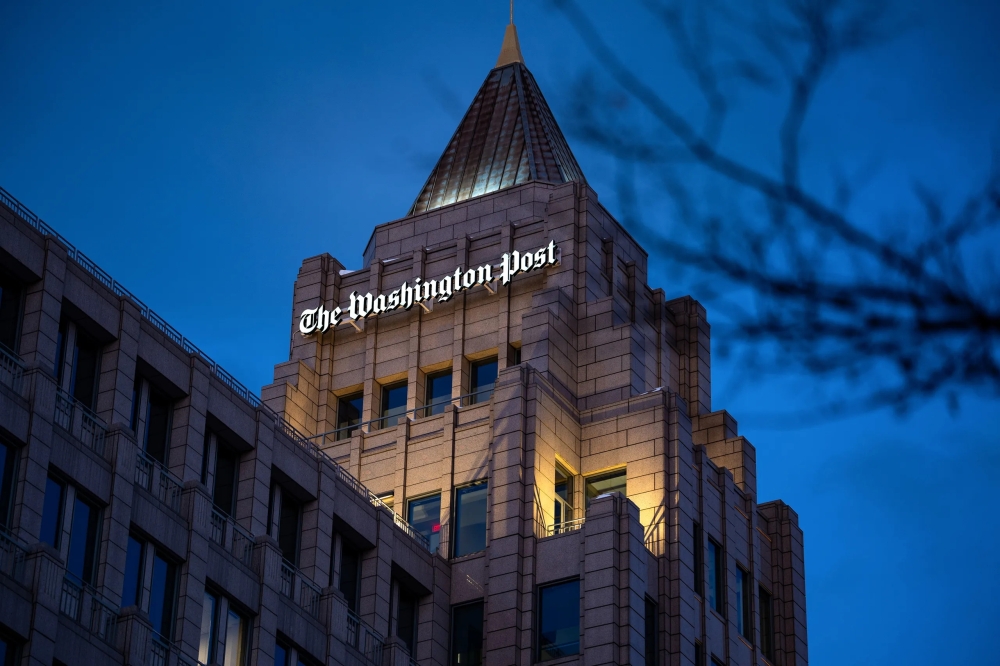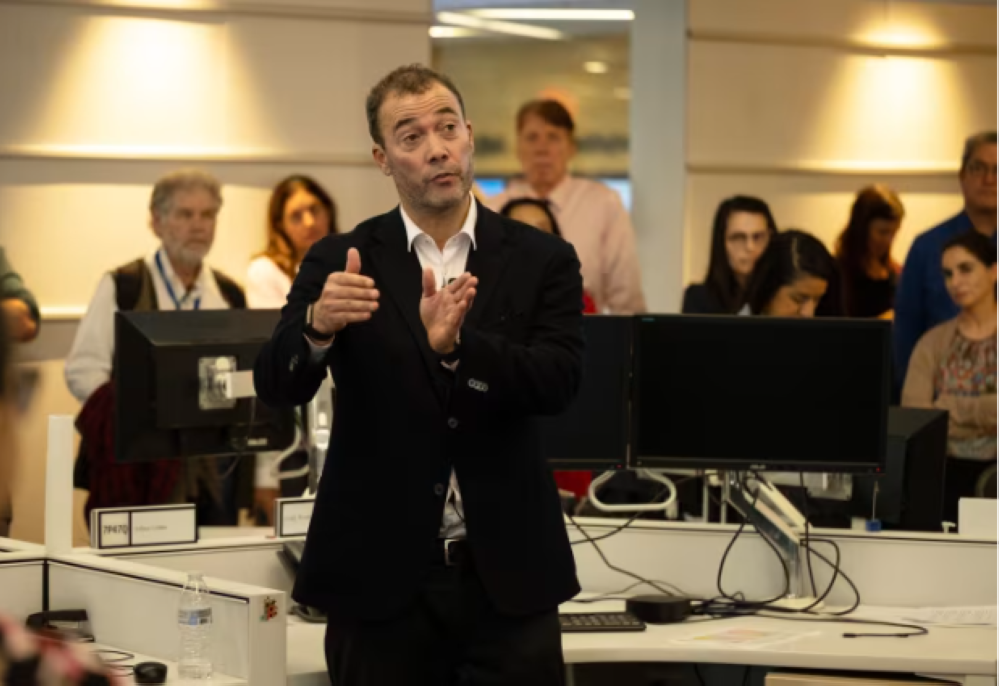





Will Lewis, the embattled CEO and publisher of The Washington Post, has stepped down, the company announced Saturday, days after the newspaper came under widespread criticism for laying off hundreds of its journalists.
Lewis said in a statement that he had made the decision “to ensure the sustainable future of The Post.” His terse email thanked only Jeff Bezos, the Post’s owner, and did not mention journalists at the newspaper.
Lewis left three days after the company, facing years of financial losses, undertook a significant round of layoffs that cut 30% of the staff — more than 300 journalists — decimating the Post’s local, international, and sports coverage. Marty Baron, the newspaper’s celebrated former editor, called it one of the “darkest days in the history of one of the world’s greatest news organizations.”
In a news release announcing Lewis’s departure, Bezos said that the Post has “an essential journalistic mission and an extraordinary opportunity.” He added, “Every day our readers give us a road map to success.” He did not mention the cost-cutting in his statement.
Jeff D’Onofrio, the Post’s chief financial officer, was named acting CEO.
Lewis’ sudden exit took many at the Post by surprise. He was seen in meetings on Wednesday and gave no indication he was leaving, according to one person familiar with the matter. The next day, Lewis was photographed at a Super Bowl event in San Francisco. The juxtaposition of that photo with the shuttering of the Post’s sports department as part of the layoffs drew widespread outcry from current and former Post staff members.
And it was Matt Murray, the newspaper’s top editor, who delivered the grim news of the layoffs to employees over a Zoom call; Lewis did not participate.
Katie Mettler, a former chair of the Washington Post Guild, said Saturday, “I’m glad Will Lewis has been fired. I wish it had happened before he fired all my friends.”
Lewis did not respond to requests for comment Saturday.
Bezos brought in Lewis at the beginning of 2024 to transform the publication and turn around years of financial losses and audience decline. The Post has yet to achieve consistent profitability, despite a hodgepodge of new strategies rolled out by Lewis, including the use of artificial intelligence, the inclusion of a new opinion product called “Ripple,” and a “big, hairy, audacious goal,” or BHAG, of reaching 200 million paid users. (It is unclear how many paid subscribers the Post has, since it is a private company.)
Lewis, who started his career in Britain as a reporter before rising in the ranks, was previously CEO of Dow Jones and publisher of The Wall Street Journal, which he left in 2020.
His tenure at the Post was marked by a mass exodus of journalists — the staff had already been reduced by buyouts last year — and broad dissatisfaction in the newsroom. He also faced questions about his journalistic ethics after news outlets, including his own, began looking into his conduct at British newspapers.
In May 2024, Lewis announced his plan to create a third newsroom division at the Post, separate from core news coverage areas of politics and business and focused on social media and service journalism. The Post’s executive editor, Sally Buzbee, abruptly resigned, and Lewis hired two of his former colleagues as top editors.
The New York Times reported that Buzbee and Lewis had clashed shortly before her exit when he objected to the newsroom’s plans to cover developments in the phone-hacking lawsuit winding its way through the British courts that included allegations against him and others. Lewis has not been charged and has repeatedly rejected accusations that he had acted to conceal wrongdoing while an executive at Rupert Murdoch’s News Corp. more than a decade ago. He denied that he had pressured Buzbee not to cover the story.
A day after the newspaper announced that Buzbee was leaving, Lewis held a town-hall meeting to announce her replacement. During the meeting, he tried a little tough love, telling reporters and editors, “People aren’t reading your stuff. Right. I can’t sugarcoat it anymore.” His remarks struck a sour note, and he hadn’t addressed the newsroom in person since.
Last year, as the distrust between Lewis and the Post deepened, two former senior editors — Leonard Downie, the Post’s top editor for 17 years, and Bob Kaiser, who spent more than a century at the newspaper, including as managing editor- emailed Bezos, urging him to replace Lewis. Bezos never responded.
Murray acknowledged the lingering issues at the Post in an interview with Fox News this past week: “I think morale has been a challenge at the Post for a while. It was a problem when I showed up, and it remains one in some ways now,” said Murray, who started at the Post in 2024.
Early in his tenure, Lewis made personal overtures to the Post’s journalists to inspire confidence in the future. On a summer night in August 2024, he met Josh Dawsey, then a political enterprise reporter for the Post, at the Four Seasons in Georgetown and pitched a new vision for the Post, according to two people familiar with the matter.
Over several drinks, Lewis told Dawsey that he intended to be there for the long haul — at least seven years — and that he would outlast his critics, the people said. After the meeting, Dawsey told colleagues that he had offered to make introductions for Lewis to help him build relationships in the newsroom.
Dawsey never heard from Lewis again.
Oman Observer is now on the WhatsApp channel. Click here