




Muscat - Negotiations between the United States of America and the Islamic Republic of Iran are taking place today in Muscat within the framework of commendable efforts to reach an agreement between the two sides, Oman TV reported.
Iran and the United States were preparing for talks with Washington, looking to see if there was any prospect of diplomatic progress on the Iranian nuclear programme and other issues, while refusing to rule out military action.
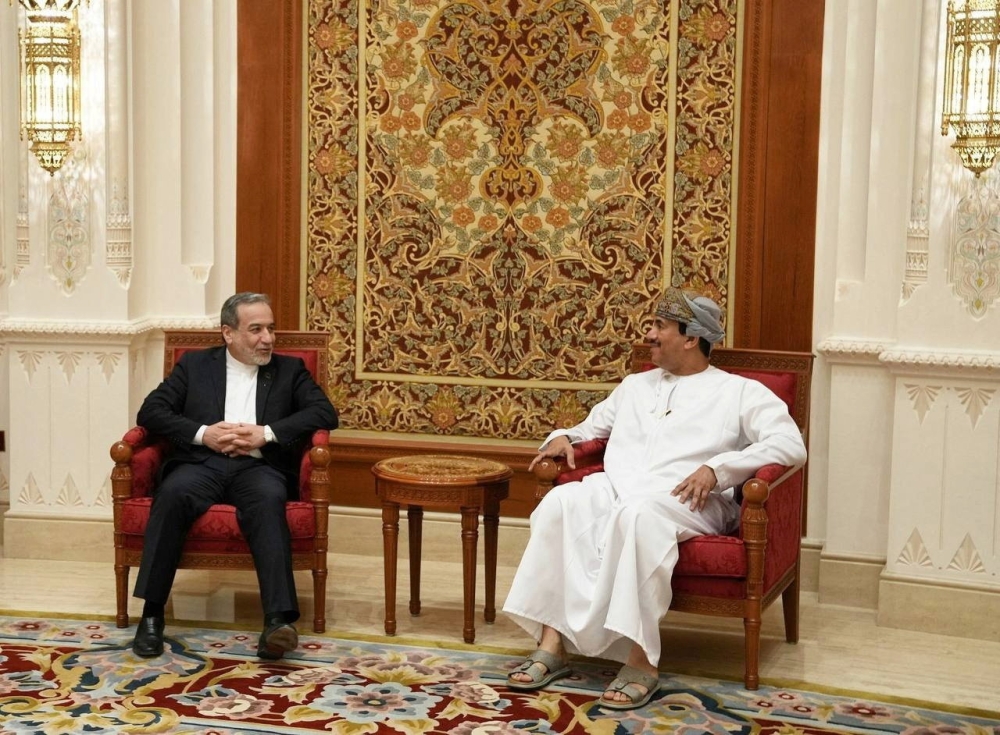
US President Donald Trump's Middle East envoy Steve Witkoff and Iranian Foreign Minister Abbas Araghchi are due to lead their delegations at the negotiations in Muscat.
"Iran enters diplomacy with open eyes and a steady memory of the past year. We engage in good faith and stand firm on our rights," Araghchi wrote on X ahead of the talks."Commitments need to be honored. Equal standing, mutual respect, and mutual interest are not rhetoric -- they are a must and the pillars of a durable agreement," he said.
Araghchi has met Sayyid Badr bin Hamad Al Busaidi ahead of talks on Friday.
The talks -- finally confirmed by both sides late Wednesday after uncertainty over the location, timing, and format -- will be the first such encounter between the two foes since the United States joined Israel's war against the Islamic Republic in June with strikes on nuclear sites.
Iran said on Thursday it had a "responsibility not to miss any opportunity to use diplomacy" to preserve peace, adding it hoped Washington would participate in the discussions "with responsibility, realism and seriousness".
The US delegation intends to explore "zero nuclear capacity" for Iran, White House Press Secretary Karoline Leavitt said, warning that Trump had "many options at his disposal aside from diplomacy".
The meeting comes just under a month after the peak of a wave of nationwide protests in Iran against the clerical leadership, which rights groups say were repressed with an unprecedented crackdown that has left thousands dead.
"They're negotiating," Trump said of Iran on Thursday.
"They don't want us to hit them, we have a big fleet going there," he added, referring to the aircraft carrier group he has repeatedly called an "armada".
Trump's rhetoric in recent days has focused on reining in the Iranian nuclear programme, which the West fears is aimed at making a bomb.
US Vice President JD Vance told SiriusXM in an interview broadcast on Wednesday that Trump would "keep his options open".
German Chancellor Friedrich Merz, speaking in the Qatari capital Doha, urged Iran's leadership to "truly enter talks", saying there was a "great fear of military escalation in the region".
Turkish President Recep Tayyip Erdogan was quoted by Turkish newspapers as saying: "So far, I see that the parties want to make room for diplomacy," adding that conflict was "not the solution".
There had been tensions in the run-up to the talks over whether the meeting should also include regional countries and address Tehran's support of proxies and its ballistic missile programmes, two US concerns that Iran resisted.
Tehran is willing to show "flexibility on uranium enrichment, including handing over 400 kg of highly enriched uranium (HEU) and accepting zero enrichment under a consortium arrangement as a solution," Iranian officials told Reuters last week.
Iran also insists that its right to enrich uranium is not negotiable.
Iran says its nuclear activities are meant for peaceful, not military purposes, while the U.S. and Israel have accused it of past efforts to develop nuclear weapons.
Oman Observer is now on the WhatsApp channel. Click here