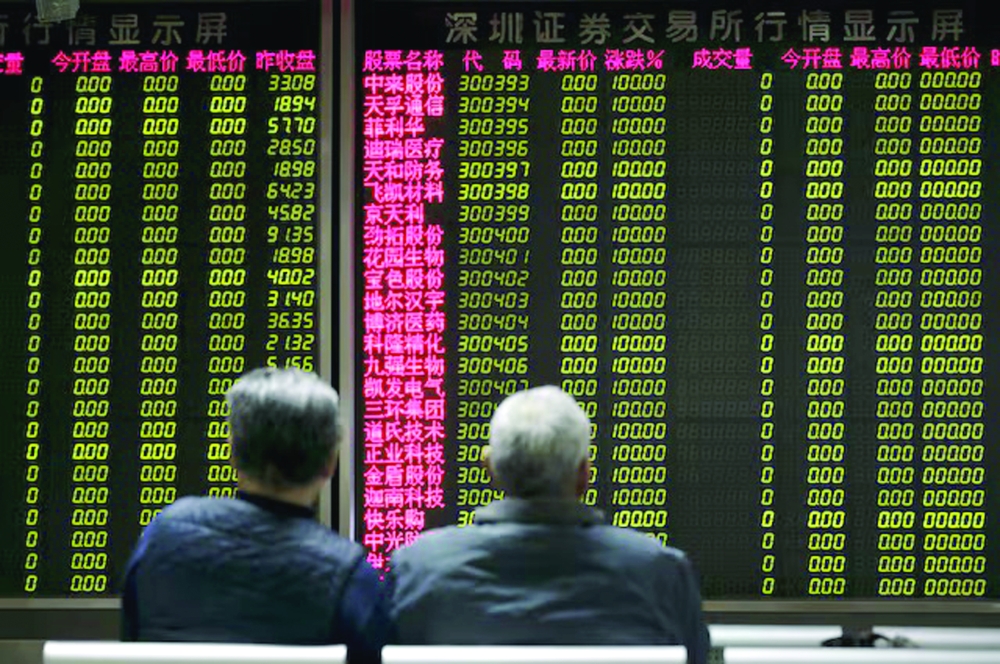





Gold and Asian stocks were on the rebound on Tuesday as trade took a calmer tone after wild swings in metals markets and a deal to cut U.S. tariffs on India helped the mood, while the Australian dollar rose after an interest rate hike.
India's rupee and stocks cheered an announcement by U.S. President Donald Trump that tariffs on Indian goods would be cut from 50% to 18% in return for New Delhi halting Russian oil purchases and lowering trade barriers.
Gold was up 3% in Asia to $4,820 an ounce, a bounce of around 9% from Monday's lows. Silver traded 5% higher to $83.34 an ounce.
Gold, silver, stocks, and the dollar have all whipsawed since Trump's nomination of Kevin Warsh to lead the Federal Reserve sent metal prices tumbling.
Warsh is seen shrinking the Fed's balance sheet, pushing up bond yields, which is negative for precious metals that pay no income.
However, the dive in prices on Friday and on Monday went beyond fundamentals and was a wipeout for leveraged positions and sent tremors through global commodity and stock markets as traders sold other assets to bail out losing bets.
Gold Prices in Oman
24k- RO61.100
22k- RO57.050
18k- RO45.100
Gold prices
The dramatic fall in gold prices has the hallmarks of a “leverage-driven break” rather than a collapse in underlying demand, predicts the deVere group.
The prediction from Nigel Green, CEO of deVere, comes as gold has experienced its sharpest price fall in more than a decade. It dropped close to 20% from its recent peak above $5,500 an ounce. Silver has suffered even sharper losses, including near-12% intraday falls and one of the most severe short-term declines ever recorded.
“Gold rose too far, too quickly into record territory, and the structure of that rise left it exposed once prices started to slip,” he says.
“At the peak, large parts of the gold market were held by traders using borrowed money. Futures contracts, options, and leveraged ETFs all expanded rapidly as prices surged above $5,000 an ounce.
“Those positions only function smoothly while prices move higher or sideways. Once prices began falling, the mechanics turned hostile.”
The first phase of the decline has been dominated by forced selling, not discretionary selling. Margin requirements were raised as volatility spiked. Traders were required to post cash immediately or close positions.
“Many chose, or were forced, to sell. This process pushes prices lower regardless of fundamentals.”
It explains the speed and violence of the move. Gold fell not because long-term holders suddenly changed their views, but because leveraged holders had to exit.
This phase tends to be self-limiting.
The deVere CEO comments: “Once leverage is flushed out, selling pressure eases naturally. Traders who were forced sellers are no longer present, daily price swings narrow, and liquidity improves.
“Prices stop falling not because sentiment improves, but because the mechanical pressure ends.
Nigel Green suggests that there are several key reasons why gold declines should stabilize.
First, gold at lower prices attracts real buyers, not traders.
“For instance, physical demand from Asia historically increases after sharp pullbacks, especially once prices move away from recent extremes. Buyers who stepped back during the rally re-enter once volatility cools.”
Second, central banks operate on long time horizons.
“They rarely chase rallies, but they do add on weakness. A correction from record highs into more stable ranges aligns better with reserve management behavior.”
Third, hedging demand returns once prices stop falling in straight lines.
Institutions that paused allocations during extreme volatility tend to resume once daily moves become more orderly.
“None of that happens at the peak; it happens after damage is done.”
The deVere CEO opines that a bounce typically follows a leverage washout.
“Gold rebounds after leverage-driven sell-offs because the reasons for owning gold usually remain intact.”
Debt levels do not fall during corrections, fiscal pressure doesn’t disappear, currency competition continues, and policy constraints remain visible. A price reset changes positioning, not the macro backdrop.
Once forced selling ends, price recovery tends to begin quietly. Early gains are often uneven and lack volume. This phase reflects repositioning rather than enthusiasm. Only later does momentum rebuild.
Importantly, rebounds following leverage washouts rarely return immediately to prior highs. Gold tends to build a base first, trading sideways as confidence slowly returns.
Nigel Green concludes: “Gold’s current plunge fits a familiar pattern: excessive leverage created fragility, volatility triggered margin pressure, forced selling drove prices lower, and positioning is now being reset.
“Once leverage clears, prices stabilize.
“The recovery may not be immediate or dramatic, but we believe the mechanics favor a bounce rather than continued freefall once the forced phase ends.
Oman Observer is now on the WhatsApp channel. Click here