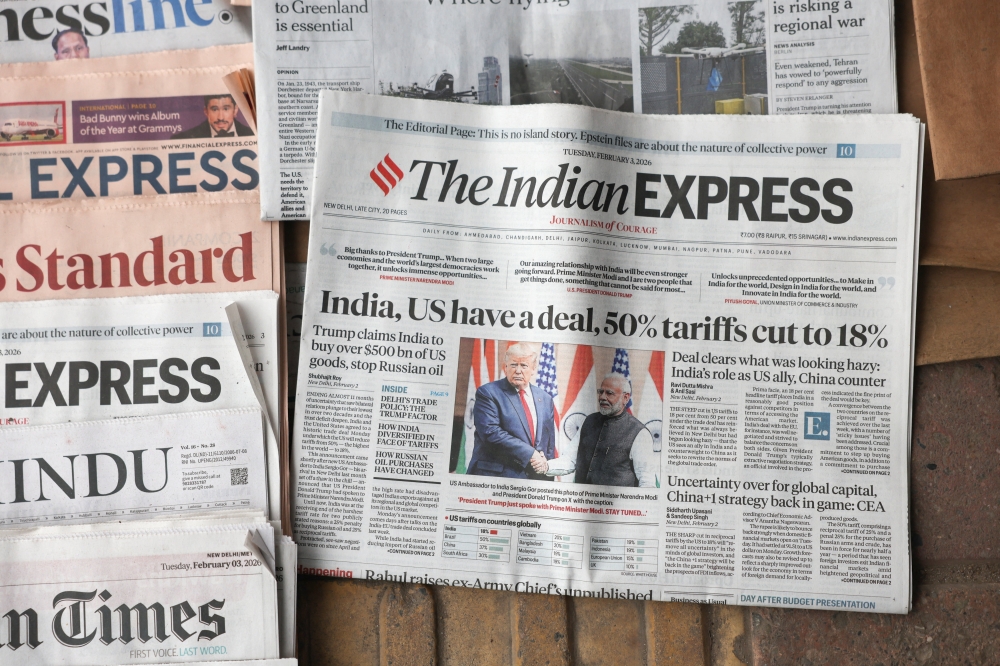
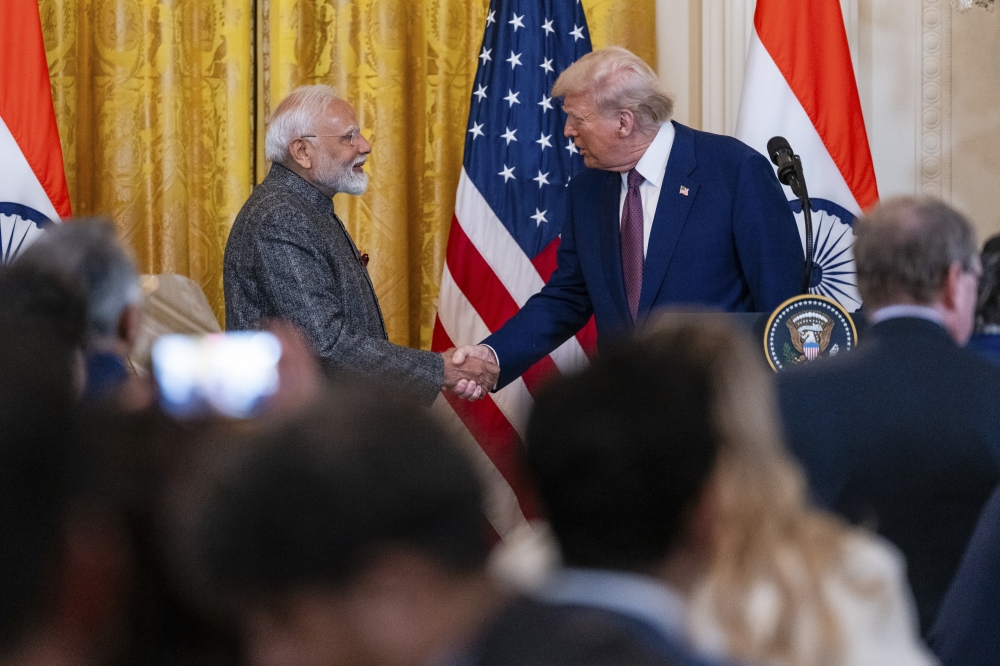





President Donald Trump said Monday that the United States had reached a trade agreement with India that would reduce some of the punishing tariffs the United States had placed on Indian imports.
The deal, as Trump described it on social media, would roll back some of his tariffs in return for India dropping its tariffs on some American goods and ceasing purchases of Russian oil.
The agreement included few details beyond the United States lowering its tariff on India’s export to 18%. Trump had raised tariffs on Indian products to 50% following troubled bilateral negotiations last year.
The arrangement appeared likely to defuse some of the tensions between the United States and India. The tariffs have hurt India’s attractiveness as a manufacturing hub, particularly for companies that have tried to move factories out of China. Analysts said the deal would reverse that dynamic and help to pull India back into a strategic alliance with the United States.
In a post on social media, Prime Minister Narendra Modi of India wrote that he was “delighted” by the tariff reduction but was similarly spare on details, including whether his country would stop buying Russian oil as Trump had claimed.
“When two large economies and the world’s largest democracies work together, it benefits our people and unlocks immense opportunities for mutually beneficial cooperation,” he wrote. “President Trump’s leadership is vital for global peace, stability and prosperity.”
In his post, Trump said he would reduce U.S. tariffs on India, and that India would “likewise move forward to reduce their Tariffs and Non Tariff Barriers against the United States, to ZERO.” He said that he and Modi had discussed ending the war in Ukraine, and that India had agreed to buy oil from the United States and “potentially” from Venezuela instead of Russia.
Modi would “‘BUY AMERICAN,’ at a much higher level,” Trump claimed, including “500 BILLION DOLLARS of U.S. Energy, Technology, Agricultural, Coal, and many other products.”
Eswar Prasad, a professor of trade policy at Cornell University, said the deal would put India “back in pole position as a major economic and geopolitical ally,” especially if it was finalized before a recent agreement between India and the European Union. He said it was “remarkable” that Modi appeared willing to drop restrictions on U.S. agricultural exports, despite how politically sensitive the sector is in India.
“This deal would bring India and the U.S. back into economic and geopolitical alignment, although U.S. immigration policies and remaining tariffs will certainly remain as thorny issues between the two countries,” he said.
The White House did not immediately provide any other details of the arrangement. A White House spokesperson said the administration expected to release related documents soon. Initial agreements that the Trump administration has announced over the past year have often been framework agreements that leave many details to be hashed out. Some, like the deals with South Korea and the European Union, have run into issues in recent weeks.
Just last week, India announced a long-awaited trade deal with the European Union, as both governments looked to diversify their markets. India also signed a free-trade agreement with Britain last year, as well as deals with Oman and New Zealand.
But the lack of a deal with the Trump administration had been a sore spot for India, which counts the United States as its largest trading partner. The countries carried out a difficult negotiation last year, as Trump imposed steep tariffs on the country’s exports, then raised them further, leaving India facing among the highest tariff rates of any nation.
Trump has long complained about India’s barriers to trade, including tariffs that make American cars and motorcycles too expensive for the Indian market. In his first term, Trump spent years trying to negotiate a trade deal with India, but it never came to fruition.
At the beginning of his second term, the friendly relationship between Trump and Modi raised hopes for an early trade deal. A delegation from New Delhi visited Washington just two weeks after Trump’s reelection, in part to talk about trade.
But as he did for other countries, Trump imposed steep tariffs on Indian exports. He announced in July that Indian goods would face a 25% tariff, then doubled that rate in August, saying that India should stop buying Russian oil.
Through months of trade talks, the two sides continued to spar over issues like agricultural access — and Modi’s refusal to back up Trump’s claims that he had “solved” the military conflict between India and Pakistan, a dispute that dates back more than 75 years.
Some Indian industries have been eager for a more open trading relationship with the United States, including makers of pharmaceuticals, auto parts and chemicals. But other sectors, notably agriculture, pushed to maintain relatively high tariffs and other regulations that block imports of foreign farm goods. The Indian government has been reluctant to remove those barriers, saying that they are necessary to protect small-scale farmers, who often live in poverty, from being put out of business.
Indian officials were also troubled by Trump’s plan to put other national security-related tariffs on pharmaceuticals, and felt stung by the administration’s promises to crack down on student visas. The country has become the biggest source of foreign students to U.S. universities, overtaking China.
The India tariff posed significant challenges for U.S. businesses importing from India, some of which had turned to the market as a safe haven after U.S. officials urged them to move factories out of China.
While an 18% tariff is far lower than in recent months, critics of Trump’s tariff policy said it still represented a significant tax increase on small businesses and American consumers who buy Indian products compared with recent years.
Dan Anthony, executive director of We Pay the Tariffs, a coalition of more than 800 small businesses that oppose the levies, called the arrangement “a permanent tax hike” that would impose “a 600% tax increase on American businesses compared to 2024.”
“Before President Trump’s tariff policies, American importers paid an average of about 2.5% on goods from India. This ‘deal’ locks in a rate six times higher than what we were paying a year ago,” he said.
This article originally appeared in The New York Times.
Oman Observer is now on the WhatsApp channel. Click here