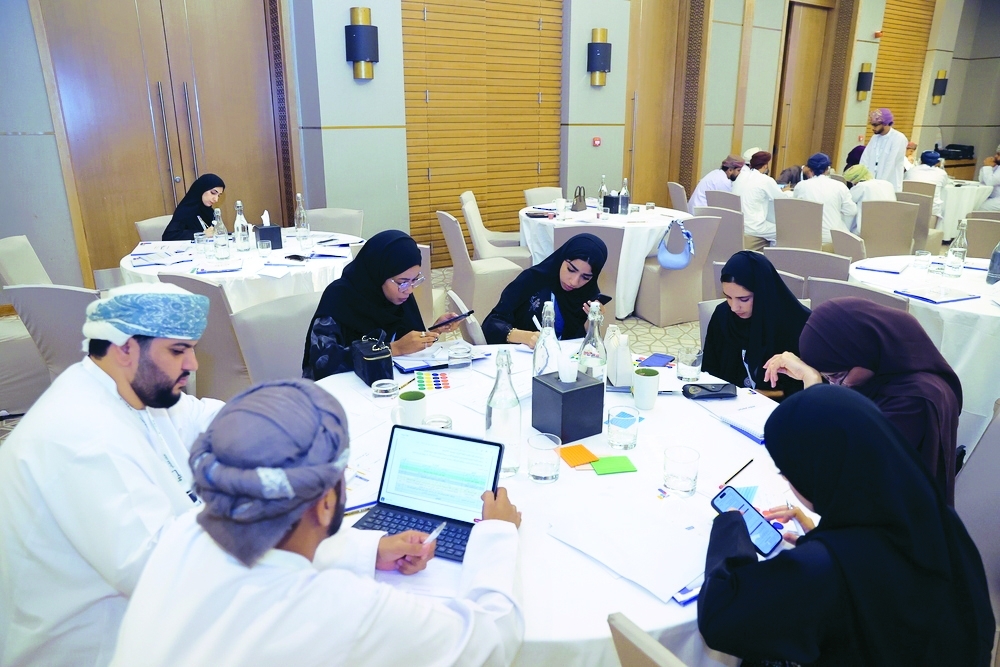
It was nice to see employers and decision makers attend a conference on wellness at workplace. We try to compartmentalise our lives, and we focus on our lives with family. Maybe we need to rethink the whole process.
In the past, children spent quite a few years in the house with their family. These days, however, children begin their interaction with the outer world much earlier, beginning with the days in crèche as early as infant days if both parents are working. Then come the school days and university life, and soon it is career time. That's when we think of the workplace.
The experts at the workplace wellness conference talked about the increase in productivity when the workplace has a positive outlook, where there is appreciation and encouragement.
Giving respect does not cost anything, yet its outcome is tremendous. In return, there is loyalty that builds into trust.
Loyalty and trust are foundational interpersonal virtues that build secure, long-term relationships through commitment and reliability. Trust is the confidence and belief in someone's integrity, while loyalty is the steadfast, unwavering commitment to support a person or cause, even through challenges. Together, they involve vulnerability, honesty, consistency and a shared dedication. Loyalty is often considered a consequence of trust, developed over time when the risk of being hurt is deemed low.
These are the key characteristics, according to the experts: Loyalty brings in steadfast commitment. It results in unwavering support that can be present in good and bad times.
Loyalty is also action-oriented and is demonstrated through actions, such as defending someone in their absence or making sacrifices for them. That is the best part. They are that way not because of your presence. Loyalty also brings with it dedication (prioritising the well-being of others) and consistency (reliable and predictable in behaviour). These virtues definitely help in achieving goals.
On the other hand, trust brings in confidence and reliability.
Where there is trust, we feel free to unveil our vulnerability. Elements of trust are also honesty and integrity, holding onto them even in difficulty.
When we can generate a sense of safety, we are able to create a sense of security and belonging. And we begin to see dependability as a core quality.
Going back to the conference, an expert asked us to change our outlook from finding work/life balance to achieving integration of work and life. This is what set the mind to the thought process of how work and life are actually one. They are not separate.
Now we can say work-life integration is a modern outlook. So what we need is a more cohesive and flexible lifestyle. It begins with our mind. We cannot stay detached from work when we are at home and from personal life when we are at work.
The experts say that when we define it as integration, it makes our lives fluid, whereas when we are thinking of balancing, we are thinking of gates and doors to leave our roles behind. It is almost like wearing masks. Life is to flow, right?
You are whole and authentic and not just fulfilling a role. The problem arises when we feel disconnected from ourselves by playing different roles.
With all the balancing act, one could burn out due to the sheer pressure of being the person by striking a balance.
Experts say we need to have more discipline when we practise integration of work and life. I am sure artists and entrepreneurs practice integration. Just like teachers, how can they stop thinking of their students, especially if they are children with special needs?
How can parents detach themselves from their concerns?
That is because once again life flows. We cannot build dams and walls. So these are some of the suggestions: we are in the era of apps, but it is a good idea to use 'Focus Modes' on mobile phones. Technology is going to be part of our lives, and it has its advantages, especially for the hybrid form of work.
Communicating expectations and limitations to the family and the work team. And then the precious commodity — time. Experts say we must selfishly allocate time for recharging ourselves, and this is when we stay disconnected and unplugged.
Lakshmi Kothaneth
The writer is senior editor of Observer
Oman Observer is now on the WhatsApp channel. Click here