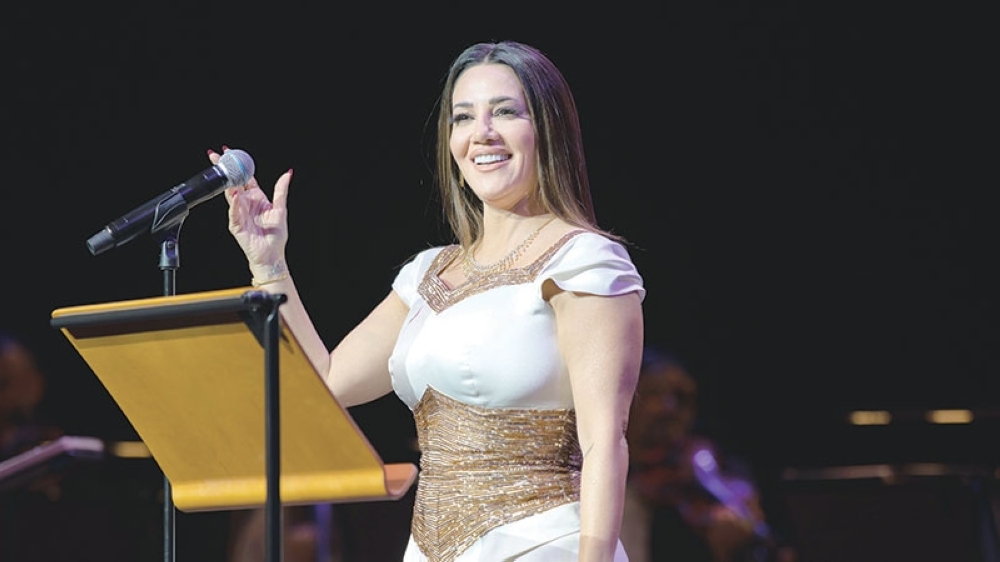
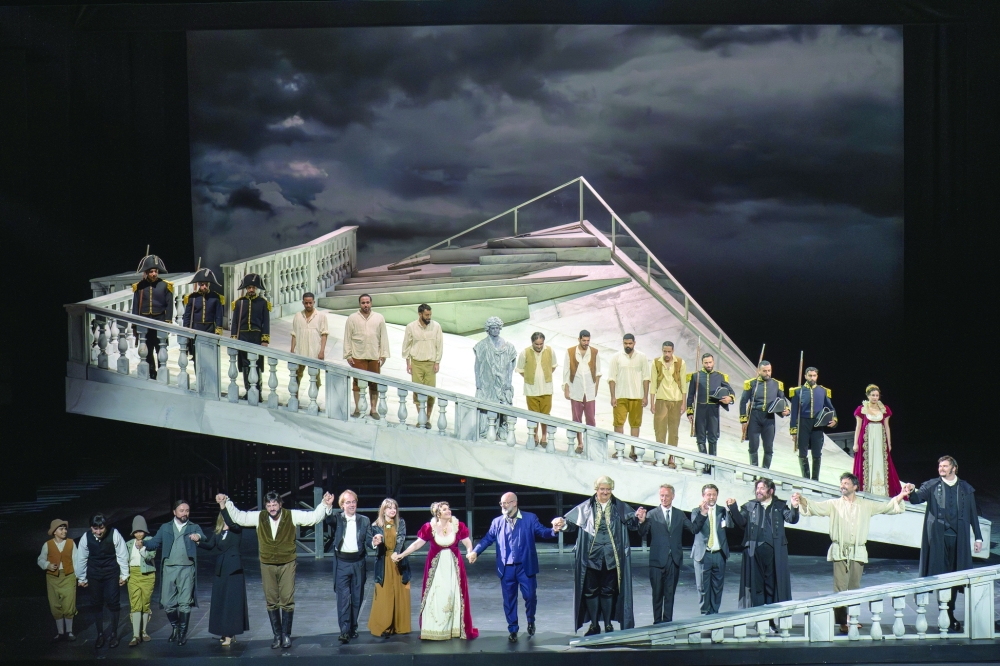





The enduring success and popularity of “Tosca”, despite its dark psychologicalthemes, surely lies in Giacomo Puccini’s lush romantic music and his lyrical vocallines. The much-awaited highlight of The Royal Opera House Muscat (ROHM)2025/26 season was David Livermore's innovative production last weekend, basedon the May 2018 premiere in Valencia, set in 1800 in two sold-out performances.
How this first Gulf “Tosca” would be received by the public was a question yet to beanswered. The large orchestra of the Azerbaijan State Academic Opera and BalletTheatre delivered the two-and-half-hour long score to perfect aplomb under theexperienced musical directorship of Fabio Mastrangelo.
The most striking aspect of the production was Livermore’s (rather distracting) raked triangular set which revolved throughout the evening. It created many shapes and scenes, sometimes with giddying effect on the audience and posing challenges of balance and safety to the singers themselves. Enhancing the dramatic impact were evocative projections, designed by D-wok Video, from the dome of the Sant’Andrea Church to changing skies and white doves in flight, symbolising a yearning for freedom.
The youthful Azerbaijani tenor, Yusif Eyvazov in the leaning church was the painter, Mario Cavaradossi, working on a portrait of Mary Magdalene which descended miraculously from the flies. His voice had a lyrical, attractive quality in the extremely challenging, “Recondita Armonia”(Hidden Harmony) well sustained in his upper register. The comic Sacristan, portrayed to a tee by Albanian baritone, Gezim Myshketa, was the perfect fall-guy, astride on the sloping floor polishing ecclesiastical candlesticks! A clever juxtaposition between Eyvazov’s clear engaging voice and Myshketa's light baritone was a delightful cameo, accompanied by Puccini’s warm, compelling score.
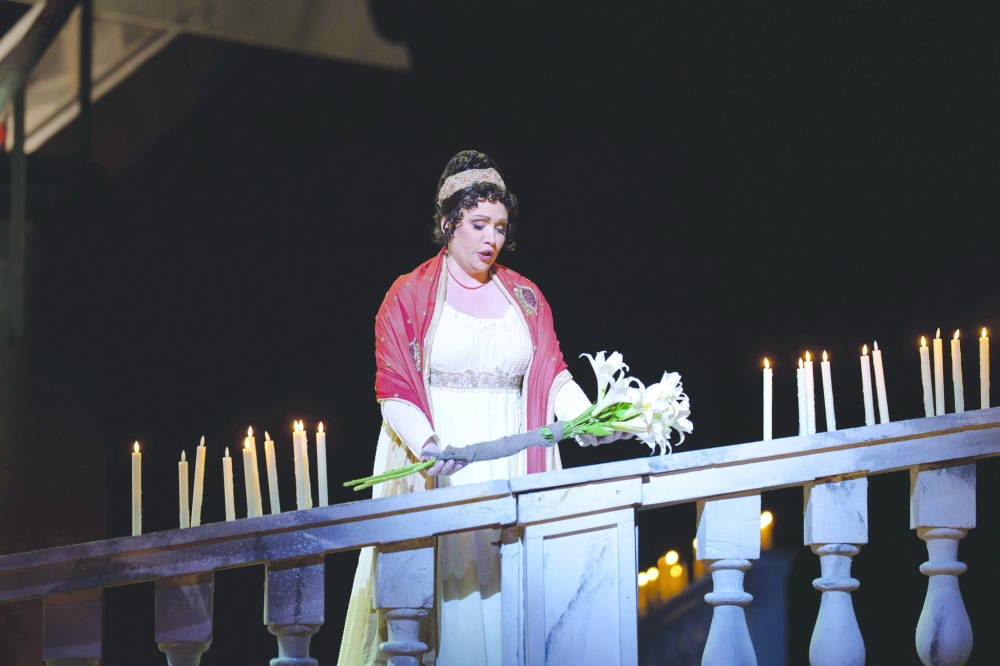
The brief appearance of Dario Russo as Republican fugitive, Cesare Angelotti provided a tantalising taste of his sumptuous bass timbre before the arrival of Carmen Giannattasio as the jealous, suspicious singer, Floria Tosca. In white dress and lilies for the shrine, Ms Giannattasio's seductive vocal entry blossomed into her light, agile technique in ‘Non la sospiri, la nostra casetta’ (Do you not long for our little cottage) as her lush love-motif is heard in Puccini’s gorgeous 1900 orchestration.
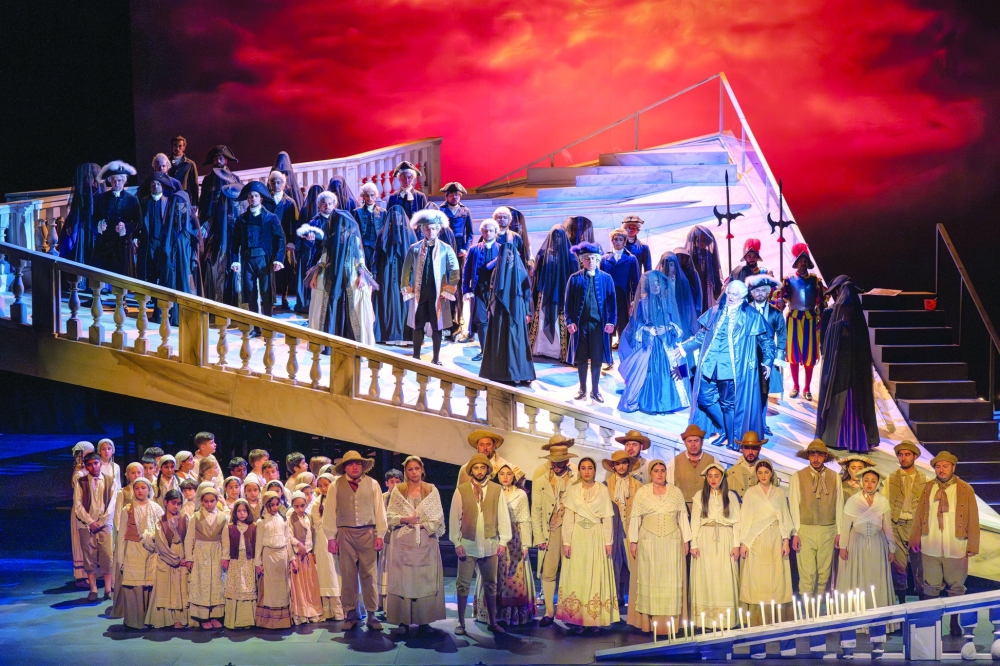
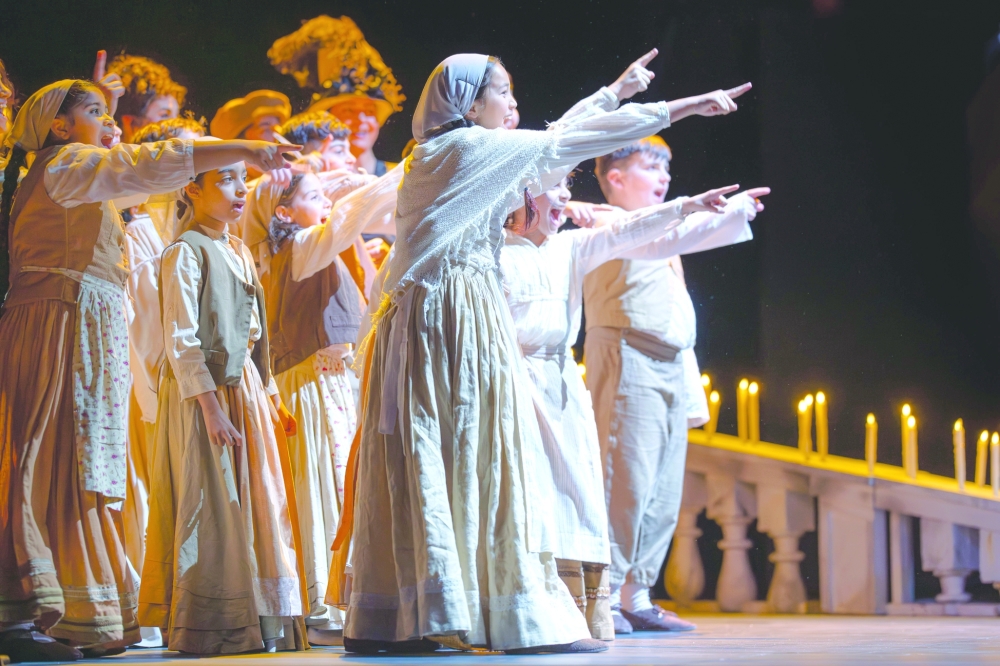
Tosca’s jealousy is reflected in her rising vocal and dynamic intensity, executed with perfect control and placing, while Cavaradossi falls hopelessly under her spell. Eyvazov’s sincere and powerful delivery of ‘Qual occhio al mondo’ (what eyes in the world) belied its challengingly high, sustained tessitura. Carmen’s response is measured acquiescence and the duet was simply sublime, blending their voices, soaring above the orchestra and bringing goose bumps to an enthralled audience. Bonaparte’s victory heralded the entry of the Ladies Chorus and new ROHM Children’s Choir, directed by Sara Matteucci, which includes 34 young singers, 16 of whom are Omani, singing the ‘Te Deum’.
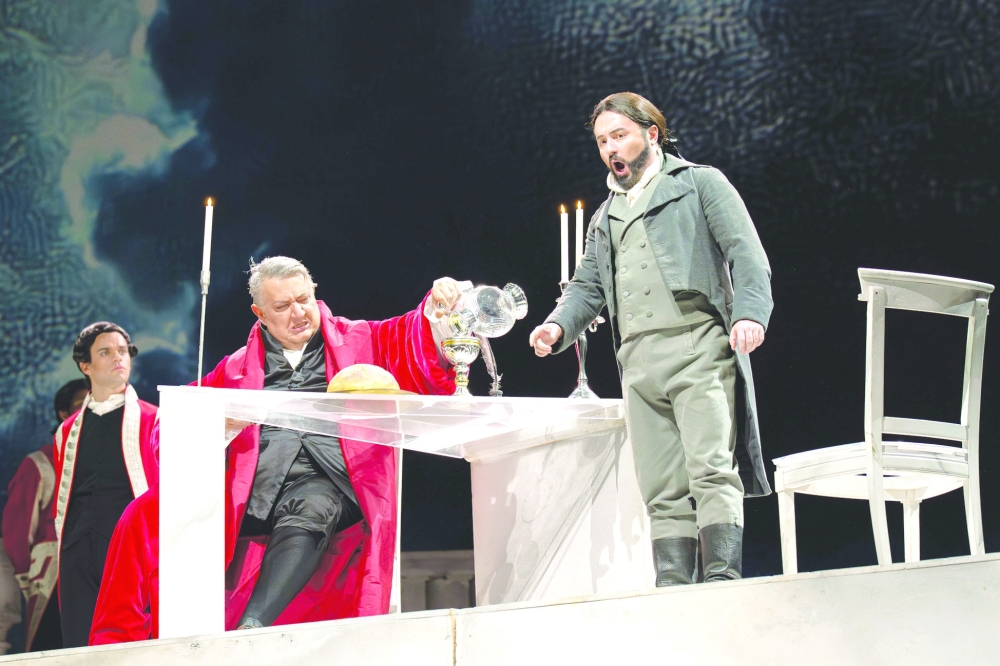
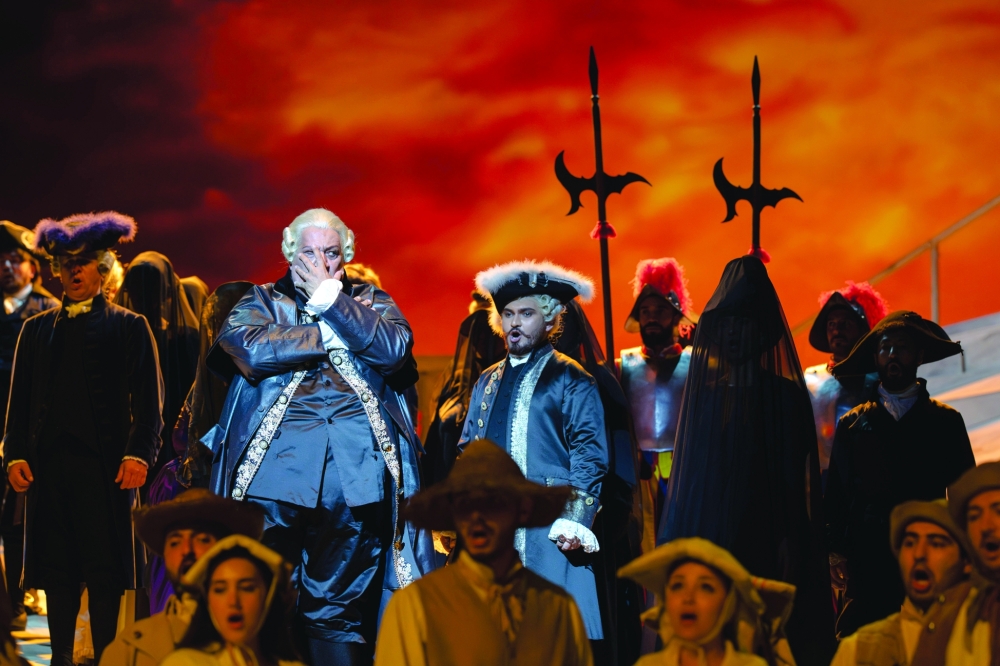
Baron Scarpia, Chief of Police appeared high above on the prow of the Palazzo Farnese, remonstrating the crowd for their lack of respect in church. The deceitful Scarpia was portrayed with distinguished gravitas by Italian Baritone, Ambrogio Maestri. As a would-be lover, Maestri maintained a warm, steady baritone against frequent brass interjections and strong orchestral chords. His Aria “Tre sbirre una carrozza... Presto!” (Three men and a carriage. Quick — follow!) was deceptively beautiful against a stunning sunset projection, but his intentions are sheer lust and tyranny. The entire chorus and children’s choir filed on stage at the end of Act One, where they took their curtain call to rapturous applause and shouts from an adoring public.
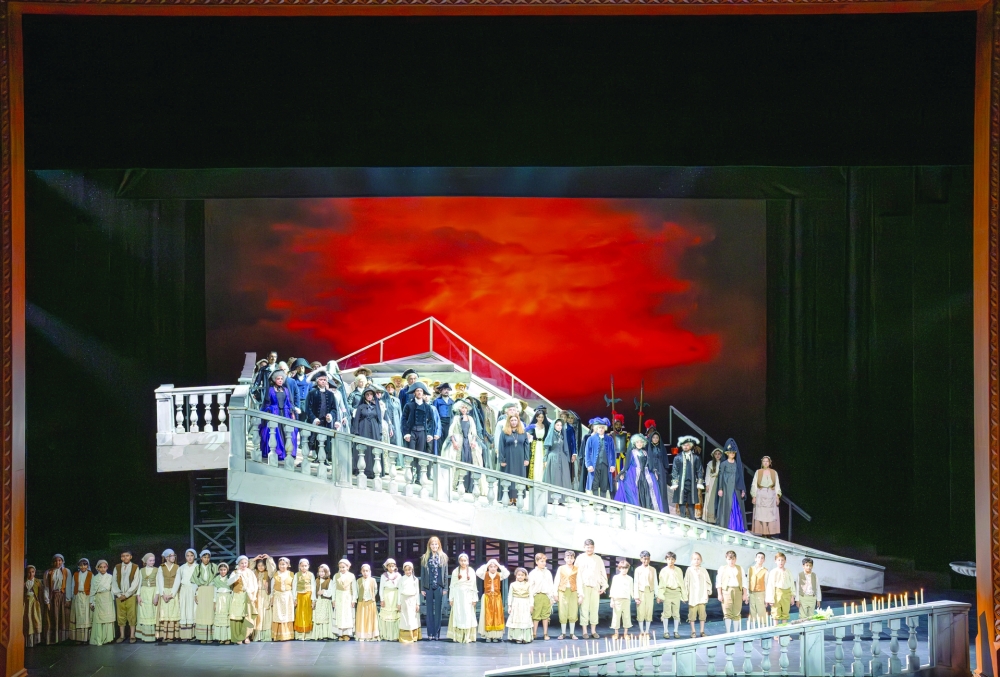
Scarpia is a paradox in the opera. Maestri’s vocal placing in the passionate “Se la giurata fede debo tradir” was superb; clear and comfortable while conniving to gain Tosca in the Palazzo. Carmen Giannattasio soared above his cynical propositions with scream-like vocalise. Meanwhile Cavaradossi is held in a dungeon cleverly constructed below the revolving set — a spacial juxtaposition — while Puccini’s romantic chromatic harmony seduced the listener, if not Tosca. Giannattasio’s interpretation of the impossibly beautiful, prayerful “Vissi d’Arte, vissi d’Amore” (I lived for Art, I lived for Love) was sung entirely lying down. Her dramatic confidence and measured vocal control, accompanied by plaintive strings and harp, held the audience spellbound. Her blood-red cloak contrasted forebodingly with Scarpia’s Cardinal red; all else was grey against a blood-red sky.
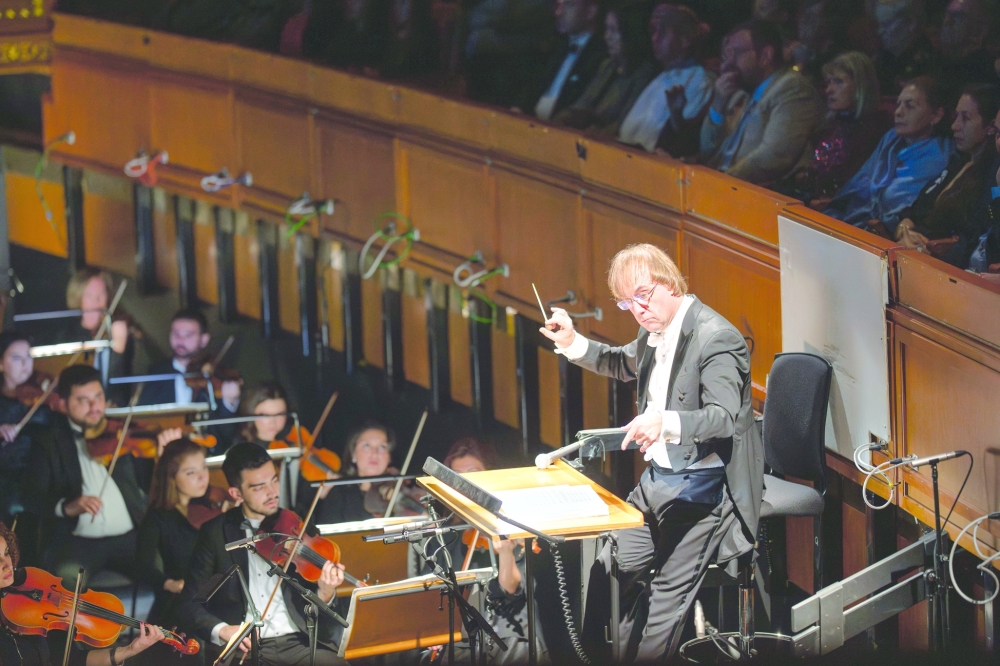
A five minute set change to Act 3 revealed a silver Statue of Justice as pastoral woodwind melodies invoked the shepherd boy. Sariya alLawati sang the short, beautifully falling phrases in “Io de Sospiri” (I give you sighs) delightfully with vocal accuracy and maturity for her age. Church bells toll for matins — and Cavaradossi’s ‘mock’ execution. An orchestral interlude dripping with leitmotivs introduced perhaps the most famous Aria in Tosca: ‘E lucevan le stelle’ (And the stars were shining).
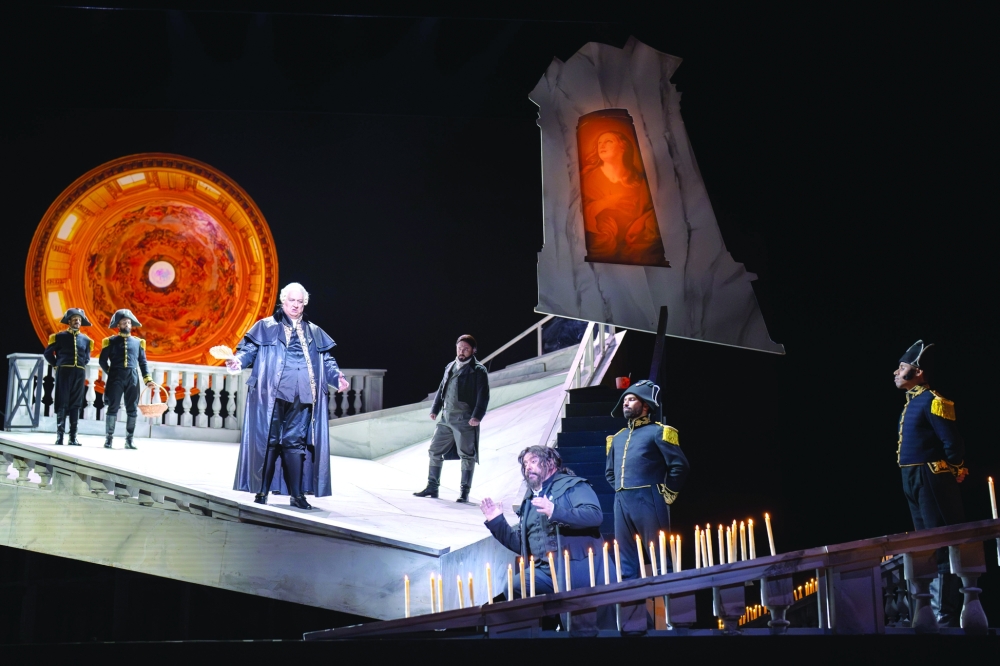
Eyvazov's stunning interpretation was beautifully poised, broad and rich, above some challenging string solos and a poignant clarinet countermelody from Budagov Vali. The lyrical tenderness of the final duet, ‘Amaro sol per te m’era il morire’ (only for you did death taste bitter for me) surpassed the pathos of Act 1. All was shattered by forceful triumphant brass scoring as Tosca hurled herself from the parapet of the Castel Sant’Angelo, receiving tears, gasps and unanimous accolades for yet another ROHM success from the audience!
Photos by Khalid Al Busaidi
Oman Observer is now on the WhatsApp channel. Click here