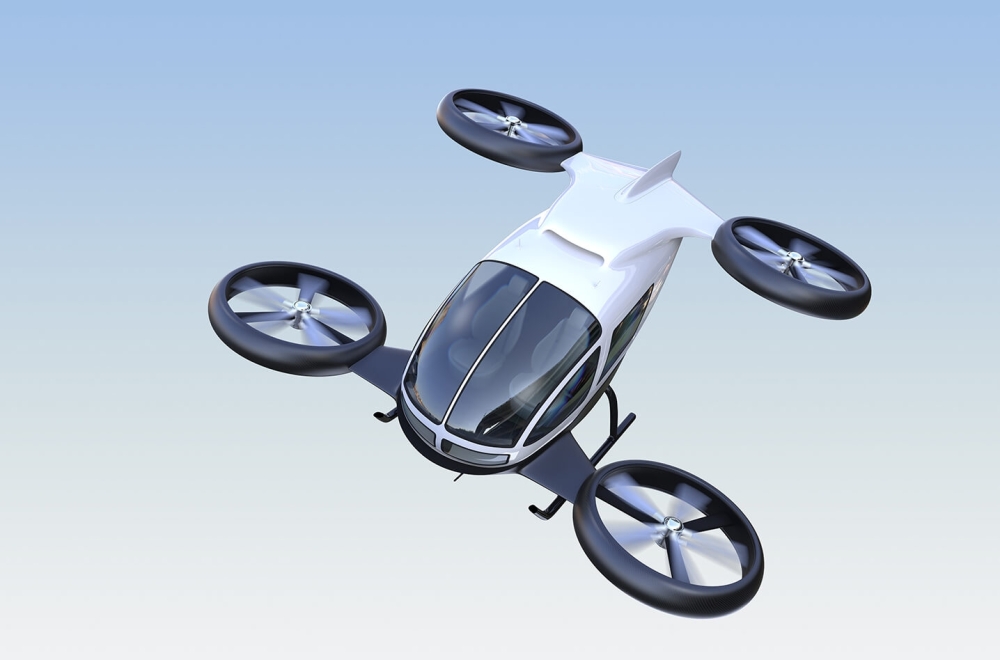





MUSCAT - The National Aviation Strategy is aiming at integrating the Advanced Air Mobility (AAM) Programme, incorporating advanced air transport technologies, including drones, in a safe and economically viable manner.
Speaking to the Observer, Hamed al Brashdi, Director-General of Strategic Planning at CAA, said, “The aviation strategy includes three initiatives for advanced air mobility. One initiative focuses on setting regulations, the second involves sandboxing - a controlled area for operations and trials. The third initiative is about the UTM, which stands for creating a digital, collaborative ecosystem designed to safely manage unmanned aircraft operations, primarily at low altitudes.”
The study on developing the masterplan for the AAM is being handled by the Ministry of Transport, Communications and Information Technology (MoTCIT) in collaboration with the Civil Aviation Authority. “They are currently analysing the tenders to choose consultants who will work under the national programme for aviation AAM, helping us select the companies and operators eligible for the sandbox."
MoTCIT recently opened the financial bid for the consultancy study to develop the national Advanced Air Mobility (AAM) Master Plan.
An AAM (Advanced Air Mobility) sandbox is a controlled, regulatory-friendly environment designed to test and certify eVTOL aircraft and autonomous flight technologies. The CAA is currently preparing the regulations specific to AAM for the sandbox.
Regarding the possibility of seeing actual air taxi operations in the Sultanate of Oman, Al Brashdi said, “We cannot provide a timeframe because countries are currently focusing on trials, while authorities are working on supporting it with appropriate regulations. Hopefully, we are planning a sandbox trial for this year.” The AAM operations will not impact existing aircraft movements, as they will be operated in a separate zone.
“The companies are currently working on developing prototypes, which could be 18-seaters or even four-seaters, but they are still in the experimental stage. Many Omani SMEs are showing interest in the project, particularly in unmanned aircraft that can be used for cargo or small shipments.”
Meanwhile, Fahad al Riyami of AeroVecto Aviation Services, one of the Omani companies actively involved in the project, mentioned that his company is working on a hybrid electric aircraft (eVTOL) capable of carrying around 18 passengers with an aisle. They are also forming partnerships to design and plan a network of vertiports and air mobility infrastructure.

Oman Observer is now on the WhatsApp channel. Click here