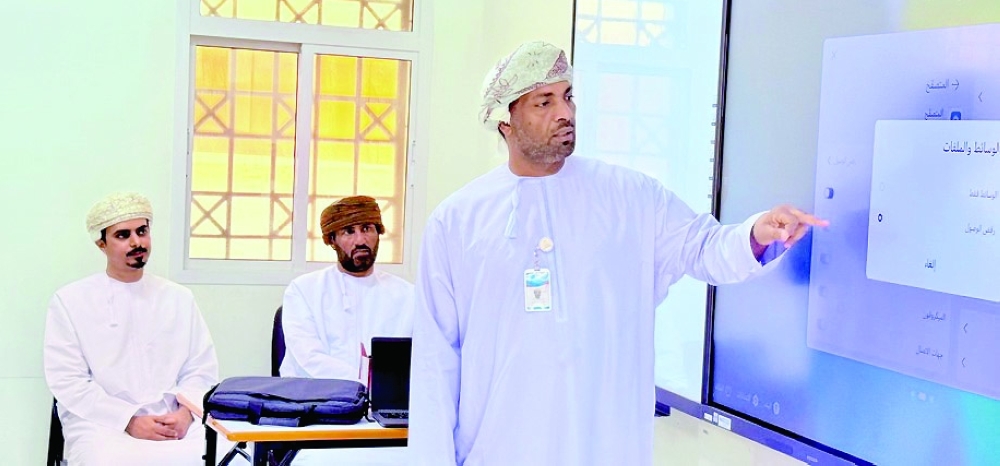





MUSCAT: Oman is steadily advancing a comprehensive digital transformation of its education sector, embedding e-learning into national development strategies such as Oman Vision 2040.
While earlier efforts introduced technology through limited initiatives and pilot projects, challenges such as uneven infrastructure and varying digital competencies among teachers and students highlighted the need for a more sustainable and system-wide approach. Today, Oman’s digital education drive is built on an integrated framework designed to modernise learning environments and enhance educational outcomes.
At the core of this transformation is the expansion of digital infrastructure. The government, in partnership with the private sector, is extending fibre optic networks and 5G connectivity to ensure high-speed Internet access for schools. Classrooms, particularly at the primary level, are being equipped with interactive screens, and Internet speeds have been upgraded to reach up to 1 gigabit, creating a more dynamic and connected learning space.
The Ministry of Education, in cooperation with BP Oman, has launched a major project to digitise the Omani curriculum for Grades 1–12. Textbooks are being transformed into interactive digital content that supports self-directed and collaborative learning while catering to students’ diverse abilities. QR codes in textbooks now link learners directly to updated digital resources, interactive books and educational videos available through the Educational Portal.
Teachers are undergoing training in advanced digital skills to enable them to manage digital classrooms effectively, design innovative content, and foster 21st-century skills among students. In parallel, the Ministry has introduced guidelines on the ethical and effective use of artificial intelligence in education, encouraging data-driven decision-making, personalised learning experiences, and timely feedback.
A major milestone in this journey is the ‘Noor Educational Platform,’ an integrated digital environment for managing teaching and learning. The platform connects curriculum content with learning outcomes and offers tools such as electronic lesson planning, vocabulary banks, and digital repositories.
During the first and second phases of implementation (2024-2025), the system was rolled out in 578 schools, achieving 96 per cent teacher access and 65 per cent student access. The third phase (2025-2026) is now expanding to 730 schools across 11 educational governorates, with the ultimate goal of full nationwide coverage.
More than 1,100 digital resources — including e-books, interactive activities, and videos — have already been uploaded, produced collaboratively by central ministry teams and local educational directorates.
These efforts reflect Oman’s strategic commitment to building a smart, inclusive, and future-focused education system that supports a competitive, knowledge-based economy.
Schools are increasingly moving from traditional, teacher-centred methods to more interactive and student-driven models that encourage critical thinking, creativity, and problem solving. Digital tools are enabling continuous assessment, real-time feedback, and closer communication between schools and families, strengthening the overall learning ecosystem and ensuring that students remain engaged both inside and outside the classroom.
As global education systems evolve rapidly, Oman’s structured and phased approach to digital transformation positions the Sultanate as a regional model in aligning technology with long-term national development goals. By combining infrastructure investment, curriculum innovation, teacher empowerment, and smart governance, the country is laying the foundation for a resilient education system capable of adapting to future challenges while nurturing a digitally fluent generation ready to lead in a knowledge-based world.
Oman Observer is now on the WhatsApp channel. Click here