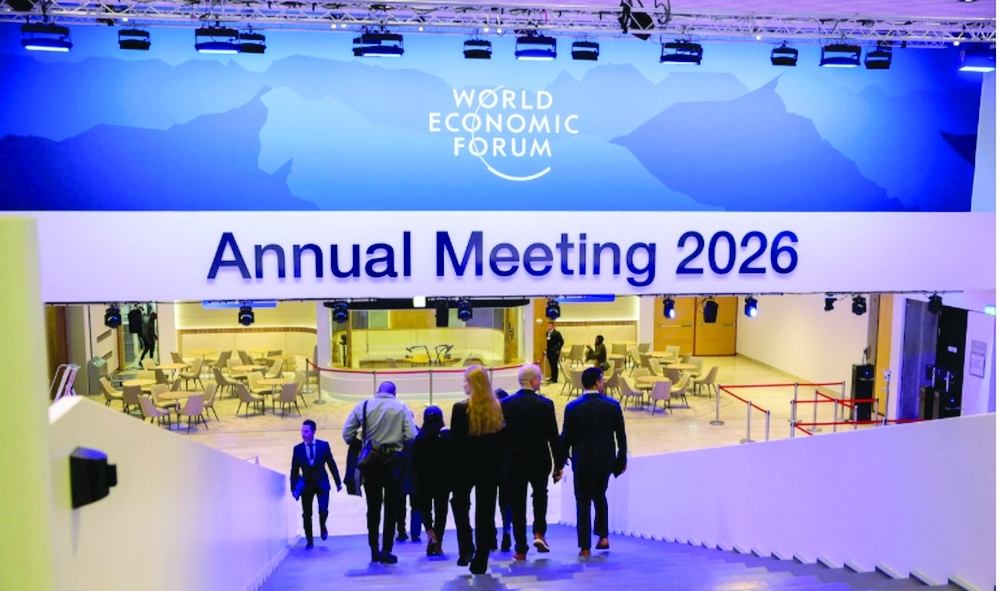






At the World Economic Forum’s annual gathering in Davos this month, the global elite witnessed firsthand what some have called US President Donald Trump’s “neo-royalist” style of government. But the week offered more than an over-the-top spectacle (more Game of Thrones than Versailles). It also revealed deeper, structural changes that will shape political and business leaders’ decision-making for a long time to come.
Although the crisis over Trump’s demand that Denmark hand over Greenland to the United States appears to have been defused for now, the idea of a united West has been dealt a fatal blow. Even if Trump keeps his promise to refrain from using force against a Nato ally, his (and all his advisers’) boorish behaviour in the run-up to Davos and at the conference has raised lasting doubts about America’s reliability, even in the minds of some of the most committed Atlanticists.
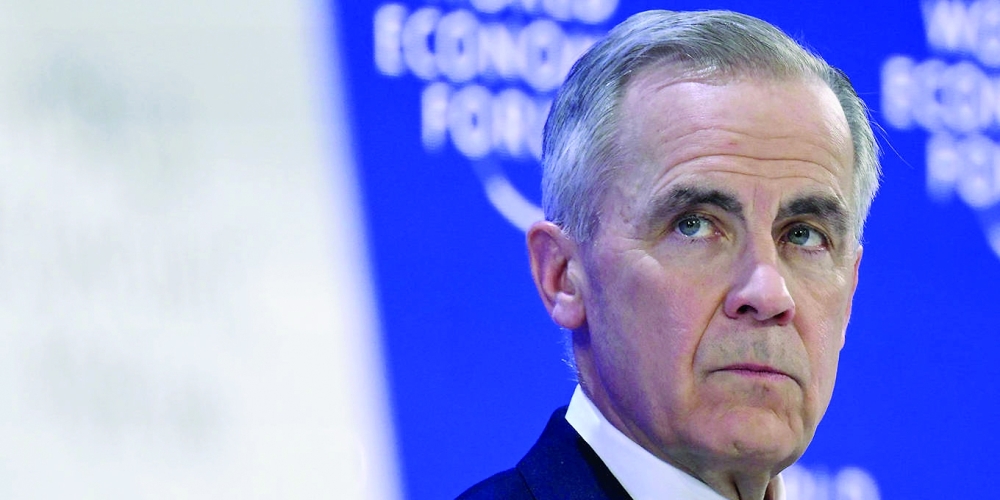
These doubts formed the essence of Canadian Prime Minister Mark Carney’s now-famous speech, in which he spoke of a “rupture in the world order.” The same sentiment also showed up in my own organisation’s latest poll, which finds that a mere 16 per cent of Europeans see America as an ally, whereas almost twice as many in countries such as France, Germany, and Spain see it as a rival or even an enemy.
Equally important, as one European leader put it to me in private, the lurching unpredictability of US foreign policy under Trump reflects American weakness rather than strength. Again, our polling bears this out. One year into his second term, Trump’s greatest achievement has been to make China great again. Around the world, respondents expect China to become the world’s biggest power, and they predict that their own countries will develop closer links with it rather than with the United States.
What lessons should Europeans draw from this moment? The first takeaway concerns the exercise of power. The Greenland resolution that Trump announced on Truth Social on January 21 appears to have been the product of tireless diplomacy by Nato Secretary-General Mark Rutte, Finnish President Alexander Stubb, and Norwegian Prime Minister Jonas Gahr Støre. But more importantly, these “Trump whisperers” succeeded because Europe had shown unusual resolve in drawing red lines and signalling its willingness to defend them.
To be sure, European leaders had to manage the usual divisions within their own ranks (for example, Poland’s right-wing nationalist president, Karol Nawrocki, dismissed the Greenland crisis as a bilateral problem between Denmark and the US). But unlike Europe’s feeble and ultimately unsuccessful response to Trump’s “Liberation Day” tariffs, the assertion of European sovereignty in recent weeks has been forceful and credible. It included troop deployments to the Arctic and a threat to introduce €93 billion ($110 billion) worth of retaliatory tariffs and to use the EU’s so-called “trade bazooka.”
This response was enough to spook US markets, Congress, and the American public. Trump was forced to change course, just as he did when China called his bluff on tariffs last year. Europeans showed not only that they had “cards” and were willing to play them, but also that they were prepared to engage in Trumpian power politics on their own terms. The question now is whether Europeans will accelerate efforts to insulate themselves from America’s volatile politics and identify the cards they can play in the next transatlantic contretemps.
That brings us to a second lesson: now is the time to prepare for a post-Western world by building wider relationships beyond the Atlantic. Carney prepared the ground for this by conceding that much of the world has always seen the liberal international order as hypocritical. And in their speeches, French President Emmanuel Macron, European Commission President Ursula von der Leyen, and German Chancellor Friedrich Merz all made a point of reaching out to the rest of the world.
Such overtures are prudent. Davos attendees from India, Africa, and South America told me that they are eager to find cooperative ways of resisting lawlessness and unfettered power politics. But, again, there are questions about whether Europeans will rise to the occasion. After all, messy intra-European politics remain a persistent obstacle. While European leaders were offering paeans to multilateralism in Davos, the European Parliament was busy trying to block implementation of a landmark EU-Mercosur trade deal that had been signed to much fanfare just the previous week. Equally, European leaders have long struggled to find the right tone when engaging with countries outside the West, as evidenced by their failure to create a global alliance in support of Ukraine. Finally, Europeans should remember that although this moment may feel unprecedented, it really is not. One of the most interesting discussions I attended in Davos focused on the lessons from the 1920s. That decade, too, was characterised by a discrepancy between technological optimism (following the advent of electrification and mass production) and geopolitical crises.
Project Syndicate, 2026
Oman Observer is now on the WhatsApp channel. Click here