




MUSCAT: Oman’s Mohammed Al Barwani Group is moving beyond satellite ground-station services to owning dedicated satellite capacity, its Chief Executive Officer said, framing the step as a strategic bet on data connectivity and greater control over critical communications infrastructure.
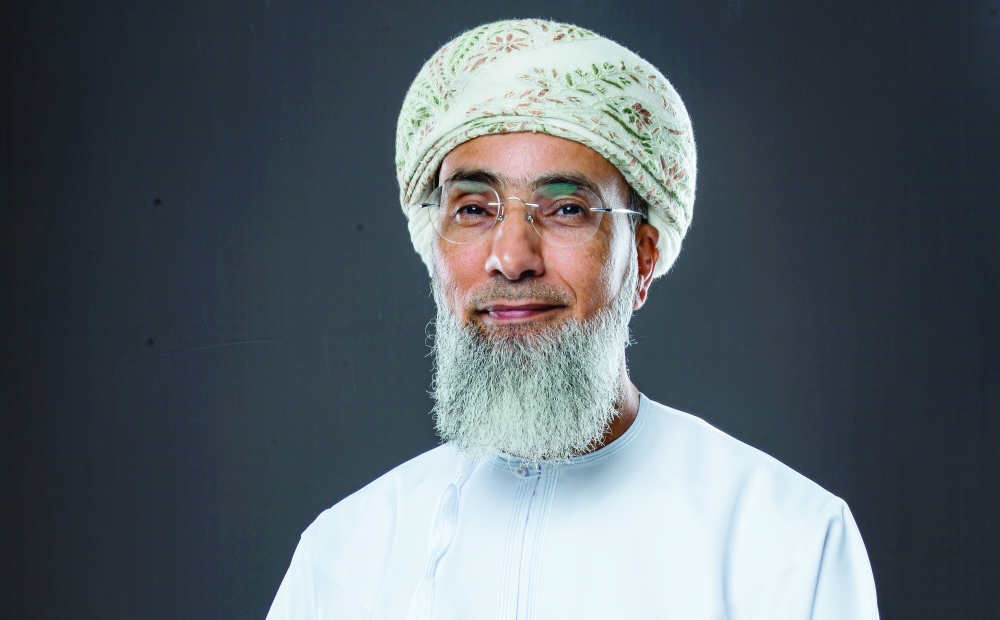
“We started with the idea of ground services”, Said bin Saleh al Jabri, CEO of Mohammed Al Barwani LLC, said. “But when we went deeper, we asked: why stop there? Why not own the satellite itself?”.
His remarks follow a January 26 announcement that MB Group has signed an agreement with San Francisco-based Astranis to deliver the Sultanate of Oman’s first dedicated MicroGEO communications satellite, contracted under Astranis’ Block 3 launch with SpaceX later in 2026. Services are expected to commence by early 2027, according to the companies.
Al Jabri said the project reflects a wider shift for a conglomerate best known in Oman for oil and gas. The group has expanded into other sectors in recent years and has now adjusted its strategy towards technology, he said, arguing that future growth will be driven by connectivity and the use of data across industries.
The entry path began with ground infrastructure. Al Jabri said MB Group studied options from last year, drawing on exposure to space-related capabilities through other providers, particularly in military and security applications. That led to a focus on “ground service”, including acquiring a stake in a business operating in that segment.
But, he said, the group concluded that owning the space asset itself would be a faster and more decisive route to building a long-term position in satellite communications.
The move carries risk, he acknowledged. “Many specialists... told us we were taking a big risk”, Al Jabri said. Yet he argued the market opportunity is growing and that the investment is designed as a platform — not a one-off purchase.
On the economics, Al Jabri said the satellite alone represents a significant investment, excluding related spending such as ground infrastructure and other supporting systems. He added that MB Group expects its space investments to exceed $200 million within a few years, aligning with the programme figure cited in the announcement, which covers the dedicated satellite, ground stations and additional digital infrastructure.
While the satellite is dedicated to Oman, Al Jabri suggested the business model will be regional. Oman, he indicated, will not necessarily consume the full capacity, with the remainder marketed to customers across nearby markets. He said the group’s initial commercial focus is Oman, Iraq and Saudi Arabia.
Astranis positions MicroGEO satellites as smaller, high-orbit spacecraft designed to deliver dedicated broadband capacity to a single customer rather than shared throughput across multiple users. The MB Group–Astranis agreement describes the arrangement as providing Oman with a dedicated network model and full control over its digital infrastructure.
Al Jabri also linked full ownership to operational flexibility, particularly for critical users. In shared-capacity models, he said, customers may only access a portion of capacity alongside other parties. “Here... if we own the entire satellite, it becomes easier to allocate a specific portion, including for security use, without any third party entering the picture”, he said.
He said the group expects the rocket launch before the end of 2026, with the satellite targeted to be operational in the first quarter of 2027 following commissioning in orbit. He also signalled follow-on missions — referring to second and third satellites — as the group builds experience in the sector.
“We are still learning”, Al Jabri said, adding that more details would be shared closer to launch and operational readiness.
Oman Observer is now on the WhatsApp channel. Click here