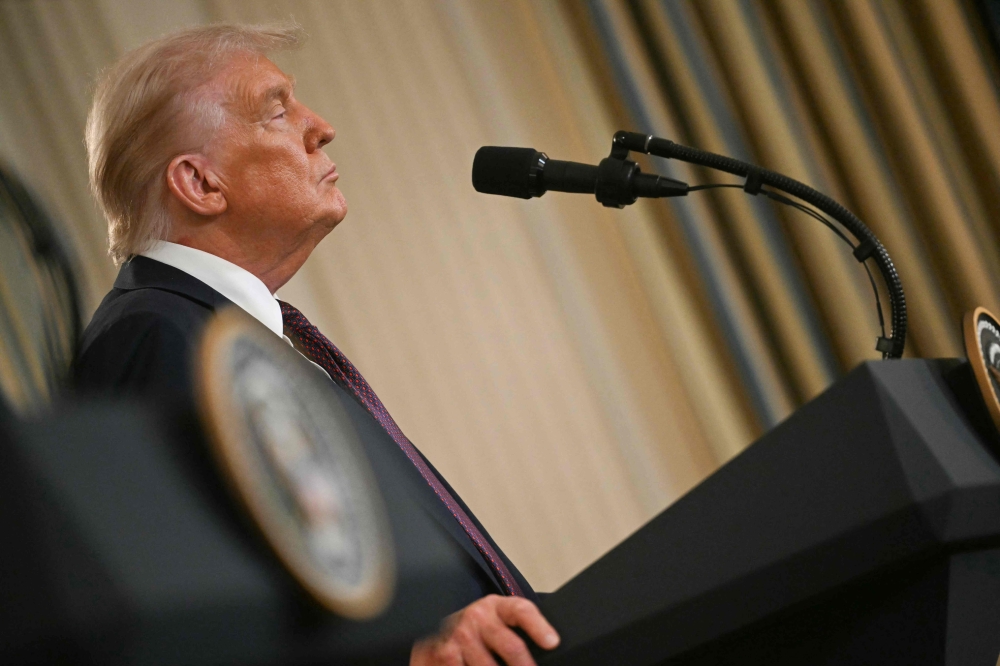
Donald Trump’s creation of a so-called Board of Peace has been framed by the White House as a new mechanism to address global conflicts, beginning with Gaza and potentially extending far beyond. “Once this board is completely formed, we can do pretty much whatever we want to do. And we’ll do it in conjunction with the United Nations,” Trump said, also adding that the UN’s potential wasn’t being fully utilised. Yet the concept, the composition of the board and the reactions it has provoked reveal something far more troubling: it could be a bid to sideline the established international system and reshape global governance in ways that favour US strategic priorities and political allies.
At first glance, the Board of Peace appears to be another multilateral effort, a new United Nations-style body designed to mediate conflict, stabilise war-torn regions and promote reconstruction. It was launched this month at the World Economic Forum in Davos with a charter signing and a handful of member states, and introduced as an effort for extending the fragile October 2025 Gaza ceasefire and supporting reconstruction efforts.
But beneath the official rhetoric lies a less reassuring reality. The initiative was described by local media as raising concern because it could rival or sidestep the UN Security Council’s traditional role in world affairs, a deeply problematic development for a global system already under strain. Rather than strengthening existing peacekeeping and humanitarian frameworks, the Board of Peace risks fragmenting them and relegating established institutions like the United Nations to the sidelines.
That concern is not abstract. The UN remains the core international organisation tasked with maintaining international peace and security, conflict resolution, climate action and humanitarian protection. Undermining its role undermines the norms and mechanisms that have governed international relations since World War II. If powerful nations are free to create parallel bodies to “do pretty much whatever we want,” as Trump put it, then global governance shifts from a rules-based order to one shaped by narrow power interests and transactional deals.
A board led by an outgoing US president whose foreign policy record is defined by transactional alliances and prioritising domestic interests is unlikely to prioritise the perspectives of populations most affected by conflicts that the board claims to address. Concerns about the board’s composition are well-founded. The executive leadership includes figures such as Jared Kushner, Trump’s son-in-law and senior adviser, and Marco Rubio, the US Secretary of State with strong pro-Israeli credentials. This alignment raises legitimate questions about neutrality, independence and whose interests are truly being advanced.
That scrutiny is shown by the involvement of Israeli Prime Minister Benjamin Netanyahu, who has agreed to join the board despite leading a government and military campaign that has committed grave human rights violations against Palestinians in Gaza. Netanyahu’s participation in a body claiming to foster “peace” strikes as emblematic of deeper contradictions: a group seemingly created to secure stability and reconstruction includes leaders seen as contributors to ongoing violence and displacement.
It is especially worrying given the circumstances under which the board was conceived. The October 2025 ceasefire in Gaza was supposed to end one of the deadliest chapters in the region’s decades-long conflict. Yet that ceasefire and the board’s first task of supervising reconstruction, rests on a tragic paradox: the United States supplied weapons, money and political backing that enabled that conflict’s scale and duration, and now claims a central role in “resolving” its aftermath. This raises uncomfortable questions about accountability and whether the board’s leadership is positioned to foster genuine peace or to shape post-conflict outcomes in ways that entrench existing power imbalances.
Moreover, reactions from around the world reflect scepticism. Several traditional US allies including France, Sweden and Norway have declined to participate, citing concerns that the board could replace or undercut the UN rather than complement it. European reluctance to join reflects not only doubts about the initiative’s mandate but also anxiety over what it represents politically: a US-centric alternative to international cooperation on peace and security.
Even proponents of the Board of Peace acknowledge its beginnings are tied to Gaza, not a global agenda. But the expansion of its stated scope suggests an ambition not merely to assist with a ceasefire and reconstruction, but to establish a new axis of influence in international affairs. If more world leaders agree to join, the board could undercut the UN’s central role in resolving conflicts, shaping development and coordinating global responses. That would leave space for a divided system in which power replaces principle. History shows that peace is not achieved by the loud proclamations of power, but by sustained multilateral engagement, legal frameworks and trust among diverse stakeholders.
Oman al Yahyai. The writer is a multilingual writer and media professional based in Paris. She specialises in human rights and immigration
Oman Observer is now on the WhatsApp channel. Click here