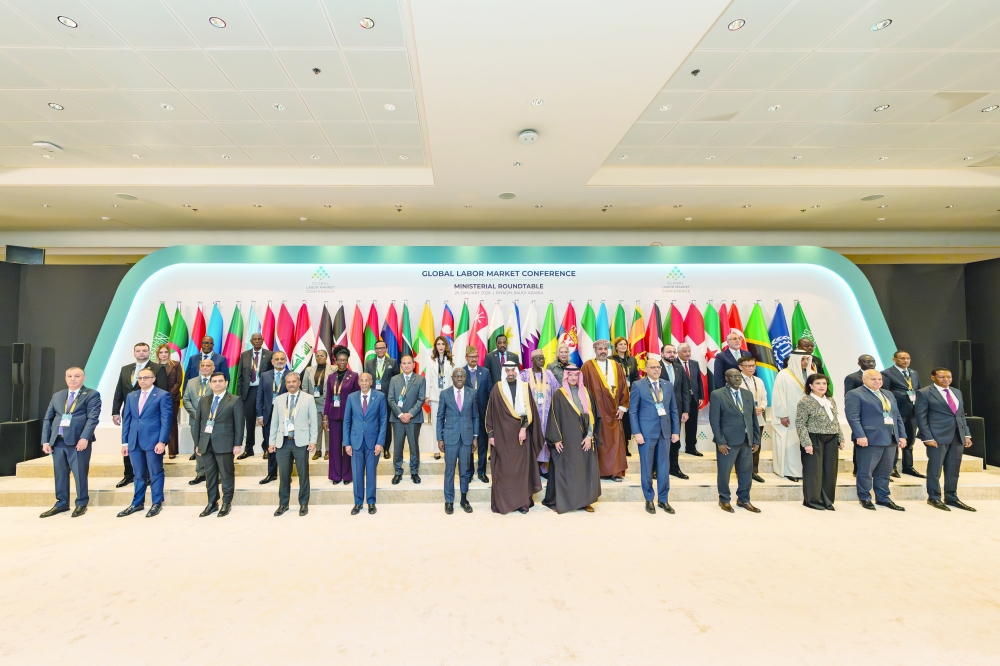





RIYADH: The Global Labour Market Conference (GLMC) kicked off on Monday in Riyadh, Saudi Arabia. The two-day event, themed 'Future in Progress', brings together over 10,000 participants from 100 countries, including more than 40 labour ministers, international organisations, private sector leaders and academics.
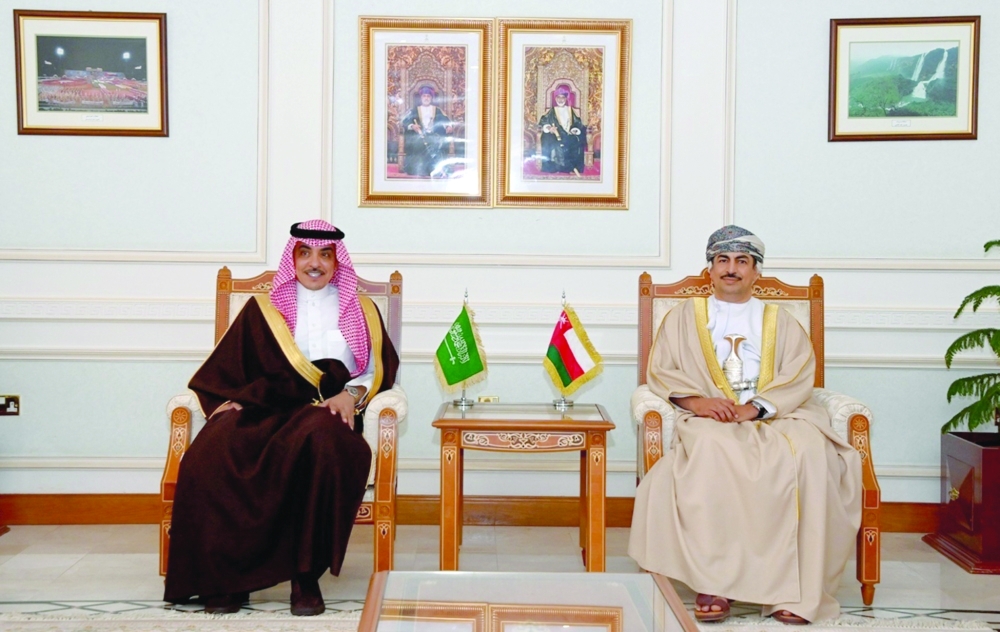
The Sultanate of Oman is represented by a good number of officials, seeking to leverage this platform to learn from global best practices and share its own experiences in promoting decent work and social justice.
According to Nabhan al Battashi, Chairman of the General Federation of Oman Workers (GFOW), Oman's participation in the conference is a significant step towards addressing global labour market challenges and sharing expertise. "Oman's presence at the GLMC underscores its commitment to advancing labour standards and promoting social justice," he told the Observer.
Nabhan emphasised that the labour market conference is a crucial step towards Gulf integration, promoting unified labour market policies tailored to each GCC country's specific needs. "This conference on the labour market is held within the framework of Gulf integration on unified labour market policies, which naturally take into account the specific conditions of each GCC country," he said.
He highlighted the importance of sharing experiences and expertise among GCC states. "It is extremely important to convene at such an event in order to gain insight into different experiences, exchange expertise, and become familiar with regulatory systems applied in the Kingdom of Saudi Arabia and across other GCC states," Nabhan added.
He emphasised Oman's focus on achieving Omanisation objectives. "In the Sultanate of Oman, this file has received considerable attention, with numerous initiatives underway to achieve its objectives in the near future. Likewise, what we have observed in Saudi Arabia reflects a highly successful and closely aligned approach to handling the job-seekers' file," Nabhan added.
The conference focuses on six key pillars: trade transformations and employment, informal economies, the evolving global skills landscape, AI's impact on jobs, building resilient labour markets and enhancing job quality with a focus on youth. These themes are crucial in shaping the future of work and addressing shared labour market challenges.
In the opening remarks, Saudi Minister of Human Resources and Social Development Ahmed al Rajhi emphasised Saudi Arabia's commitment to advancing global dialogue on the future of work and addressing shared labour market challenges. The event featured over 200 speakers across sessions, ministerial meetings, agreement signings, and the graduation of the first Labour Market Academy cohort.
The GLMC provided a unique opportunity for Oman to engage with global stakeholders, share its experiences and learn from best practices. Oman's participation is expected to enhance its labour market reforms and promote decent work and social justice.
The conference is a significant step towards promoting global cooperation and addressing labour market challenges. The outcomes of the GLMC are expected to shape the future of work and promote sustainable development.
Ahmed al Khateeb, Minister of Tourism of the Kingdom of Saudi Arabia, highlighted tourism as one of the world’s largest employment-generating sectors, accounting for approximately 10 per cent of global GDP and supporting around 370 million jobs worldwide.
He noted that women hold approximately 45 per cent of tourism jobs globally, while youth account for around 80 per cent, underscoring the sector’s importance for inclusive participation.
Dr Mamta Murthi, Vice-President for the People at the World Bank, noted that labour market challenges and opportunities vary significantly across regions. In particular, she highlighted that Sub-Saharan Africa and South Asia have strong potential to drive future growth if their young populations are provided with relevant and market-aligned skills.
Oman Observer is now on the WhatsApp channel. Click here