



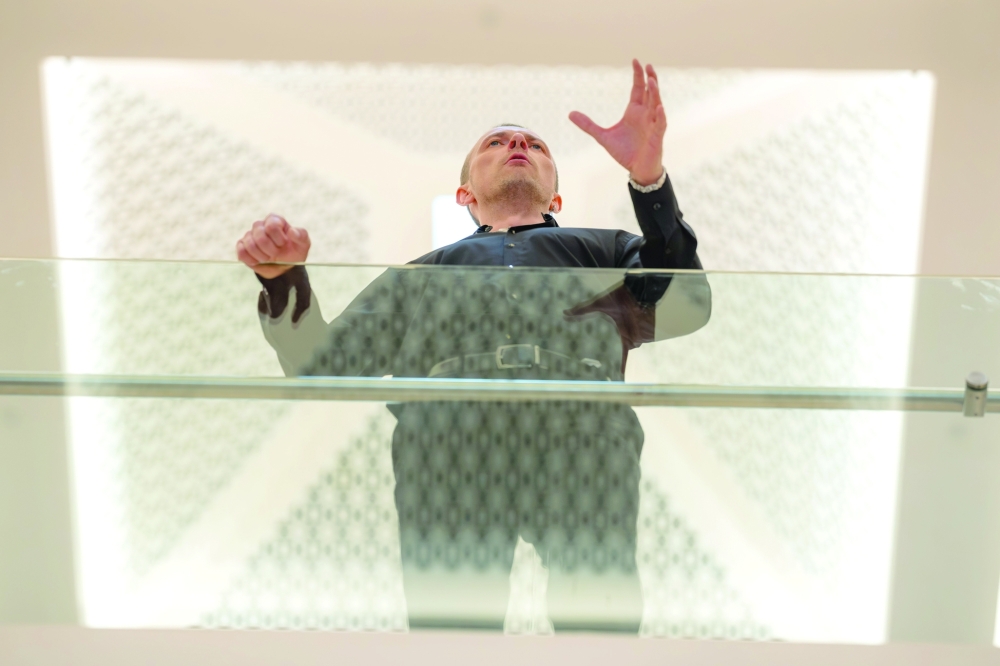


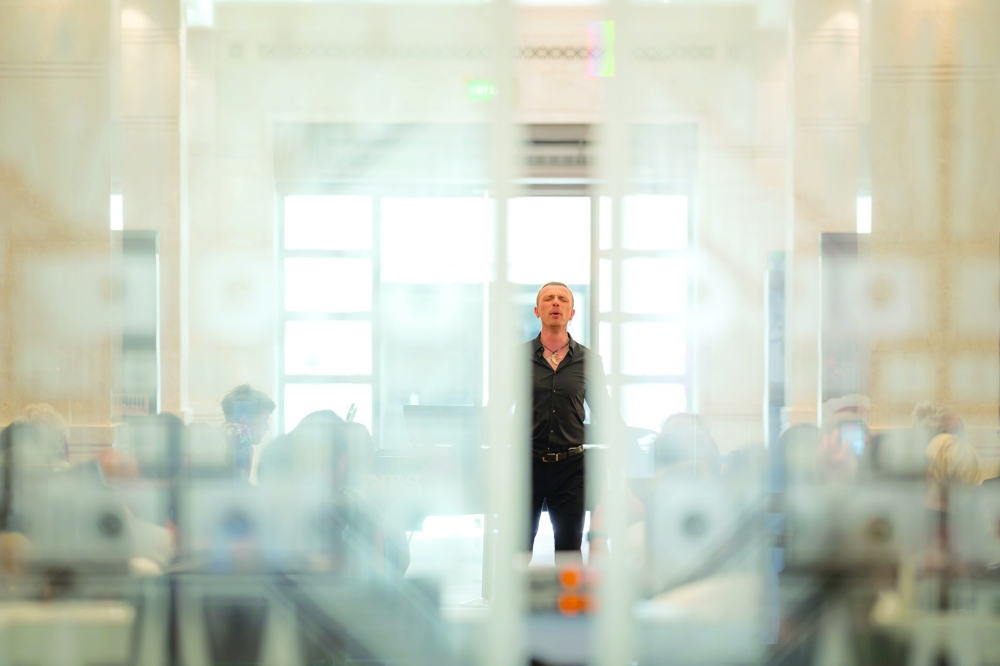


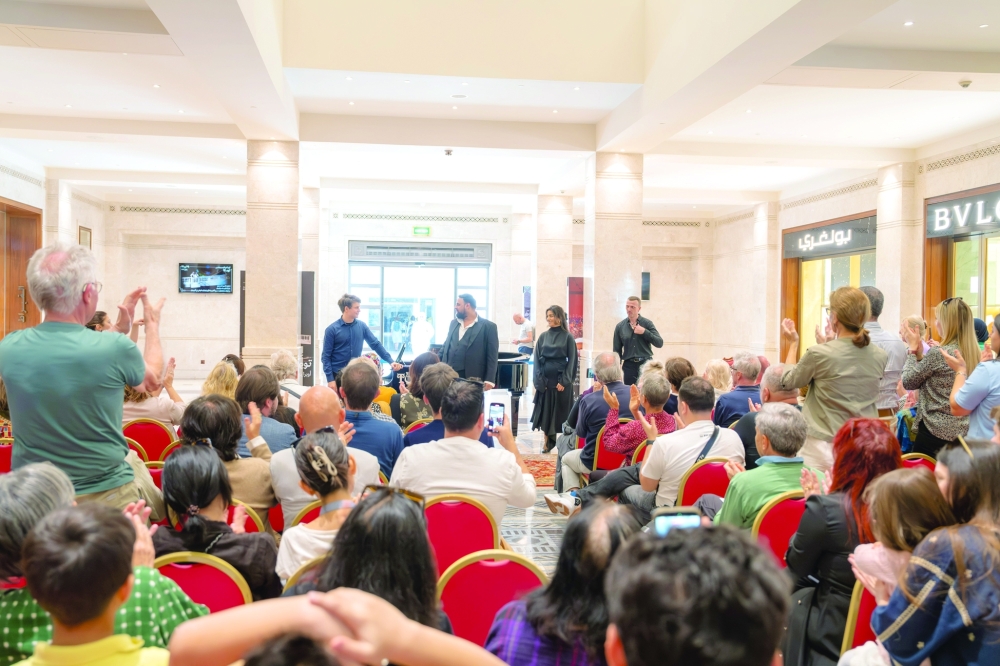





It’s that time of year again, when members of the public are treated by ROHM to an hors d'oeuvre in the Opera Galleria's large foyer. On Saturday lunchtime the courtyard was transformed into an intimate chamber opera hall with red velvet seats and a grand piano. Three understudies from the Royal Opera House Muscat's forthcoming production of Giacomo Puccini’s “Tosca” presented a selection of arias and ensembles free of charge to entice the audience to see the full-blown performance on Thursday and Saturday evenings next weekend. Some would-be-shoppers entered the mall and met the impromptu performance going on with some surprise and confusion, but after a little disturbance all settled into enjoying the unexpected promotion.
Puccini’s “Tosca” is one of the darkest operas in the repertoire, so no “Carmen” gypsies or “Magic Flute” animals here. It was going to be a serious affair in the bright light of a January lunchtime. The young Russian pianist, Daniil Kirilov sat at the Concert Grand and opened with a lush romantic introduction to the ‘starter course’, Act 1 Italian Tenor, Davide Battianello made an immediate impression with his interpretation as Mario Cavaradossi in the extremely challenging, “Recondita Armonia” (Hidden Harmony). His smiling lyrical delivery belied the sustained high tessitura of this role which resonated powerfully in the acoustics of the Galleria.
Off-stage, Floria Tosca was heard and there followed the agitated dialogue, “Mario! Mario! ....Qual occhio al mondo” (what eyes in the world could be more beautiful) from Azerbaijani dramatic soprano, Affag Abassova. Tosca’s haughty, suspicious character was portrayed superbly in this highly theatrical role, melting into Ms Abassova’s gorgeous lush vocal quality in, “Non la sospiri la nostalgic casetta” (Do you not long for our little house).
In the Finale to Act 1 the strong voice of Belarusian Baritone, Anatoly Silvko was heard from the balcony behind declaiming “Tre sbirre una carrozza... Presto!” (Three men and a carriage. Quick — follow!) as the deceitful conniving, Baron Scarpia, Chief of Police. Members of the chorus from the Azerbaijan State Academic Opera made a powerful commentary from the wings as the tyrannical, lustful Baron arrived on stage to conclude his gloating intentions for Tosca.
The ‘side course’ in the menu comprised “Se la giurata fede debo tradir” duet from Act 2 between Tosca and Scarpia — while Cavaradossi was carted off to jail. It is an angry exchange between them with Tosca pleading then bargaining to spare Cavaradossi’s life. Guards throw a dishevelled, tortured Cavaradossi onto the stage floor as a prelude to the ‘mains course’ at the Castel Sant'Angelo — and the two most famous arias from “Tosca”.

Ms Abassova portrayed the heartbroken Tosca in the prayerful “Vissi d’Arte, vissi d’Amore” (I lived for Art, I lived for Love) with a dramatic intensity sustained throughout that held the audience captivated. A short piano interlude brought Davide Battianello slowly back to perform “E lucevan le stelle” (And the stars were shining). His interpretation was beautifully poised with subtle placing, sometimes in effective unison with the piano scoring, doubling the melody and providing poignancy to the inevitable tragic conclusion.
The handsome quartet, youthful and dressed in concert black lined up for well deserved applause and cheers from the assembled throng. In what could be termed the ‘sweet course’ to conclude the gastronomic analogy came the refreshing encores. The role of Scarpia provided a limited monochrome vision of Anatoly Silvko’s extreme talent and so he treated listeners to the “Cavatina” from Rachmaninov’s 1892 romantic Opera “Aleko”, composed when Rachmaninov was only nineteen! It was a true Russian Bass-baritone aria, allowing the attractive young baritone's emotional expressiveness and acting ability to shine. The solo demonstrated Silvko’s considerable breath capacity as Aleko remembers tenderly his early days with his young wife, yearning, then descending into grief.
That could only be followed by the perennial favourite “Brindisi” Drinking Song from Verdi’s “La Traviata”. It was amusing, jovial and flirtatious with some impressively high improvised harmony from Ms Abassova — and what an excellent note to end on!
Photo credit: Khalid Al Busaidi
Oman Observer is now on the WhatsApp channel. Click here


