In recent weeks, Americans have watched a familiar federal acronym take on a darker meaning in public life: ICE. Officially, US Immigration and Customs Enforcement is a federal law enforcement agency inside the Department of Homeland Security, created in 2003 after the Homeland Security Act reorganised immigration and customs enforcement functions. Its core enforcement arm, Enforcement and Removal Operations, carries out arrests, detention and deportations, powers that, in practice, can place extraordinary coercive force in everyday streets, workplaces and homes.
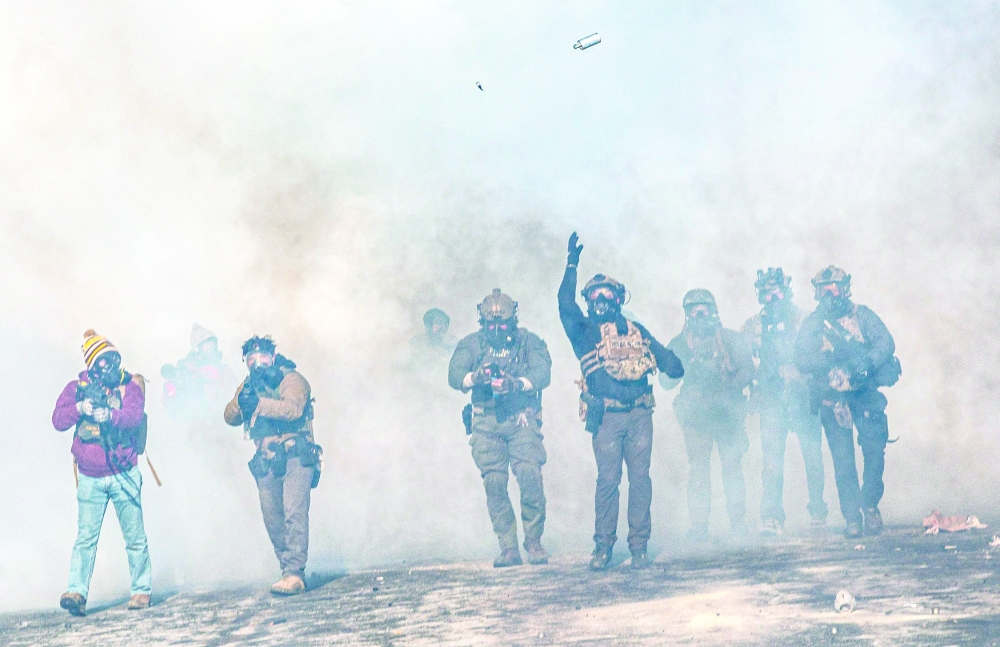
What many communities are describing now, however, is not simply “enforcement.” It is a pattern of raids, aggressive stops and heavy-handed operations that increasingly resemble a domestic dragnet. And the numbers show how quickly the machinery has expanded in the past year.
Independent detention monitors report that ICE held 65,735 people in detention as of November 30, 2025, with 73.6 per cent having no criminal convictions. Reuters similarly reported that ICE was detaining roughly 69,000 people as of January 7, 2026, amid a broader crackdown and swelling budgets. Another major US outlet reported internal ICE statistics showing about 73,000 people in custody in mid-January 2026, described as the highest level recorded by the agency. These figures are not abstractions. They represent families, long-term residents, asylum-seekers and workers, many held in a detention system increasingly criticised for overcrowding and weak oversight.
The consequences are visible in both custody and community encounters. Reuters reported that 2025 saw a record 30 deaths in ICE custody, the highest in two decades, and that four additional deaths occurred in the first days of 2026. Separate reporting has intensified scrutiny over use of force and medical neglect inside facilities, including contested accounts surrounding deaths that investigators may classify as homicide. But the most alarming turn is not only what happens behind detention walls; it’s what appears to be happening on the street. Multiple investigations and lawsuits describe incidents where US citizens and lawful permanent residents were detained, manhandled or subjected to aggressive tactics. A recent lawsuit filed by a green card holder in Massachusetts alleges she and her two US citizen children were “illegally and forcefully detained” and hospitalised after a “violent” encounter with ICE. ProPublica has documented a broader pattern of immigration agents arresting Americans, including many cases that later collapsed or were dismissed, raising questions about standards, accountability and escalation. A bipartisan set of lawmakers has also pointed to instances in which citizens were arrested, sometimes with “violent physical force,” and in some cases held in immigration detention facilities.
Taken together, these accounts reinforce what targeted communities have said for years: people are being profiled and swept up based on skin colour, language or accent. A recent report from North Carolina described two US citizen brothers alleging they were racially profiled and assaulted during an ICE encounter. When enforcement becomes indistinguishable from racial sorting, civil liberties are no longer theoretical. They are immediate.
Even more alarming is the emerging reality that citizens who try to protect others or who are simply caught in the path of an ICE operation can end up injured or dead. The killing of Renee Macklin Good, a white woman shot in her car by an ICE officer in Minneapolis on January 7, has become a flashpoint precisely because it punctures the myth that only “non-citizens” are at risk when enforcement becomes militarised. Whatever the final
legal determinations, the social meaning is already stark: when a domestic agency operates with maximum coercive discretion and minimal public visibility, ordinary people can die in moments of chaos, before accountability arrives, if it arrives at all.
This is not merely a US crisis. It is a dangerous precedent for the wider Western political environment, where anti-immigration parties and “border-first” ideologies are increasingly normalised. The United States has long exported security models, from counterterror frameworks to surveillance practices, through alliances, training and political influence. When the US treats mass detention, aggressive street operations, and blurred lines between immigration control and everyday policing as acceptable governance, other countries will feel permitted to follow. The likely targets will be the same everywhere: migrants, refugees and especially people of colour.
If the United States wants to claim leadership on human rights, it cannot build an internal system that looks, to many communities, like a roaming apparatus of fear. The question is no longer whether immigration policy should be “tough” or “lenient.” The question is whether a democracy can tolerate a domestic enforcement regime that appears to punish identity, skin tone, accent, last name, and that increasingly endangers citizens who stand too close.
Oman al Yahyai
The writer is a multilingual writer and media professional based in Paris. She specialises in human rights and immigration
Oman Observer is now on the WhatsApp channel. Click here