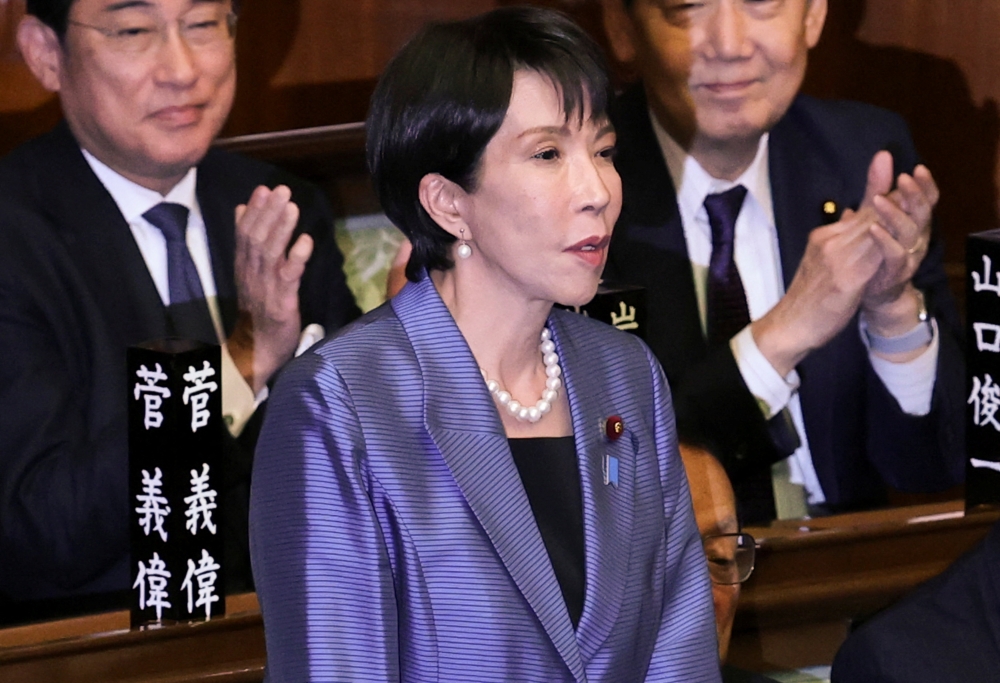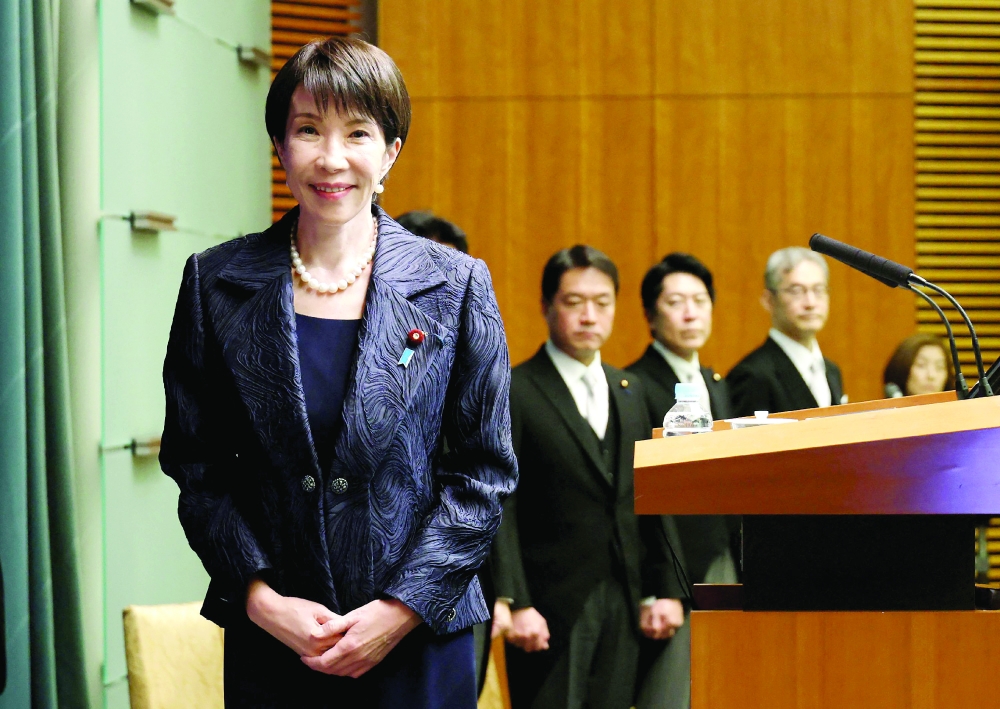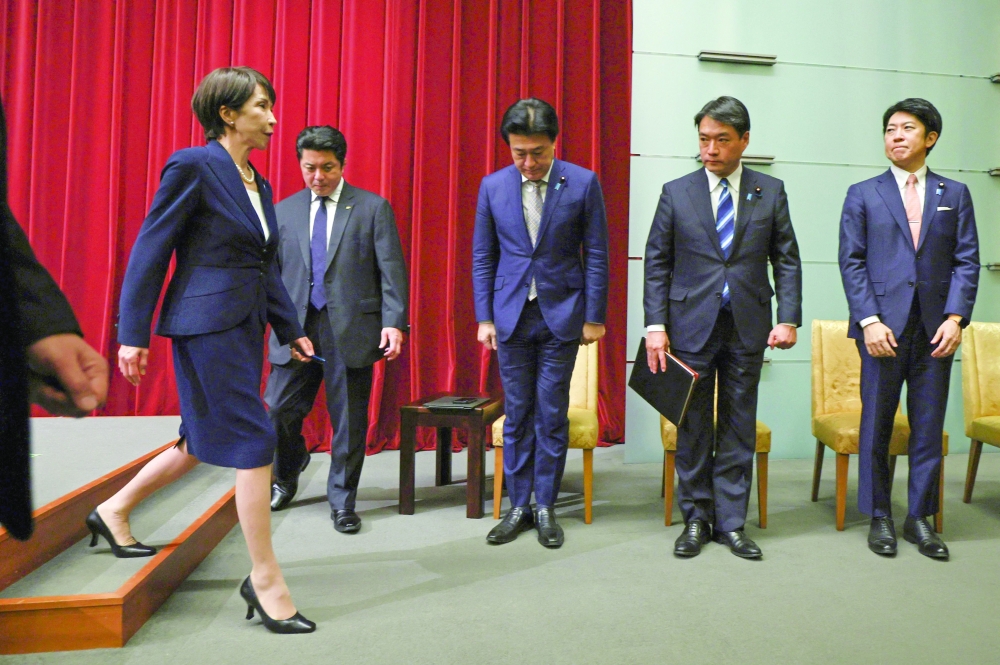





TOKYO: Japanese Prime Minister Sanae Takaichi said on Monday she would dissolve parliament this week ahead of a snap election on February 8, hoping for a stronger mandate to push through her ambitious policy agenda. The country's first woman leader is banking on her high poll numbers to lead the unpopular ruling Liberal Democratic Party (LDP) to victory. "Is Sanae Takaichi fit to be prime minister? I wanted to ask the sovereign people to decide," she told a news conference. "Following the dissolution of the lower house on January 23, the schedule will be set for campaigning to start on January 27 and voting and counting held on February 8."
If elected, Takaichi pledged on Monday to cut a tax on food for a two-year period to "alleviate the burden" on people struggling with inflation.
Takaichi's cabinet approved a record 122.3-trillion-yen ($768 billion) budget for the fiscal year from April 2026, and she has vowed to get parliamentary approval as soon as possible to address rising prices and shore up the world's fourth-largest economy.
"We have a responsibility to overcome the shackles of excessive austerity and take immediate action against the crisis at hand," she told reporters.
The LDP has governed Japan almost uninterrupted for decades, albeit with frequent leader changes. Takaichi was appointed premier in October, and her cabinet is riding high in the polls despite her party's flagging popularity. The ruling bloc — which includes coalition partner Japan Innovation Party (JIP) — has only a slim majority in the powerful lower house of parliament.
This could hamper the passage of her policy agenda, including "proactive" fiscal spending and boosting the defence budget. "If the LDP can get a majority by itself in the lower house, that'll help her pursue policies" without concessions to other parties, said Sadafumi Kawato, professor emeritus at the University of Tokyo. But opposition parties say Takaichi's plan to dissolve the lower house risks delaying its passage, with Jun Azumi of the main opposition Constitutional Democratic Party of Japan (CDP) saying it would "sacrifice livelihoods". Masaaki Tokuno, a 64-year-old bicycle lot manager, said that "carrying out policies to tackle inflation should be first, before holding the election".
A snap election may also help Takaichi break the deadlock in a spat with China, increasing her leverage by showing she has strong support at home, analysts said. China recently announced a broad ban on exports to Japan of "dual-use" goods with potential military applications and has reportedly been choking off exports of rare-earth products crucial for making everything from electric cars to missiles.
Takaichi denounced on Monday "economic pressure tactics" impacting Japan, without explicitly referring to China. These are "aimed at forcing other nations to submit to demands, by controlling upstream materials in supply chains that the world relies on", she said. Mikitaka Masuyama, dean of the National Graduate Institute for Policy Studies, warned that if she wins, China could further intensify pressure on Takaichi. Beijing may want to send voters "the message that supporting a hawkish leader could lead to pain" through more trade controls or other means.
According to a poll by the Asahi newspaper, 60 percent of people surveyed said they were worried about the impact of a worsening Japan-China relationship on the economy. Under Takaichi's predecessor, Shigeru Ishiba, the LDP and its former long-term coalition partner Komeito lost its majority in both chambers in the past two national elections — most recently in the July upper house election. The July election led Ishiba to step down, while smaller parties gained support — including the populist Sanseito, which called immigration a "silent invasion" despite foreign-born residents making up just three percent of the population. Komeito and the leading CDP have agreed to join forces to fight Takaichi, hoping their alliance can draw swing voters. — AFP
Oman Observer is now on the WhatsApp channel. Click here