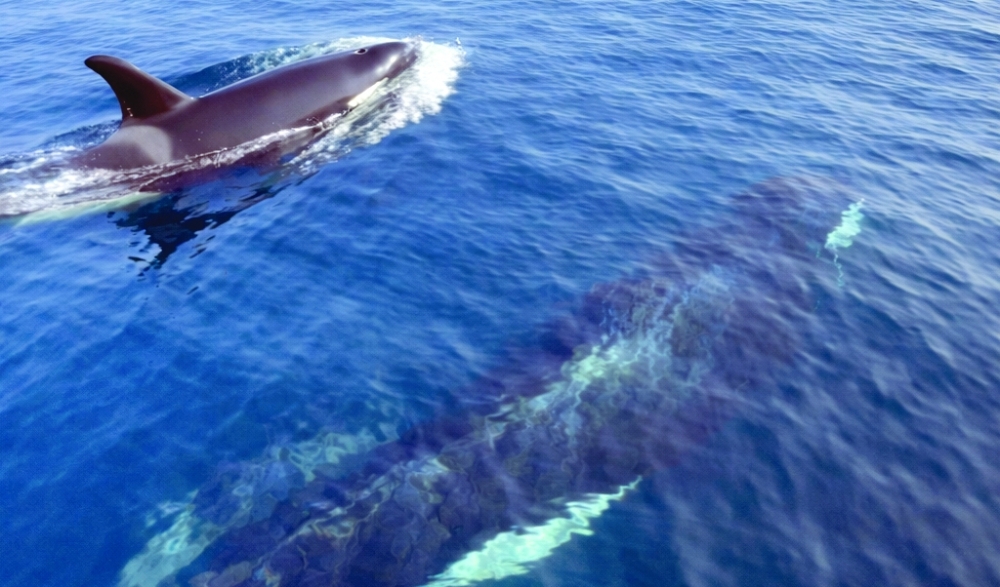





The turquoise waters off the coast of Oman have long been a magnet for those seeking the gentle ballet of dolphins or the silent majesty of humpback whales.
But in recent weeks, a different and more enigmatic visitor has captured the imagination of residents and travellers alike: the orca. Known colloquially as the “killer whale”, these striking black-and-white cetaceans— Orcinus orca — are usually denizens of colder, richer seas, yet this season they have been making high-profile appearances in Omani waters, spawning viral videos and a flood of social media chatter.
On Instagram and Facebook, reels shot near Qantab Beach and Muscat depict pods of orcas breaking the surface, their dorsal fins slicing through the waves. One post with millions of views simple announced "Orca season on Oman’s coasts became the soundtrack to thousands of likes, comments and shares, with hashtags like #Oman #Orca #Whale echoing across the region.
“It’s like seeing something mythic,” a social-media comment on a recent video summed up the collective thrill.
From a scientific perspective, such sightings are unusual but not inexplicable. Orcas are the largest members of the dolphin family and one of the most cosmopolitan marine predators on the planet — found from polar reaches to the equatorial seas.
They are apex predators, meaning nothing naturally preys on them, and they hunt in highly social family groups known as pods.
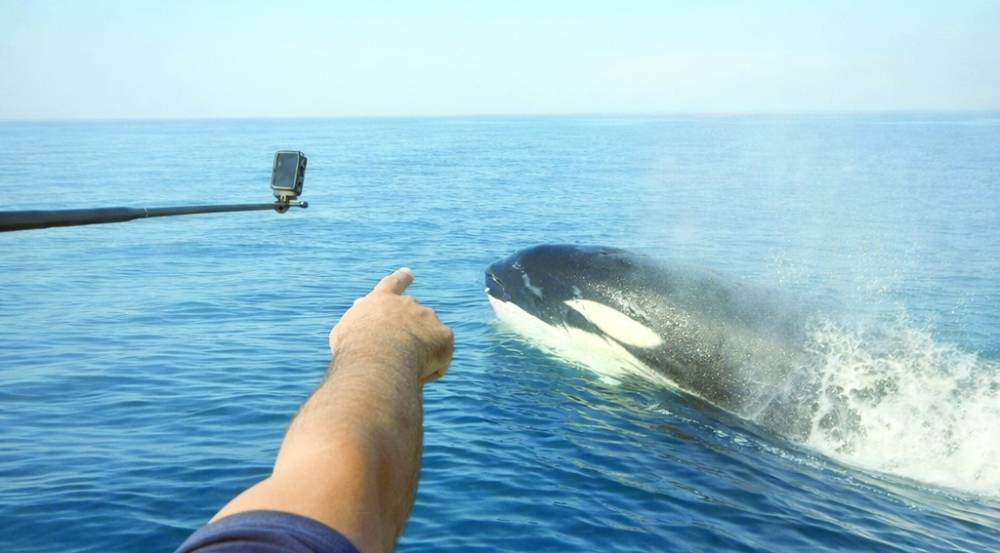
Contrary to their fearsome “killer whale” reputation — an ancient moniker from sailors — their relationship with humans in the wild has been far more benign; no wild orca has ever been documented killing a human. Yet their hunting brilliance is legendary within marine science, with documented behaviours from coordinated pack hunting to astonishing feats such as flipping great white sharks to access their nutrient-dense livers.
For Oman, a country already home to nearly 20 species of whales and dolphins, every orca sighting carries a special significance precisely because it is so uncommon.
Scientists cannot yet fully explain the seasonal currents or food-chain shifts that might be drawing these nomadic visitors closer to the Arabian Peninsula, but locals delight in the spectacle they create.
A significant reason Oman’s orca season is gaining traction, beyond fleeting sightings, is one man’s dedication to capturing the phenomenon.
Mahmood al Farsi, the founder and face of Al Farsi Tourism, based in Qantab, has taken the world along for the ride. His reels of orcas, dolphins and sea life has recently been going viral.
Al Farsi’s business specialises in snorkelling, fishing, dolphin watching and sea adventures, but it is his orca content that has garnered millions of views across platforms. Through his lens, ocean lovers see not just the thrill of these majestic animals, but the delicate balance of marine life.
One of his captions simply says: “Orcas in Oman — Respect the ocean, respect the wild.” While the wording may vary across reels, the underlying message is consistent: maritime wonder must be met with maritime wisdom.
The excitement around Oman’s orca sightings has benefited local dive operators, eco-tour guides and visitors yearning for wildlife encounters off Muscat or the Hallaniyat Islands, where other rare interactions have been documented this year.
The surge in orca posts corresponds with the cooler months along the Sea of Oman, roughly December through February, when water temperatures and currents change, possibly prompting transient pods to explore these subtropical waters. While there is currently no long-term study confirming a strict “orca season”, recent weeks have shown a noticeable uptick in sightings, drawing both professional researchers and citizen scientists to the coast.
Yet, as social captions themselves remind us, these are wild animals — powerful, unpredictable and deserving of respect. Close encounters should be left to trained guides, distance should be maintained, and disturbance of natural behaviour avoided at all costs.
Oman Observer is now on the WhatsApp channel. Click here