




The 5th Folk Music Festival, outdoors in the ‘Maidan Al Bahri’ of the Royal Opera House of Musical Arts, was celebrated last weekend for two stellar performances. Before each of the five cultural presentations, a short film depicting the natural beauty and development of each country was projected onto a huge screen behind.
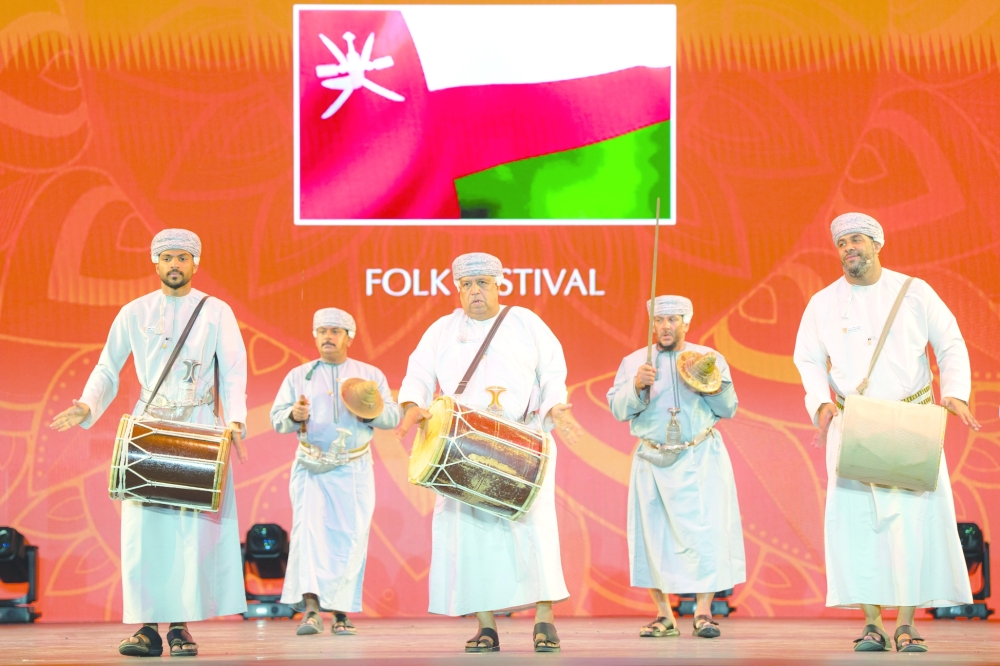
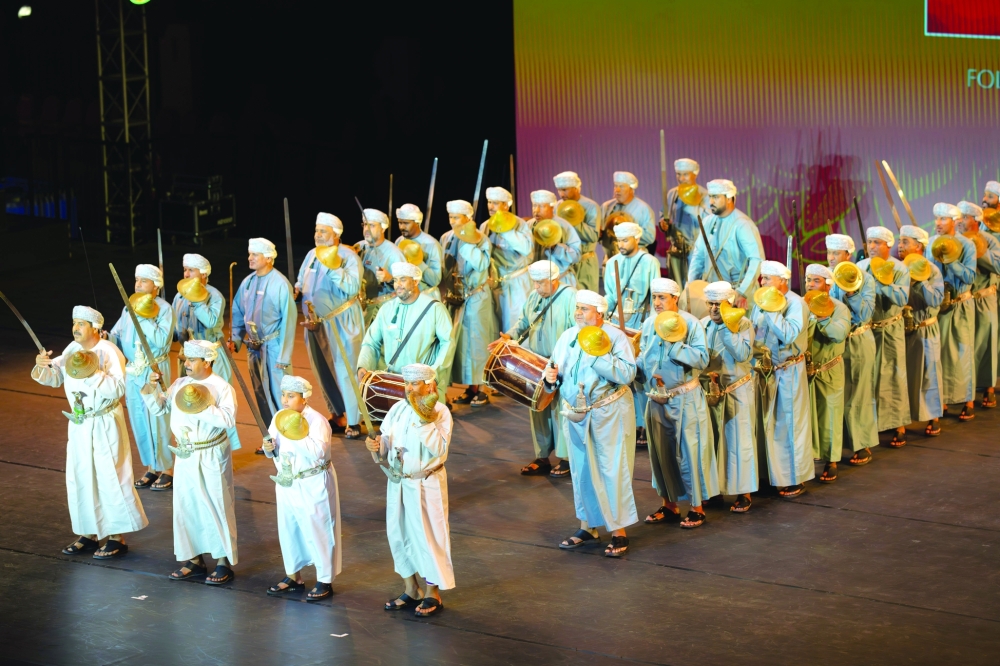
The ‘Al Shahbaa Folk Ensemble, Nizwa’ were heard in an amplified Call-and-Response as they appeared from backstage in a ‘Welcoming Razha’. The men sang a repetitive four-bar refrain with just traditional drum accompaniment as they threw ceremonial swords high in the air, impressively catching them all! A storytelling poet stepped forward to sing, ‘Al Aazi’ in tuneful commanding voice, with staccato interjections from the chorus and a simple repeated theme. ‘Al Razha Al Hamasiyya’ was a return to enthusiastic mock-fighting and sword-throwing with ritual celebratory chanting. They left the stage to proud patriotic applause.
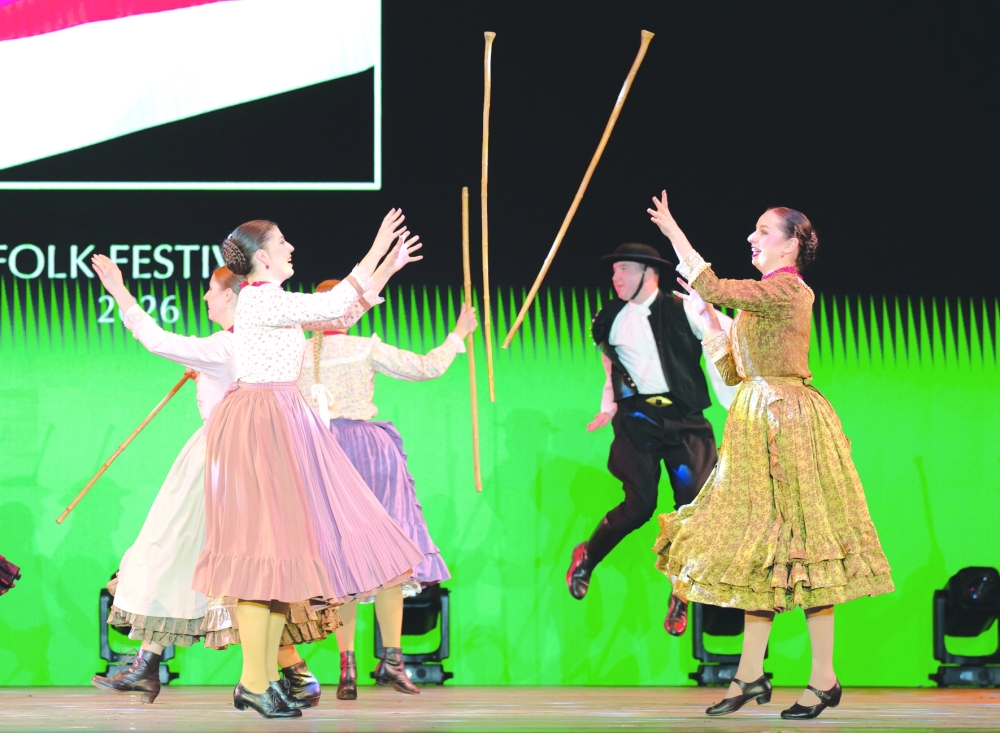
‘Kecskemet Folk Dance Ensemble’ presented Hungary’s most celebrated national folkdance, the Csárdás. Pairs of dancers displayed infectious exuberance as they circled, accompanied by four live musicians — violins, clarinet and bass. Ladies in assorted bright skirts and blue aprons turned and wheeled, shrieking as the men performed their iconic boot-and-thigh-slapping moves in rustic costumes and alpine hats. The men sang an ethnic ‘Legényes’ from Transylvania then danced with fast, fancy footwork and high leaps. ‘Girls’ Bottle Dance’ from Somogy region was performed in assorted skirts with frilly petticoats. Ladies danced and sang, jumping gregariously with bright red bottles balanced precariously on their heads. They weaved under each others’ arched arms to a Klezmer-like clarinet solo. Four well-dressed ‘shepherds’ from Hortobágy region in blue jackets with beautifully embroidered coats across their backs, sang and twirled sticks with gymnastic ability. The girls returned with another fast Csárdás to lively gypsy fiddle tunes, the men falling into a final boot-slap on the floor.
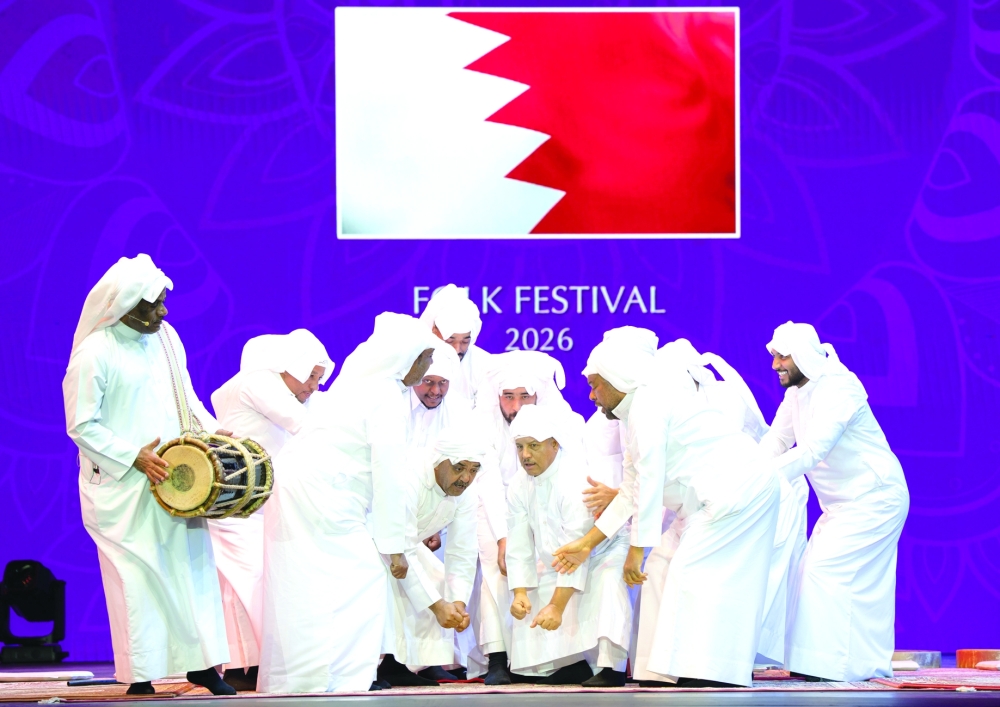
Eighteen men from the ‘Qalali Folk Arts Band, Bahrain’ appeared in the traditional slim fitting white thobe to present their musical heritage of the sea, ‘Al Fajri’. A simple, repeated chant of four beats was led by a deep solo voice and Dhol drum. The clapping in rhythm suggested a work-song to keep in time. The men imitated hauling the heavy anchor from the sea with rhythmic singing, like a sea shanty.
Sitting in a circle chanting a minor-modal song to clay pot and drum rhythms, ‘Al Bahri’ was an evocative folk-art song for the winter pearl diving season. In contrast, five daffs and cross-rhythm clapping accompanied deep-throat drones in a lively traditional form. An Oud soloist joined the ensemble as two young men stood to add slow stylised movement in an hypnotic duo. The last piece was a return to Call and Response with all the percussion, including marawees (small hand drums) in characteristic Shami rhythmic patterns in a familiar song, allowing everyone to enjoy the singalong finish!
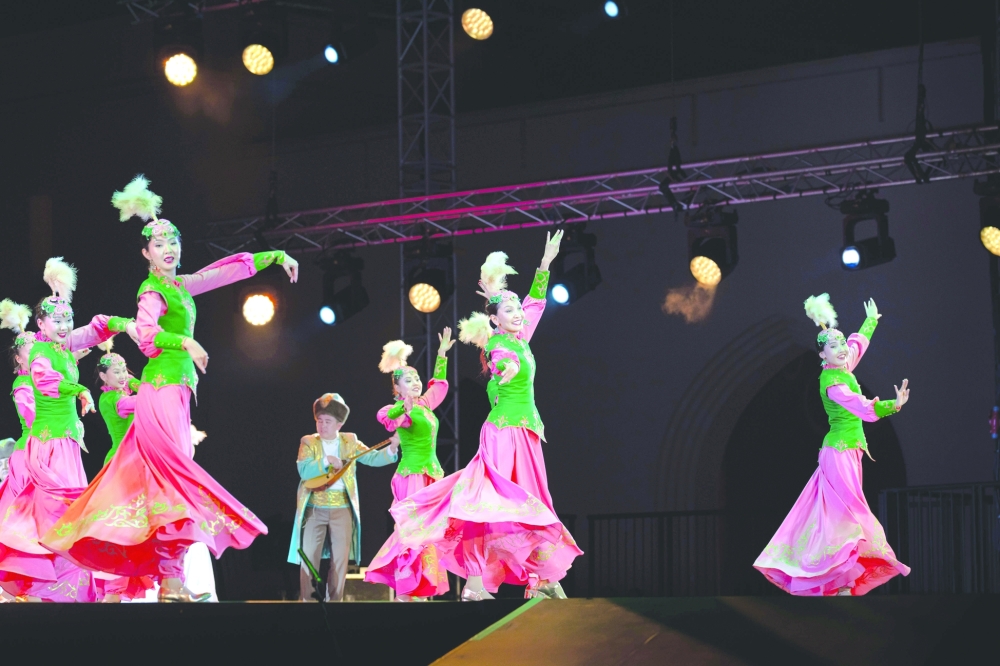
Twelve ladies of the ‘Kazakhstan K Baizhanov Concert Association’ were stunning in dazzling white dresses and headdress (Takiya). They swayed gracefully like swans across the stage, perfectly synchronised, flowing and supple. Sixteen musicians from the Central Asian state — including lead accordion, various bowed and plucked stringed instruments and the long-necked ‘dombra’ — stood decoratively behind in gold sparkly costumes and hats. They performed an instrumental number featuring irregular, syncopated rhythms. The ladies returned in yellow and burgundy with white takiya and kneeled down to play a teasing, coy mime with two sticks. A syncopated pentatonic melody reflected their oriental influences and they left the stage carrying green embroidered banners.
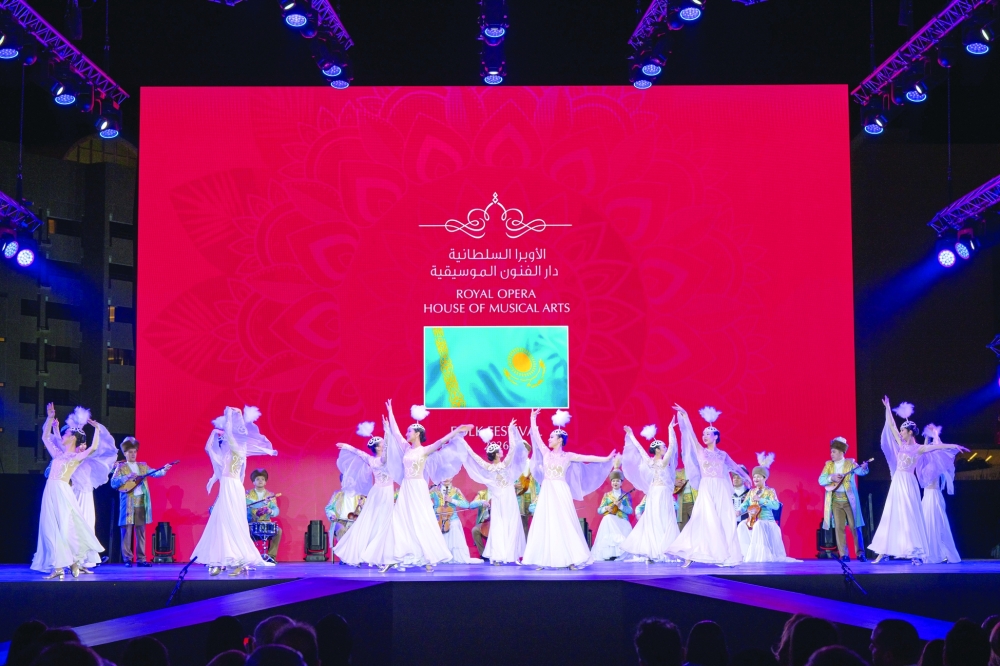
Dombra soloist, Serbian Musayin sang a lament using his wide vocal range while playing fast tremolo accompaniment in Seidimbekov’s “Daurenai”. Soloist Gulmira Zhukupbaeva sang a folksong dedicated to Kazak beauty while four agile, willowy ladies swirled about her like dolls in shimmering green and pink silk. A fast celebration dance to a simple diatonic folk tune featured the whole balletic ensemble creating patterns and shapes in a lively conclusion, ‘Zhezkiik Dance’.
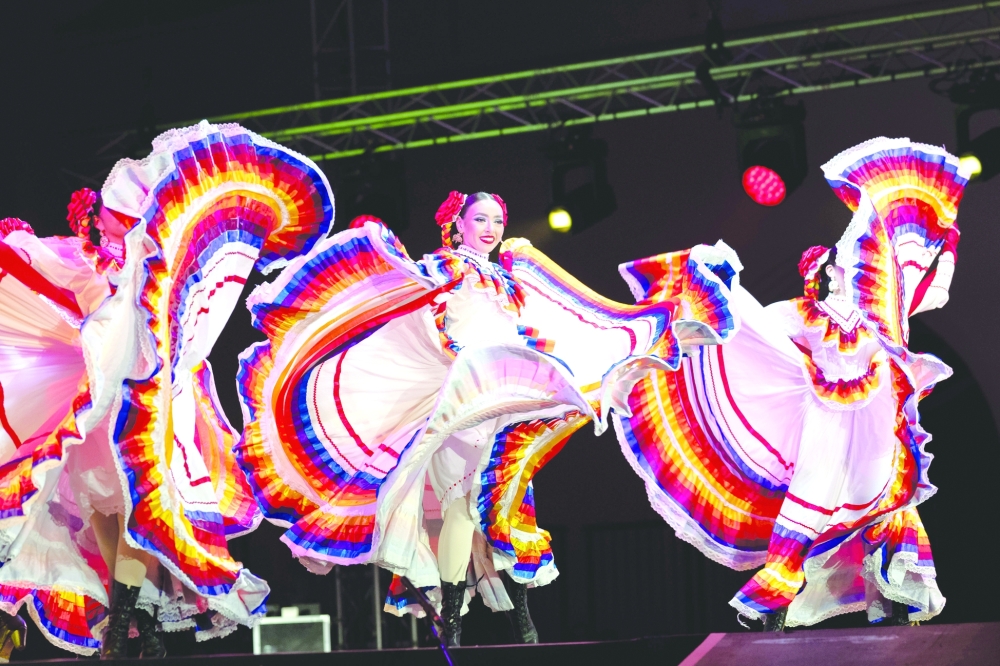
The highlight and climax in every sense came with the ‘Vallarta Azteca Folkloric Dance Group’ from Jalisco, Mexico. Six musicians exuding energy and vitality appeared behind two solo singers — José Curiel, with a voice both powerful and romantic and Diana Encarnacion with Zarzuela-like passion — in a compelling waltz. Eleven ladies sped in whirling rainbow skirts as they turned and spun, followed by men in handsome braided Charro costumes, thrashing their huge sombreros on the floor.
Two dancers performed dazzling fast footwork while a young rope artist from ‘Rancho Don Tato’ thrilled the audience with his lasso bravado. The perpetual rhythms of guitar strumming and acoustic bass from the deep-bodied, ‘Guitarròn’ provided an exciting, non-stop backing, with superb trumpet solos throughout. Ladies returned, spinning different coloured skirts while the men in Mariachi costumes, hands behind their backs, stomped out rhythms in absolute unison to an accompaniment of shouts, yelps and screams from the musicians! In sparkly skirts with flowers in their hair, the ladies joined in a patriotic song for the Grand Finale, ‘Viva Mexico’, to tumultuous applause from the audience — hoping they’d return to Muscat very soon!
Oman Observer is now on the WhatsApp channel. Click here