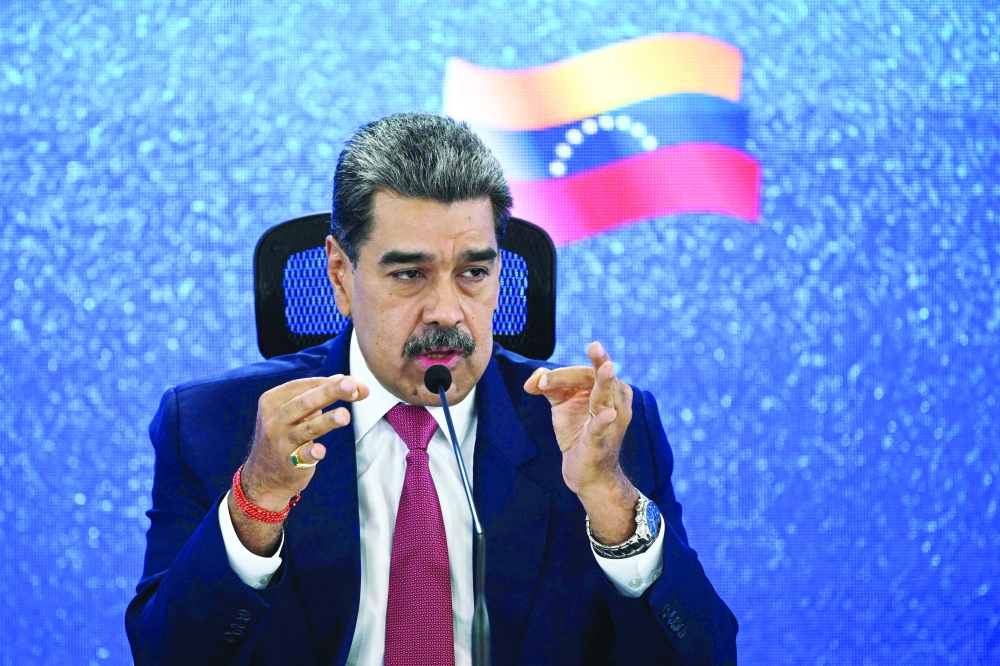
In early January 2026, the United States armed forces carried out an unprecedented military operation in Venezuela that resulted in the capture of President Nicolás Maduro and his wife, Cilia Flores, who were transported to New York to face charges including drug trafficking and narco-terrorism. US prosecutors have charged Maduro with leading a corrupt regime that facilitated massive cocaine shipments into the United States and other violent criminal acts. The Trump administration has framed the intervention as an effort to defend democracy and combat drug trafficking, a familiar rhetorical script that masks deeper geopolitical and economic interests.
President Donald Trump publicly asserted that Washington would 'run' Venezuela until a “safe, proper and judicious transition” could occur, signalling direct US oversight over the country’s governance. Many international legal scholars and foreign observers have condemned the operation as a violation of international law, arguing that it bypasses both congressional authorisation and United Nations sanction and amounts to an act of military aggression.
The use of democratic rhetoric to justify forceful regime change represents a profound contradiction. If the United States really sought to strengthen democracy abroad, it would foreground diplomatic engagement, respect for national sovereignty and multilateral frameworks. Instead, Washington launched an unilateral military strike on foreign soil, hardly a democratic practice, and proceeded to abduct a sitting head of state with no clear mandate other than executive will. Critics, including former US vice president Kamala Harris, have labelled the operation “unlawful and unwise,” warning that it reflects strategic motives far more rooted in control and influence than in any altruistic defence of democratic norms.
Underneath the official narrative lies a persistent pattern in US foreign policy: resource interests and geopolitical influence routinely trump the principles of self-determination and international law. Venezuela possesses vast oil reserves, among the largest in the world, making it a strategic prize in international energy politics.
Historically, US interventions in oil-rich regions have been framed as efforts to “protect” allies or “ensure stability,” while in practice securing access to resources and strategic ports. The 1991 Gulf War, launched in the wake of Iraq’s invasion of Kuwait, was justified by Washington as necessary to defend sovereignty and regional order. Yet the intervention also ensured enduring US military presence in the region and reinforced American access to Middle Eastern oil infrastructure. Such operations underscore how resource geopolitics inform military action.
Comparable patterns can be found in other events of US intervention. Yemen, a country ravaged by prolonged conflict exacerbated by foreign involvement, has seen its local population suffer devastating humanitarian collapse. External powers, including the United States, have supported or enabled factions in ways that prolong war rather than resolve it, with millions facing famine, displacement and disease. Somalia’s decades of foreign military presence and proxy wars have destabilised political structures and undermined local governance, leaving the country mired in insecurity long after foreign troops withdrew or shifted tactics. Though often justified as counter-terrorism or stabilisation efforts, these interventions have worsened social, political and economic conditions for ordinary people.
Moreover, the claim of fighting for democracy rings particularly hollow given the domestic challenges to democratic norms within the United States itself, including questions about political violence and erosion of checks and balances. When a country with its own struggles at home invokes the rhetorical mantle of democracy abroad to justify military conquest, it shows how political language can be used to justify actions driven more by power and control than by principle.
The rapid shift from drug enforcement rhetoric to plans for direct governance in Caracas reflects a return to a familiar form of modern imperialism: justifying intervention with lofty language while pursuing strategic control of resources and markets. This is not simply a quirk of one administration; it is rooted in a historical pattern of US foreign policy that privileges hegemonic interests under the guise of moral purpose.
Political autonomy and economic self-determination for nations should not be subordinated to external military force, particularly without broad international consensus. What is unfolding in Venezuela risks not only destabilising the region further, but also setting a dangerous precedent: that a powerful nation may deploy its military to capture foreign leaders and impose its own governance in the name of democracy.
Oman Observer is now on the WhatsApp channel. Click here