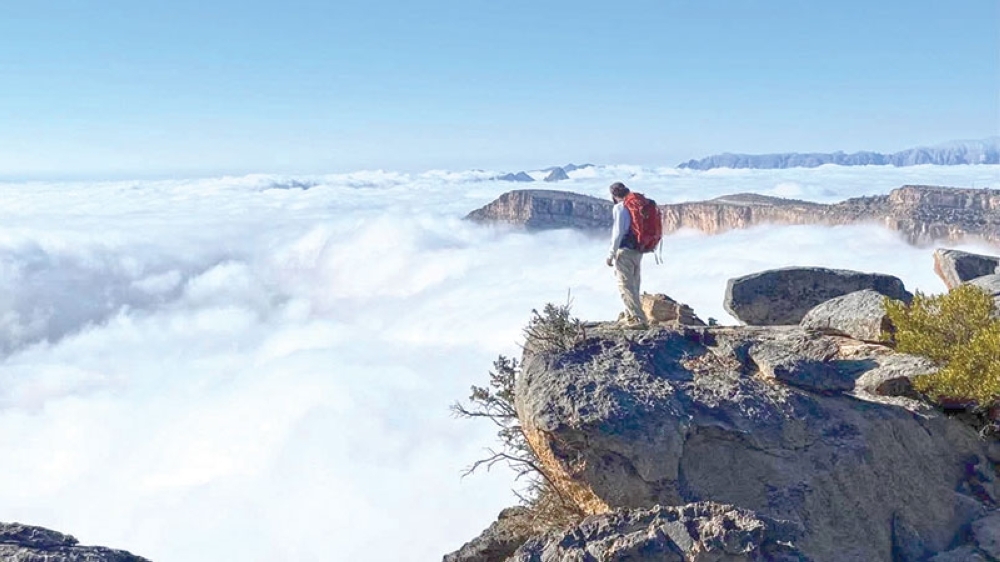





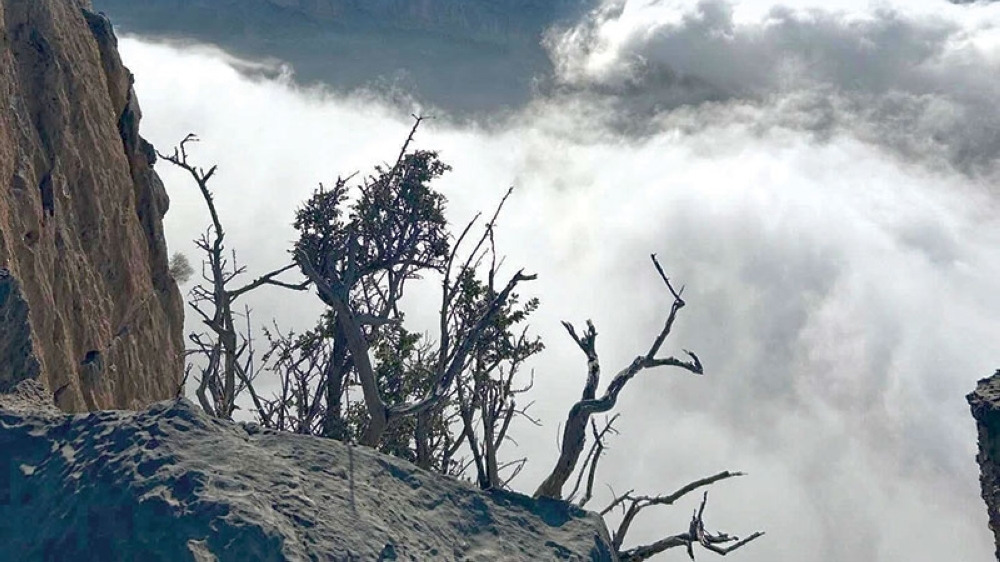
There is a particular morning in Oman when the mountains seem to forget themselves. Valleys vanish. Villages float. What was solid the night before dissolves into an undulating white ocean. This is the season of the Sea of Clouds, a fleeting atmospheric spectacle that draws early risers, photographers, hikers and quiet observers to the highlands of Al Jabal Al Akhdhar and Jabal Shams.
It is not an event announced with banners or festivals. Instead, it is whispered about through hikers’ WhatsApp groups, photographers’ Instagram captions, weekend camping forums and the knowing nods of mountain residents who understand the rhythm of weather better than any algorithm. “You don’t plan it too tightly”, one recurring sentiment goes. “You prepare. And then you wait.”
What exactly is the Sea of Clouds?
Scientifically, the phenomenon is a form of temperature inversion. Under normal conditions, air temperature decreases with altitude. But during certain periods — especially in late autumn and winter — cooler, denser air settles into valleys overnight while warmer air remains above. Moisture trapped in the cold air condenses into low-lying clouds or fog, filling wadis and basins. From higher elevations, this fog layer appears like a calm, endless sea.
In Oman’s mountain ranges, this effect is amplified by topography. Deep valleys, sharp escarpments and high plateaus create ideal conditions for cloud pooling, particularly when humidity from the Arabian Sea or residual monsoon moisture lingers inland. Calm winds are essential; too much movement disperses the clouds before sunrise.
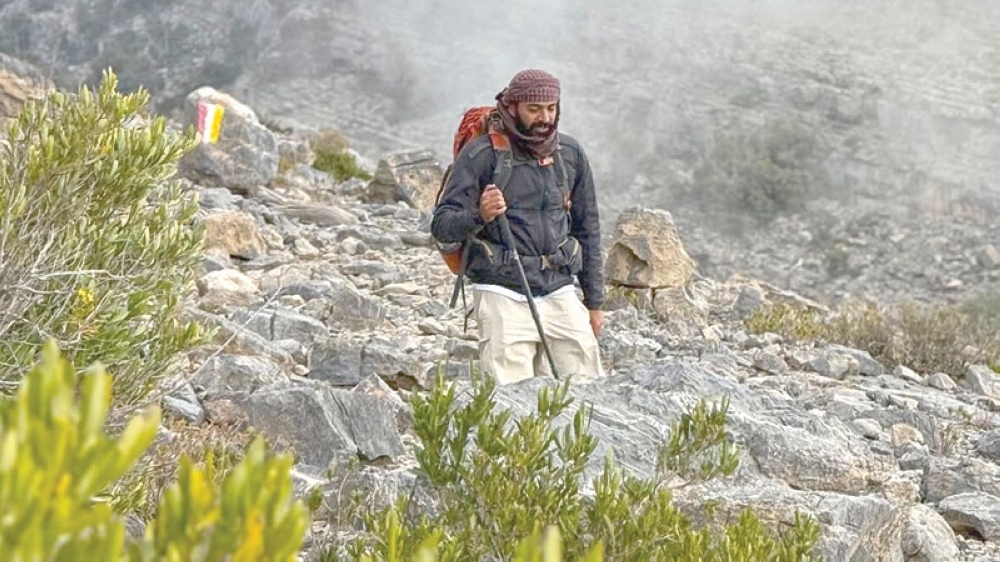
While the Sea of Clouds can occasionally be seen from other elevated points, Al Jabal Al Akhdhar and Jabal Shams offer the most consistent and dramatic vantage points.
Al Jabal Al Akhdhar, sitting at around 2,000 metres above sea level, combines altitude with accessibility. Its terraced villages, cliffside viewpoints and agricultural plateaus overlook deep valleys where clouds accumulate. Many visitors note that the phenomenon here feels intimate — clouds drifting between villages, sunlight piercing through in slow, cinematic shafts.
Jabal Shams, Oman’s highest peak at over 3,000 metres, delivers scale. Here, the clouds collect far below, filling what is often described as Oman’s “Grand Canyon”. When conditions align, the view is staggering: sheer rock walls rising from a white void, with only distant ridgelines breaking the horizon.
When does it happen?
Based on observations shared by hikers, tour guides, photographers and local residents — and supported by seasonal forecasts from Oman’s meteorological channels — the prime window typically runs from late November through February, with December and January offering the highest probability.
The most reliable conditions occur after a cool night following high humidity or light moisture with minimal wind and during early morning hours, usually between 5:30 am and 8:30 am.
This window is crucial. By mid-morning, rising temperatures and solar heating break the inversion, lifting or dispersing the clouds. Miss it by an hour and the mountains return to themselves.
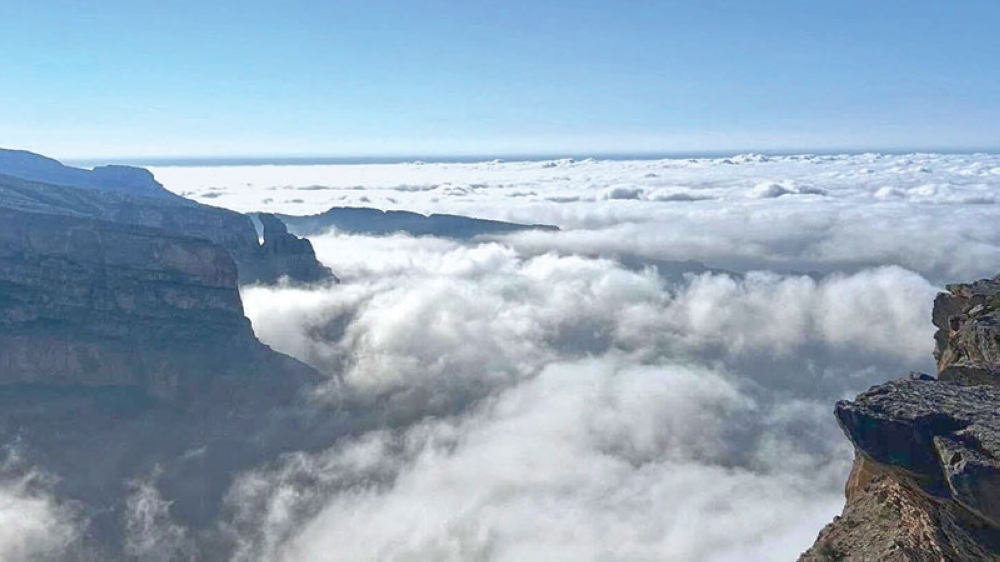
What makes the Sea of Clouds so compelling is its impermanence. Unlike a waterfall or a canyon, it cannot be visited on demand. Many seasoned mountain-goers emphasise this in their shared experiences: you may camp overnight and see nothing, or arrive with low expectations and witness something unforgettable.
This unpredictability has shaped a quiet culture around the phenomenon. The advice repeated across blogs and social posts is consistent: don’t chase it in a rush. Stay the night. Wake early. Be patient.
How to experience it properly
Camp or stay overnight
Arriving before sunrise is non-negotiable. Camping near cliff edges (where permitted and safely distanced) or booking a local guesthouse increases your chances significantly. Many who have witnessed the best displays were already awake, tea in hand, watching the sky shift from indigo to gold.
Prepare for the cold
Even for seasoned Oman travellers, the temperature drop surprises. Winter nights in Al Jabal Al Akhdhar and Jabal Shams can fall close to freezing. Pack thermal layers, windproof jackets, gloves and proper sleeping gear if camping. Several social media accounts recount abandoning viewpoints early simply because they underestimated the cold.
Choose your viewpoint carefully
Not all viewpoints work equally well. You need elevation above the valley floor but not so high that clouds never reach you. Locals often recommend spots slightly removed from main tourist lookouts — places where the landscape opens wide and the horizon remains uninterrupted. Stillness is your ally. If the night is windy, expectations should be tempered. Many experienced observers check wind forecasts more carefully than cloud predictions.
Stay after the reveal
One of the most overlooked pleasures is watching the clouds dissolve. As sunlight warms the valleys, the “sea” begins to ripple, thin and lift — sometimes creating moments more dramatic than the initial reveal.
A quiet reminder
Perhaps what draws people back to the Sea of Clouds is not just the visual spectacle, but the discipline it demands: early mornings, patience, respect for weather and acceptance that nature does not perform on command.
In a country often defined by its deserts and coastlines, this seasonal phenomenon reminds us that Oman’s mountains have their own language — one spoken softly, briefly and only to those willing to listen at dawn.
Oman Observer is now on the WhatsApp channel. Click here