President Donald Trump raised the taxes that the United States charges on imports last year to levels not seen in a century.
Prices of goods have increased as a result and businesses that depend on imported products and supplies have struggled, with some closing their doors. Still, the effects have not been felt as strongly as some experts predicted after early April when Trump announced double-digit tariffs on imports from countries worldwide.
A new working paper from economists at Harvard University and the University of Chicago helps explain why. It shows that the tariff rate importers have paid is significantly lower than the tariff figures that Trump announced. The reasons include exemptions for certain countries and industries, rates that were lowered for some goods by the time they arrived in the US and evasion of the rules by some companies.
By analysing the government’s tariff revenue and the value of imports, the economists concluded that the actual US tariff rate was 14.1% at the end of September.
The figure is about half the tariff rate that the administration had officially announced. The average trade-weighted tariff rate for the United States was nominally 27.4% in September, the authors estimated, down from a peak of 32.8% in April.
“The actual tariffs are much lower than what were announced and that is one of the reasons why the effects have not been as big as feared”, said Gita Gopinath, a Harvard economist and former first deputy managing director of the International Monetary Fund.
One factor was an exemption for products that were on boats en route to the United States when tariffs were announced. Shipping goods by ocean to US ports often takes weeks, meaning the tariffs that businesses paid rose more slowly than what Trump announced throughout the year.
The exemptions for products and countries included semiconductors and some products containing them, a move widely seen as a favour to tech executives. Though officials said they would announce more tariffs on chips and electronics, those have not come.
As a result, companies paid an actual tariff rate of 9% on chips brought into the United States, the authors calculated, far below the tariff level for other commodities. And exports from places that make a lot of semiconductors, like Taiwan, faced a far lower actual rate (8%) than the official one (28%).
Canada and Mexico also received significant exemptions from the nominally high tariffs that Trump put on them last year. Many goods that are mostly made in North America qualify for zero tariffs under the US-Mexico-Canada Agreement, which Trump signed in his first term.
Because US tariffs were low overall in the past, many companies had not bothered to declare that their goods were compliant with the trade pact when filing customs forms. But in 2025, roughly 90% of goods coming from Canada and Mexico were declared to be compliant, up from less than 50% the previous year.
Tariff evasion has also reduced the actual tariff rate that companies pay. Companies can pursue a variety of strategies, many of them illegal, to alter the information on customs forms about a product’s content, value or origin and pay a lower tariff than they are supposed to.
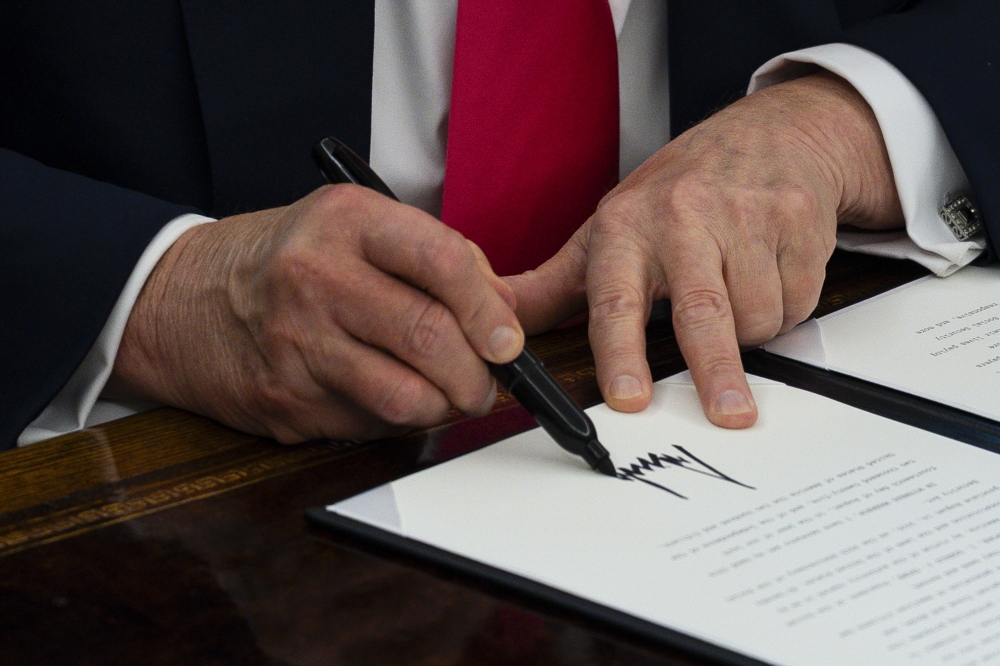
As concerns about affordability grow, the Trump administration may offer more exemptions and delays to planned tariffs. On Wednesday, Trump issued an executive order to delay a planned increase in tariffs on vanities, kitchen cabinets and upholstered furniture for one year. The Commerce Department has also pulled back on a preliminary plan to impose tariffs on some Italian pasta imports, saying some pasta makers had addressed US concerns about unfair practices. A final decision is expected in March.
Oman Observer is now on the WhatsApp channel. Click here