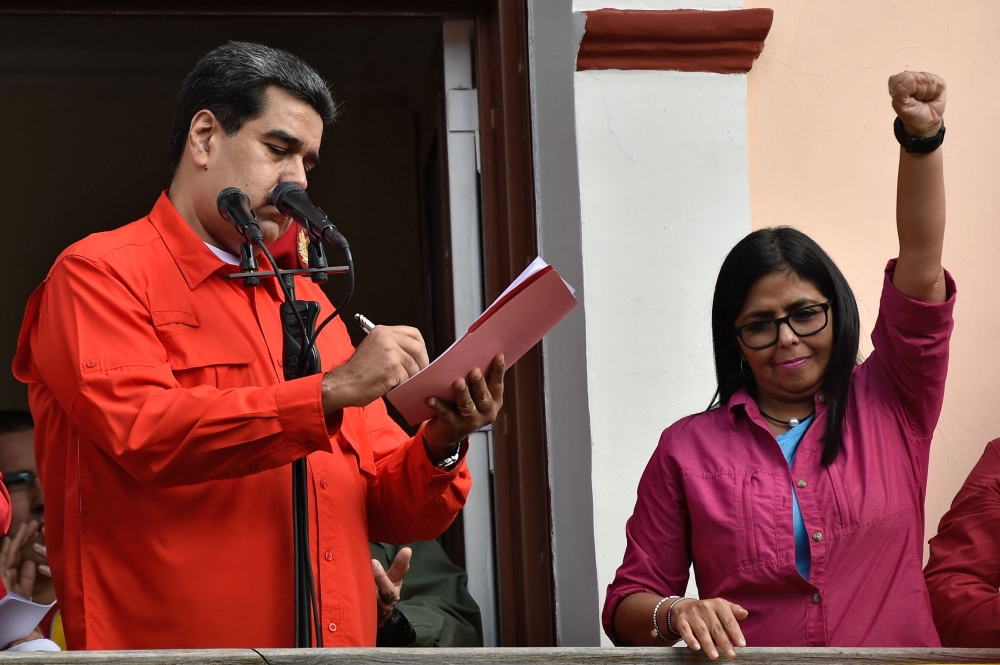
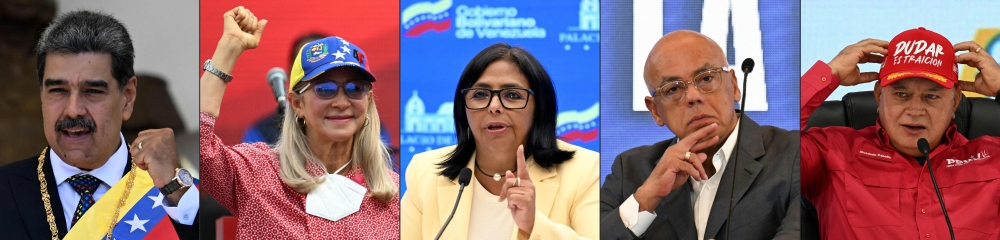





Buenos Aires - Following the capture of leader Nicolás Maduro, Venezuela's new leadership has signalled a willingness to cooperate with the United States.
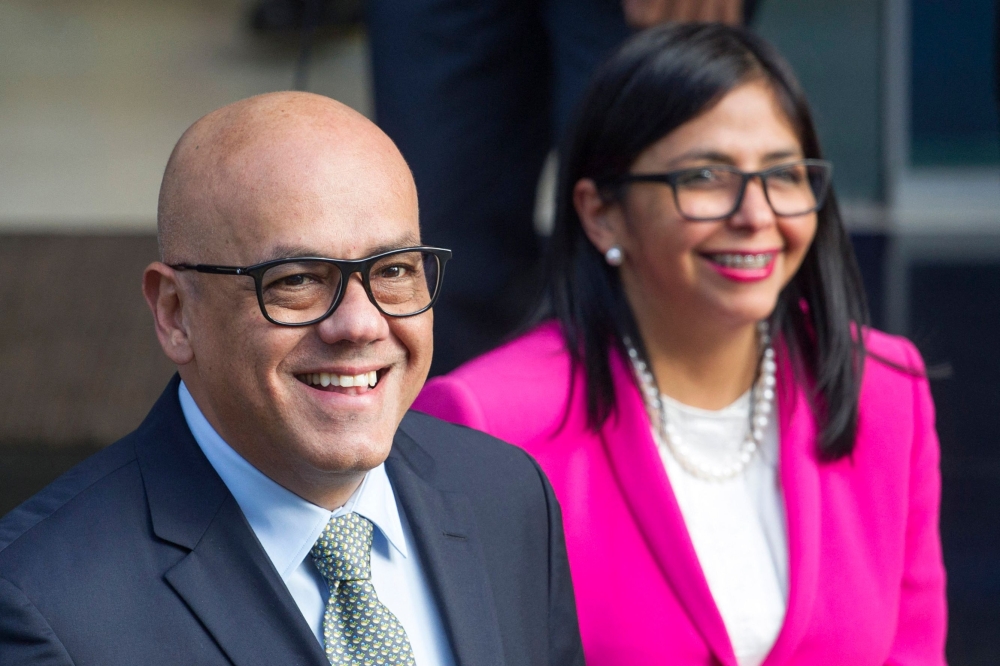
"We invite the US government to collaborate with us on an agenda of cooperation oriented towards shared development within the framework of international law to strengthen lasting community coexistence, "Delcy Rodríguez, the interim president of Venezuela, said on Sunday in a statement posted on Instagram.
Rodríguez had initially taken a hard line after the US attack.
"Our peoples and our region deserve peace and dialogue, not war," she wrote in a message addressed to US President Donald Trump. "This has always been President Nicolás Maduro's message, and it is the message of all of Venezuela right now."
She called for a relationship between the US and Venezuela based on respect, sovereign equality, and non-interference.
The US struck a series of targets in Venezuela early on Saturday, captured Maduro, and removed him from the country. He is due to stand trial in New York on drug-related charges.
Trump announced that the US would temporarily "run" Venezuela.
Venezuela's Supreme Court authorized Vice President Rodríguez to assume the powers of the presidency on an interim basis. She initially took a hard line, demanding Maduro's release and describing the US operation as a violation of the UN Charter.
"We will never be slaves again," she said, addressing Trump.
Venezuela’s new leader appeared to soften her tone toward the United States on Sunday night, raising the prospect of dialogue a day after a U.S. raid captured President Nicolás Maduro and brought him to New York City to face federal drug trafficking and weapons charges.
The new leader, Acting President Delcy Rodríguez, was initially scathing in her criticism of the Trump administration, characterizing its actions in Venezuela as “a barbarity” and saying that its goal was “the seizure of our energy, mineral and natural resources.”
But on Sunday night, in a statement addressed to President Donald Trump, Rodríguez said, “Our people and our region deserve peace and dialogue, not war.”
“We extend an invitation to the U.S. government to work together on a cooperative agenda, oriented toward shared development, within the framework of international law, and to strengthen lasting community coexistence,” she wrote.
Top Venezuelan officials had been projecting an official line of defiance after Trump said Saturday that the United States intended to “run” Venezuela and reclaim American oil interests for the foreseeable future. In a speech Sunday, Venezuela’s defense minister, Vladimir Padrino López, rejected any notion that the United States would “run” his country and maintained that the government that was in place under Maduro is still in charge.
After Trump officials spent the day laying out a plan for the U.S. to coerce Venezuela, rather than “run” it, the president doubled down late Sunday. Asked by reporters on Air Force One who was in charge of Venezuela, he said the United States was “dealing with the people that just got sworn in.”
But, he added, “Don’t ask me who’s in charge, because I’ll give you an answer, and it’ll be very controversial.” Pressed on what that means, he said: “We’re in charge.”
Trump also threatened Colombia and its president, Gustavo Petro, telling reporters on Air Force One that the country is “run by a sick man who likes making cocaine and selling it to the United States.” Asked whether the United States would conduct an operation against Colombia, he said, “it sounds good to me.”
Trump also suggested the United States could take action against a number of other countries for a wide range of issues. With Mexico, he said the cartels were “very strong”, and drugs were “pouring” through the country, and “we’re gonna have to do something.”
And he said that “Cuba looks like it is ready to fall,” adding: “I don’t know if they’re going to hold out, but Cuba now has no income. They got all their income from Venezuela, from the Venezuelan oil.”
Here’s what else to know:
— Comments from exile: Edmundo González, the exiled former diplomat who is widely viewed as the legitimate winner of last year’s presidential election in Venezuela, released a video statement referring to himself as the president of Venezuela and calling for political prisoners to be released.
— Raid Casualties: The toll of soldiers and civilians killed as part of Saturday’s U.S. raid in Venezuela rose to 80 on Sunday, according to a senior Venezuelan official. Vladimir Padrino López, the defense minister, said that U.S. forces had killed a “large part” of Maduro’s security detail in the attack. Cuba said Sunday that 32 of its citizens had died in the U.S. attacks — some of them military or intelligence personnel. No American service members were killed, U.S. officials said.
— Maduro charges: Maduro is being held at Brooklyn’s Metropolitan Detention Center. He and his wife, Cilia Flores, were both indicted on federal drug trafficking and weapons charges. They are scheduled to make their initial appearances in federal court on Monday.
— Oil reserves: Trump made clear his desire to open up Venezuela’s vast state-controlled oil reserves to American oil companies. But U.S. intervention in the country’s oil industry could prove complicated and expensive.
— Congressional criticism: Congressional Democrats, including leaders typically briefed on classified matters, said they were being kept in the dark by the Trump administration about both the military raid that seized Maduro and information about next steps.
— U.S. strike: In August, a clandestine team of CIA officers slipped into Venezuela. The information they gathered was critical to Saturday’s predawn raid, the riskiest U.S. military operation of its kind since members of the Navy’s SEAL Team 6 killed Osama bin Laden in a safe house in Pakistan in 2011.
— Celebration and protest: For some of the millions of Venezuelans living in exile in Colombia, the American attack that deposed their country’s autocratic leader brought hope that they might one day return home. In New York, anti-war protesters gathered to oppose U.S. involvement in Venezuela.
This article originally appeared in The New York Times.
Oman Observer is now on the WhatsApp channel. Click here