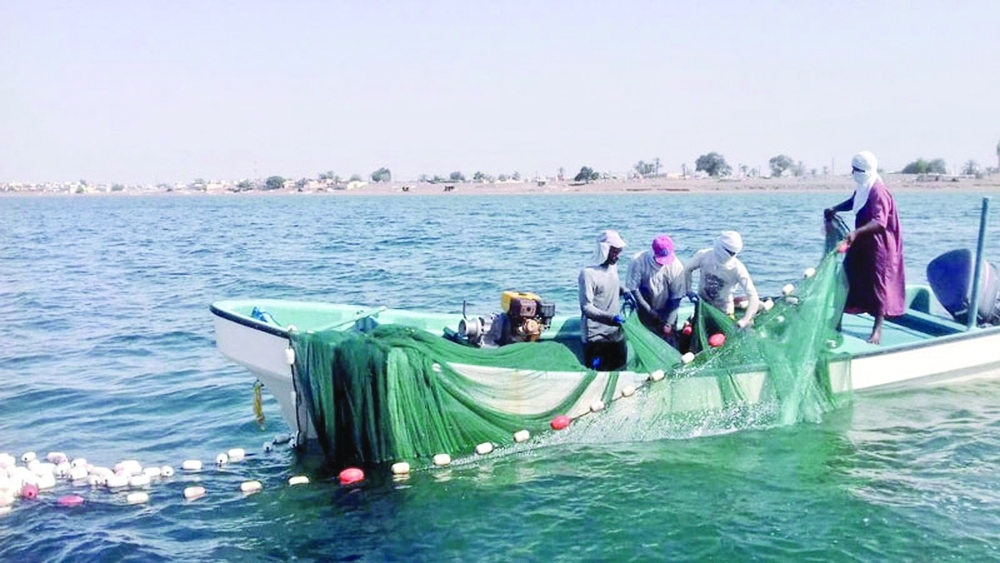





MUSCAT: Protecting fish stocks in Oman remains a national priority due to their critical role in supporting the national economy, ensuring food security and sustaining the livelihoods of thousands of artisanal fishermen.
To preserve this vital natural resource, Oman has enacted comprehensive legislation, strengthened monitoring mechanisms and enhanced cooperation between official bodies and fishing communities to combat harmful practices and promote sustainable fishing.
Dr Hussein bin Mohammed al Musqati, Director of the Fisheries Development Department in Muscat at the Ministry of Agriculture, Fisheries and Water Resources, said the ministry places strong emphasis on regulating fishing tools and practices because of their direct impact on the marine environment and fish stocks.
He noted that the misuse of certain fishing equipment outside approved regulations can increase bycatch and lead to serious ecological imbalances.
He explained that coastal fishing nets are among the traditional fishing methods widely used in several governorates, including Al Batinah North, Al Batinah South, Muscat, Musandam and Dhofar.
These nets have been used by artisanal fishermen for generations in accordance with inherited customs. Coastal net fishing relies on fixing nets close to shore to take advantage of fish movement with sea currents, primarily targeting small surface fish such as sardines and other seasonal species.
Dr Al Musqati stressed that adherence to approved regulations allows fishermen to release non-targeted catches, while failure to comply with technical specifications, designated areas or fishing seasons can result in the capture of unintended species, threatening the ecological balance.
Addressing encircling nets, also known as circular or purse seine nets, he said there are two main types. The first type does not use rings to close the net from below, allowing some non-targeted fish to escape, while the second type uses rings that close the net completely, trapping all encircled fish.
He warned that the use of these nets without approved specifications may lead to the capture of large quantities of juvenile fish, causing depletion of fish stocks in the medium and long term.
He noted that the ministry has issued clear regulations for each type of fishing net, specifying technical standards, permitted areas, fishing seasons and target species. Fishermen are required to obtain prior licences, and the number of nets permitted is regulated according to approved principles in coordination with the Sea Customs Committees in coastal wilayats.
Dr Al Musqati said non-compliance with these regulations results in negative environmental consequences, affirming that the ministry will continue to intensify monitoring and awareness efforts while promoting the concept of responsible fishing to ensure sustainability.
He added that the ministry is implementing an integrated system of regulatory, supervisory and advisory measures to curb illegal fishing practices.
These include issuing precise regulations governing fishing gear, defining net specifications, depths and areas of use, regulating licensing mechanisms and limiting the number of certain fishing tools to minimise bycatch and protect marine biodiversity.
Licensing conditions, he explained, include strict compliance with technical specifications, adherence to authorised fishing areas and depths, respect for seasonal bans, limits on the number of nets per fisherman or vessel, and protection of juvenile and endangered species, in coordination with Sea Customs Committees.
The ministry also enforces seasonal bans on certain fishing gear during breeding periods. The use of purse seine nets, for instance, is prohibited from August until the end of November to protect juvenile fish and allow stocks to regenerate. Fishing is also banned in environmentally sensitive areas such as coral reefs and mangroves due to their crucial role in maintaining biodiversity and fish life cycles.
Dr Al Musqati confirmed that continuous awareness campaigns targeting artisanal fishermen are being carried out through seminars, field meetings and media platforms, alongside intensified field inspections by specialised judicial control teams.
He added that the ministry signed a cooperation agreement this year with the Security and Safety Services Corporation, transferring fisheries control responsibilities to enhance efficiency and operational readiness.
Regarding penalties, he said legislation sets out graduated sanctions based on the severity of violations, including financial fines, confiscation of fishing equipment, and suspension or cancellation of licences in cases of serious or repeated offences. These measures, he stressed, are applied transparently and fairly to ensure deterrence and protect a renewable national resource.
The ministry also relies on modern technologies, particularly vessel monitoring systems (VMS), to track fishing activities in real time and ensure compliance with authorised fishing zones and depths. An agreement has been signed to equip all artisanal fishing boats with electronic tracking devices to further strengthen monitoring.
Coordination with relevant authorities — including the Coast Guard Police, the Environment Authority, Sea Customs Committees and the Omani Fishermen’s Association — remains a cornerstone of efforts to combat illegal fishing and safeguard marine resources for future generations.
Meanwhile, Dr Mona al Tarshi, a marine life management specialist at the Environment Authority, highlighted the environmental consequences of bycatch, explaining that it directly disrupts marine ecological balance by killing non-target species such as turtles, sharks and marine mammals, which play vital roles in food chains.
She noted that continued bycatch reduces biodiversity, particularly among slow-reproducing species, increasing the risk of local extinction and weakening the resilience of marine ecosystems to pressures such as climate change and pollution. The Authority monitors ecosystem health through indicators including coral reef condition and marine biodiversity indices.
From the fishing community, Jassim al Balushi, a craft fisherman and member of the Amateur Fishing Network, warned that overfishing threatens both fish stocks and fishermen’s livelihoods. He said some fishermen fail to comply with regulations, focusing on catch volume rather than sustainable practices.
He stressed the need to target young and new fishermen with training and awareness programmes to instil responsible fishing practices from the outset, while encouraging a culture of reporting violations. He also called for continuous education, stronger enforcement against repeat offenders and greater awareness of changing seasons and permitted fishing methods.
Preserving fish stocks, he said, is a shared responsibility involving fishermen, regulatory bodies and the wider community.
Protecting fish stocks remains a collective national duty, requiring strict adherence to laws, sustainable fishing practices, effective monitoring and sustained awareness efforts to ensure the long-term health of Oman’s marine environment. – ONA
Oman Observer is now on the WhatsApp channel. Click here