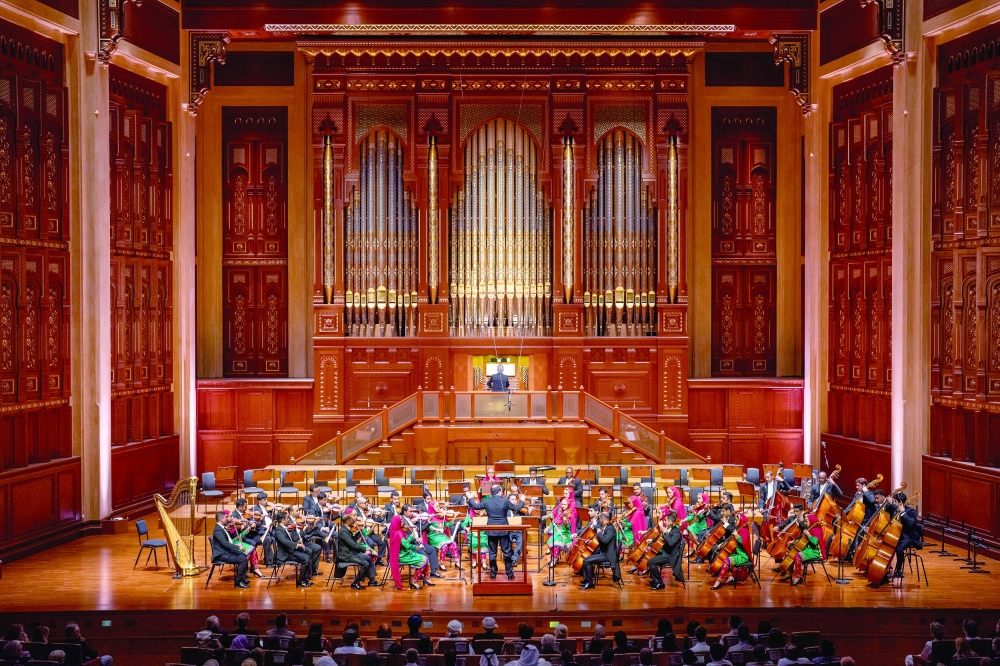





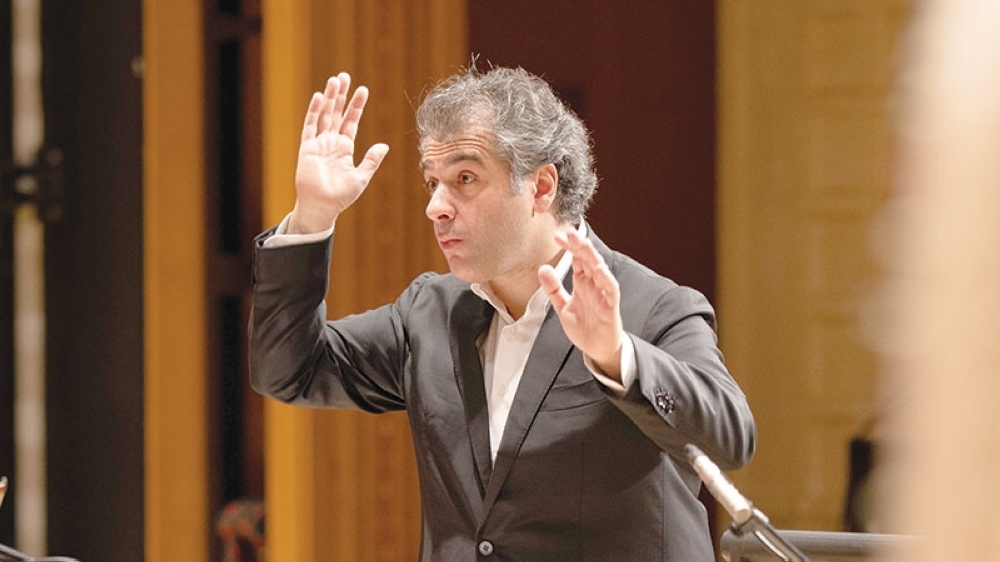
The Royal Opera House of Musical Arts rang in the New Year early on Wednesday with a strong and powerful performance from the Royal Bangkok Symphony Orchestra. Sixty of their finest musicians graced the stage with not one, but two internationally renowned soloists to make this concert a very special occasion. Dressed in formal black, they plunged into an Armenian double-bill of formidable calibre under world-class conductor, Sergey Smbatyan, with Khachaturian’s well known mighty Waltz, ‘Masquerade Suite’.
It was brilliantly performed; a romp through wonderful orchestral swells meticulously articulated, with joyous playing from the percussion. There were delicate lyrical moments from the strings leading to a rollicking conclusion. What a whirlwind to start!
Khachaturian’s ‘Sabre Dance’ was just splendid; short and fiery, the brass and percussion let rip — to the audience’s delight — and featured some high woodwind shrieks with Xylophones sabre-rattling to keep everyone on their toes.
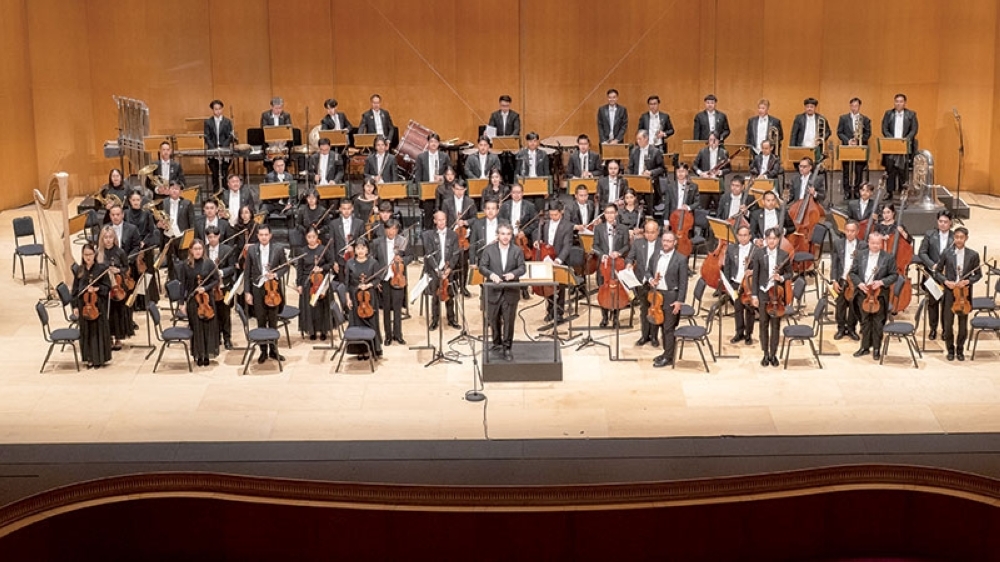
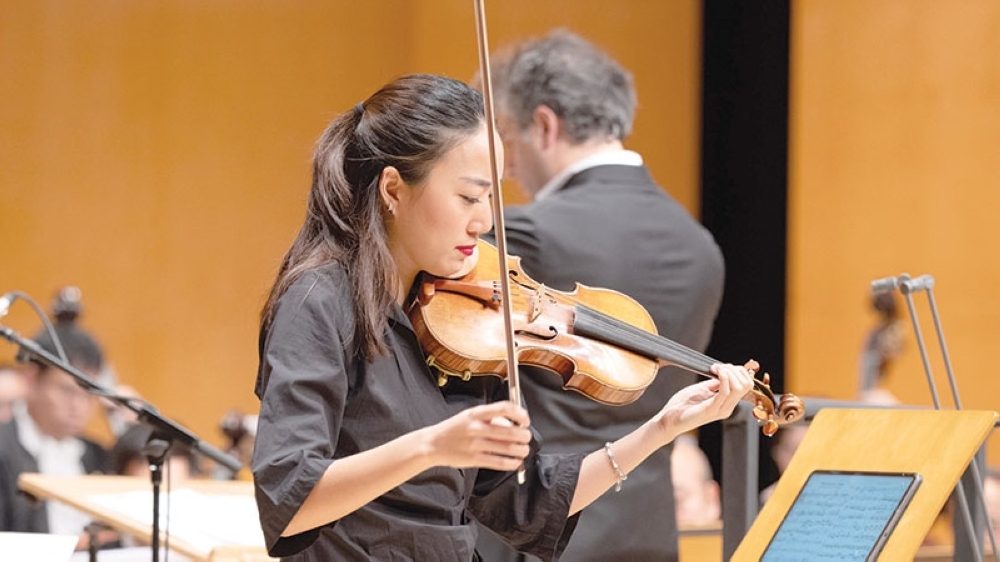
Between the two, American-Korean violinist Elli Choi appeared on stage in chic black-and-white couture to perform the contemporary Ukrainian composer, Alexei Shor’s fifth Violin Concerto. The RBSO opened in a Nationalistic vein using fanfare elements from the brass and percussion.
The soloist was able to demonstrate her stunning virtuoso technique as well as her warm, expressive quality in lyrical sections. She was never drowned in Shor’s well-balanced orchestration, though his musical language is neo-classical tonal, reflecting little influence from his Russian 20th century predecessors. The harp (Ema Mitarai) introduced the Slow Movement, then soloist and woodwind joined in a tender, filmic mode.
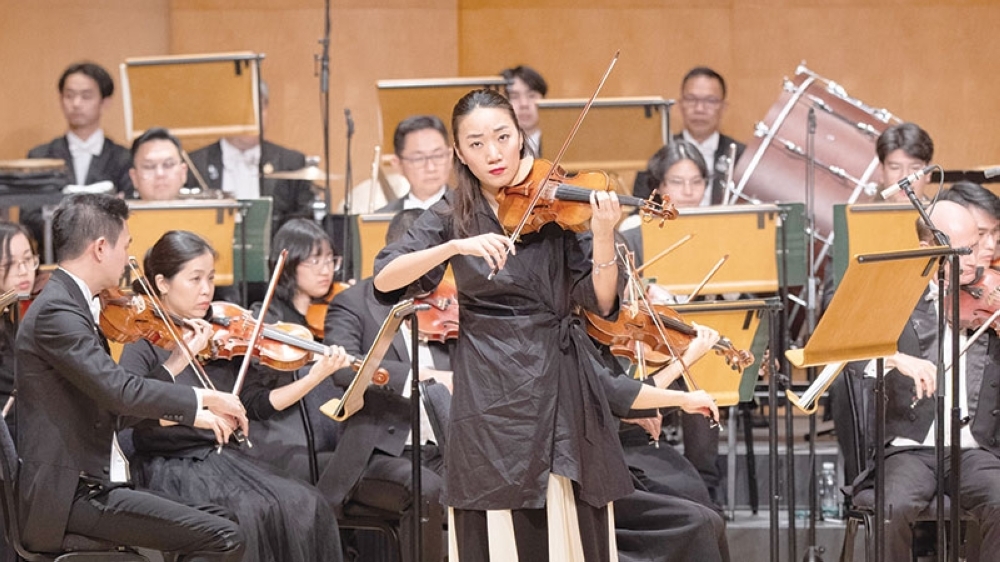
An interesting interlude from tubular bells and brass recalled John Williams’ film writing, then harp flourishes and horn countermelodies from Charnrit Rerngronasa brought the movement to a soft ending over lovely rich chords. A return to the mood of the first movement added strident glockenspiel and piccolo interjections, the soloist barely pausing in this stylistically eclectic, light-hearted composition.
Choi returned to the stage to perform the fiendishly difficult solo part in Franz Waxman’s 1946 arrangement of Bizet’s beloved themes, ‘Carmen Fantasy’. It exploits every challenging technique the fiddle is capable of — high register, leaps, glissandi, arpeggiated fills — all at breakneck speed which Elli Choi executed with finesse and faultless technique.
The tone quality she coaxed from her 1840 Vuillaume instrument was breath-taking and especially poignant in the ‘Card Trio’. She flew through rapturous flourishes in excruciatingly demanding passages, running the gambit of Carmen’s emotional spectrum through the violin’s range of possibilities. ‘Seguidilla’ was exceptionally tricky but Choi did not skip a beat — and all off by heart in a stunning climatic finale to Part One!
A deceptively gentle introduction from harp and woodwinds to Borodin’s well-known chestnut, ‘Polovtsian Dances’ from ‘Prince Igor’ dissolved into the famous, ‘Stranger in Paradise’ theme, played beautifully by oboe (Thanit Kaewrack) over gorgeous string textures. The orchestra excelled as they attacked the compelling off-beat dance, loud and rhythmic, with some powerful lower brass making it hard to sit still. A reminder of the ‘Stranger’ theme was interrupted by rude tuba blasts, vibrating to an intense tutti ending — and rousing applause.
The second soloist of the evening was certainly not playing second fiddle. The grand piano was rolled centre stage and Uzbek superstar, Behzod Abduraimov — sans score — leapt straight into Rachmaninov’s ‘Rhapsody on a Theme of Paganini’.
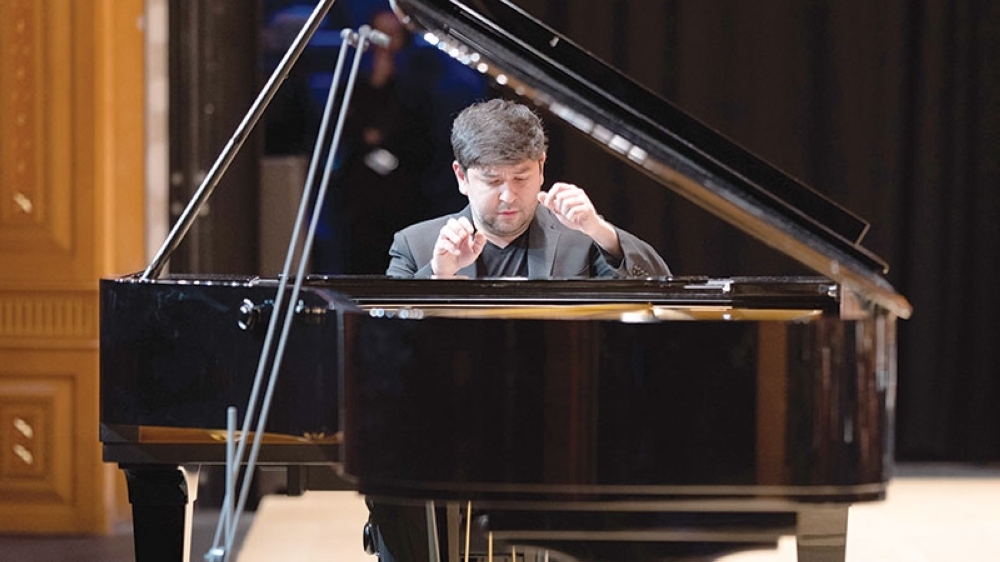
Exceedingly virtuosic technique is required of the soloist and Abduraimov surpassed the challenge at every turn. The 35-year-old performed with unwavering confidence and dexterity, demonstrating incredibly fast finger work yet depths of emotional sensitivity in the slow sections. There came a lovely romantic Variation bearing Rachmaninov’s lush signature, then his jazz influences apparent in the harmony and syncopated, off-beat Variation.
The impossibly beautiful 18th Variation drew gasps as Abduraimov gave a passionate interpretation of the intimate lyricism with broad sweeping gestures in the solos. Rachmaninov makes great use of the oboe/cor anglais timbre in his orchestration, juxtaposing the full orchestral force with light, nimble solo passages.
The applause was so tremendous that Behzod returned to perform an explosive conclusion with Liszt’s third ‘Grandes Études de Paganini’. His rippling, dazzling finger technique left the audience spellbound. What fantastic programming, giving hope for what 2026 may bring and what better way to end it than with Strauss’s ever popular ‘Radetzky March’ — which of course everyone could clap along to, bidding the old year ‘Adieu’!.
Oman Observer is now on the WhatsApp channel. Click here