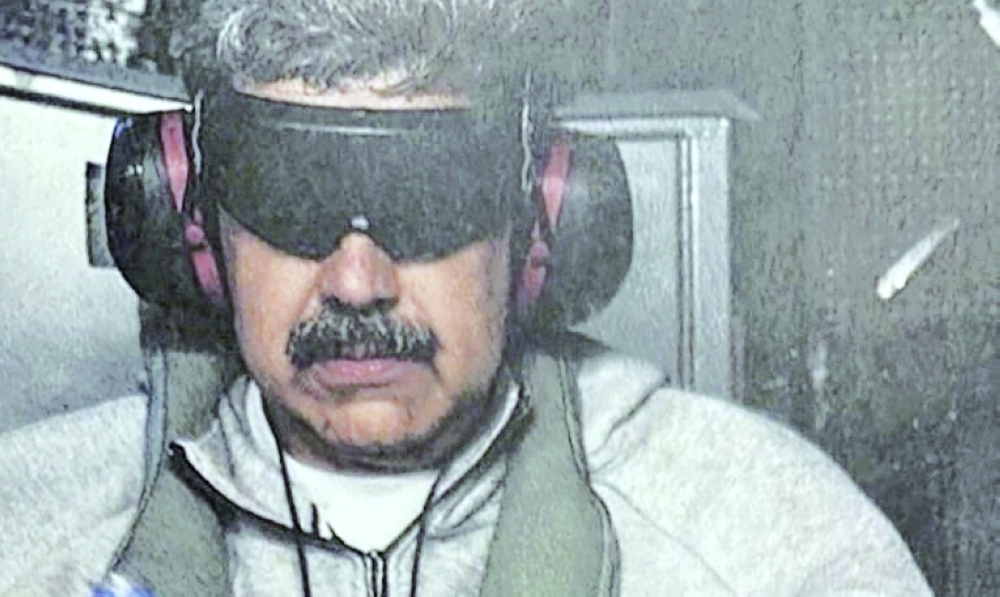





The US attacked Venezuela and deposed its long-serving President Nicolas Maduro in an overnight operation on Saturday, President Donald Trump said, in Washington's most direct intervention in Latin America since the 1989 invasion of Panama.
"This was one of the most stunning, effective and powerful displays of American might and competence in American history," Trump said at a press conference at his Mar-a-Lago resort in Florida, where he was flanked by senior officials, including Secretary of Defence Pete Hegseth and Secretary of State Marco Rubio.
Trump said Maduro was in custody and that American officials would take control of Venezuela.
"We're going to run the country until such time as we can do a safe, proper and judicious transition," he said. "We can't take a chance that someone else takes over Venezuela who doesn't have the interests of Venezuelans in mind."
It is unclear how Trump plans to oversee Venezuela. Despite a dramatic overnight operation that knocked out electricity in part of Caracas and captured Maduro in or near one of his safe houses, US forces have no control over the country itself, and Maduro's government appears to still be in charge.
The removal of Maduro, who led Venezuela with a heavy hand for more than 12 years, potentially opens a power vacuum in the Latin American country. Venezuelan Vice-President Delcy Rodriguez - Maduro’s presumptive successor - is in Russia, four sources familiar with her movements said, stoking confusion about who is next in line to govern the South American country.
Russia's foreign ministry said the report that Rodriguez is in Russia was "fake."
Any serious destabilisation in the nation of 28 million people threatens to hand Trump the type of quagmire that has marked US foreign policy for much of the 21st century, including the invasions of Afghanistan and Iraq - which were also premised on regime change. The US has not made such a direct intervention in its backyard region since the invasion of Panama 37 years ago to depose military leader Manuel Noriega over allegations that he led a drug-running operation. The United States has levelled similar charges against Maduro, accusing him of running a "narco-state" and rigging the 2024 election. Maduro, a 63-year-old former bus driver handpicked by the dying Hugo Chavez to succeed him in 2013, has denied those claims and said Washington was intent on taking control of his nation's oil reserves, the largest in the world.
United Nations Secretary-General Antonio Guterres is deeply alarmed by US military action in Venezuela that sets "a dangerous precedent," his spokesperson said on Saturday ahead of a likely UN Security Council meeting. Venezuela and Colombia, backed by Russia and China, have asked for the 15-member Security Council to meet, diplomats said, after the US attacked Venezuela and deposed its long-serving President Nicolas Maduro. The meeting has not yet been scheduled.
"These developments constitute a dangerous precedent," Guterres' spokesperson Stephane Dujarric said in a statement. "The Secretary-General continues to emphasise the importance of full respect - by all - of international law, including the UN Charter. He's deeply concerned that the rules of international law have not been respected."
The UN Security Council has met twice - in October and December - over the escalating tensions between the United States and Venezuela. "The deadly and treacherous US military attack is being carried out against a country that is at peace," Venezuela's UN Ambassador Samuel Moncada wrote to the Security Council on Saturday, warning that it "has serious implications for regional and international peace and security." — Agencies
Oman Observer is now on the WhatsApp channel. Click here