




As dusk settled over the old quarter of Ibra, the stone corridors of Souq Al Qanater began to echo with voices that have shaped Oman’s cultural memory for generations. Between weathered shopfronts and softly glowing lanterns, poetry did not merely recite the past, but awakened it. Here, where trade and tales once intertwined, Sablat Al Qasaed hosted a gathering that felt both intimate and monumental, a living tribute to voices that history refuses to forget.
Founded in 2010, Sablat Al Qasaed stands as one of Oman’s most devoted cultural poetry collectives, bringing together a distinguished group of poets from across the Sultanate of Oman.
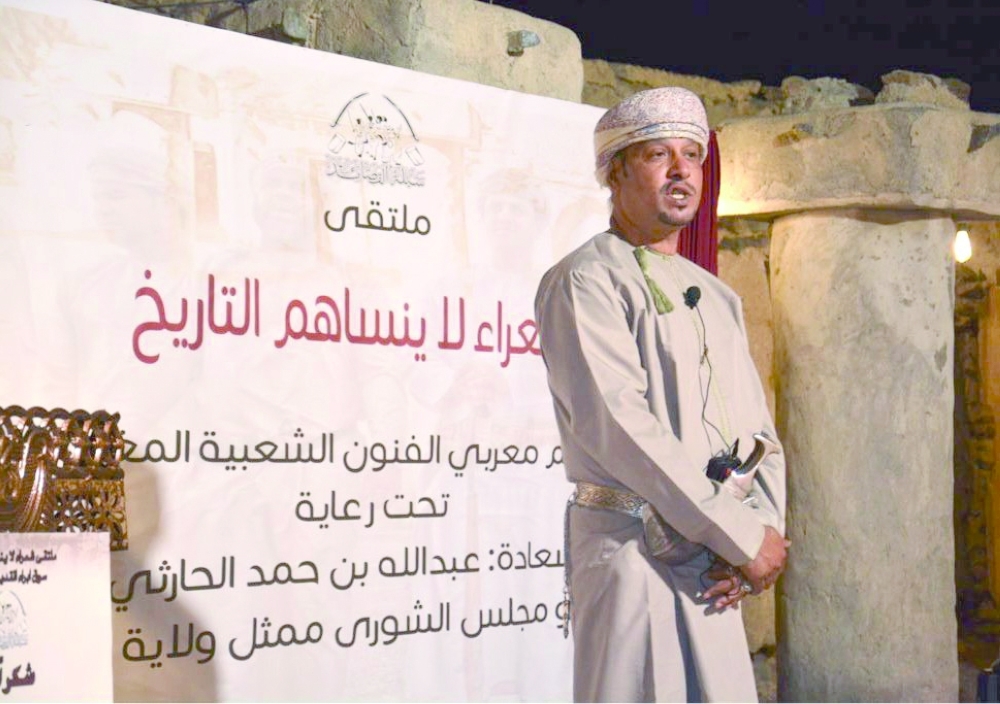
Through its annual activities and national occasions, the group has consistently worked to safeguard Omani heritage arts, ensuring they remain practiced, understood and cherished by present and future generations. That mission came vividly to life during the forum titled ‘Poets History Will Never Forget’, held in Ibra, Al Sharqiyah North Governorate.
The event honoured two towering figures of Omani folk poetry, the late poet Hafidh bin Mohammed al Maskari and poet Rashid bin Saloom al Maslahi, widely known as Al Suwairy. Their verses, once carried across villages and communal gatherings through rhythm and melody, were brought back into collective memory through research papers, live performances and heartfelt reflection. Rather than framing them as distant historical figures, the event restored their presence as living influences on Oman’s sung folk arts.
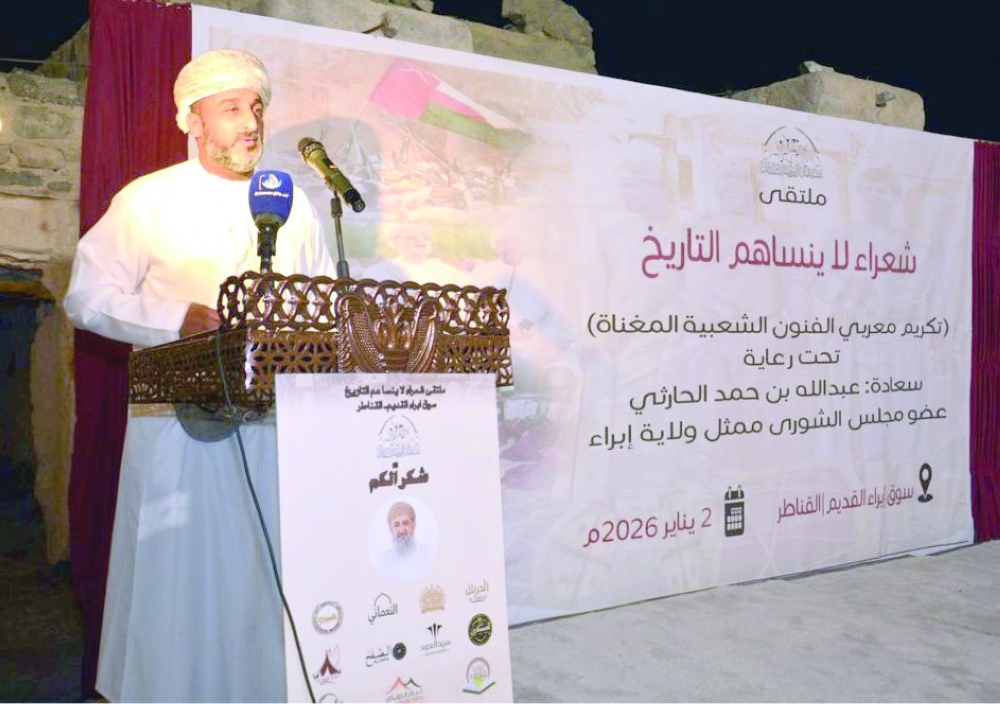
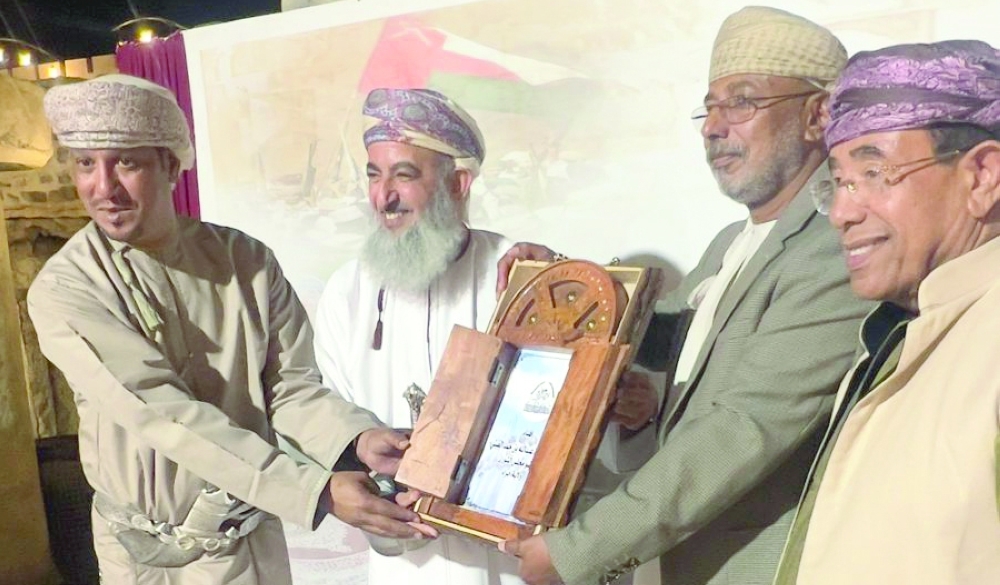
The forum was held under the auspices of Abdullah bin Hamad al Harthy, Member of the Majlis Ash'shura representing Ibra, who honoured poets, muarribeen and contributors whose efforts ensured the forum’s success. Their recognition underscored the collective nature of cultural preservation, where individual voices come together to form a lasting national narrative.
From the opening razha performance, the atmosphere signalled that this would be more than a formal ceremony. Rhythmic chants and synchronised movements drew community members together, setting a powerful tone for the gathering. As the forum unfolded, it opened with a welcoming address by Sablat Al Qasaed, followed by scholarly yet accessible presentations exploring the poetic legacy of Hafidh al Maskari and Rashid al Maslahi.
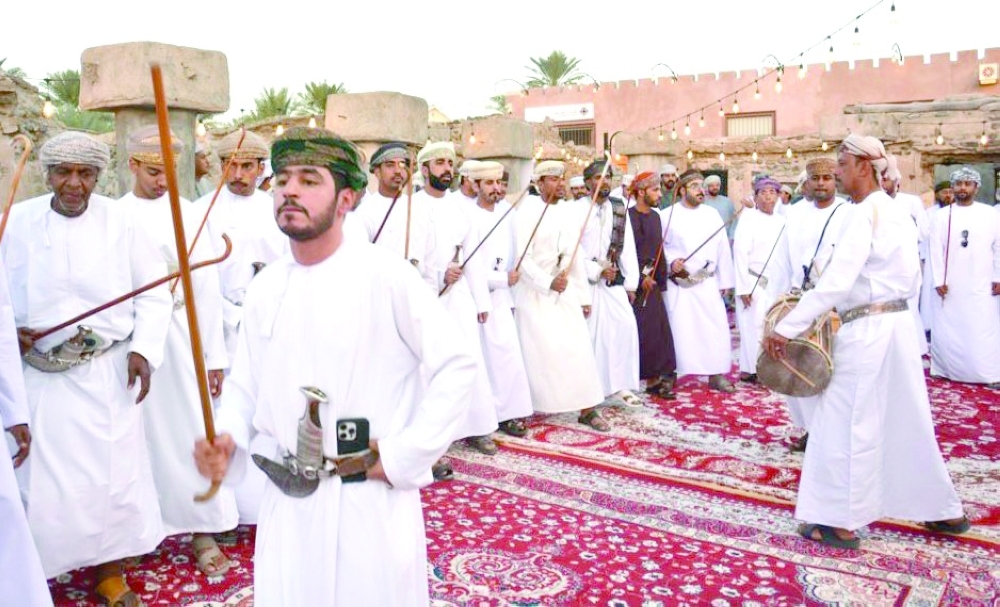
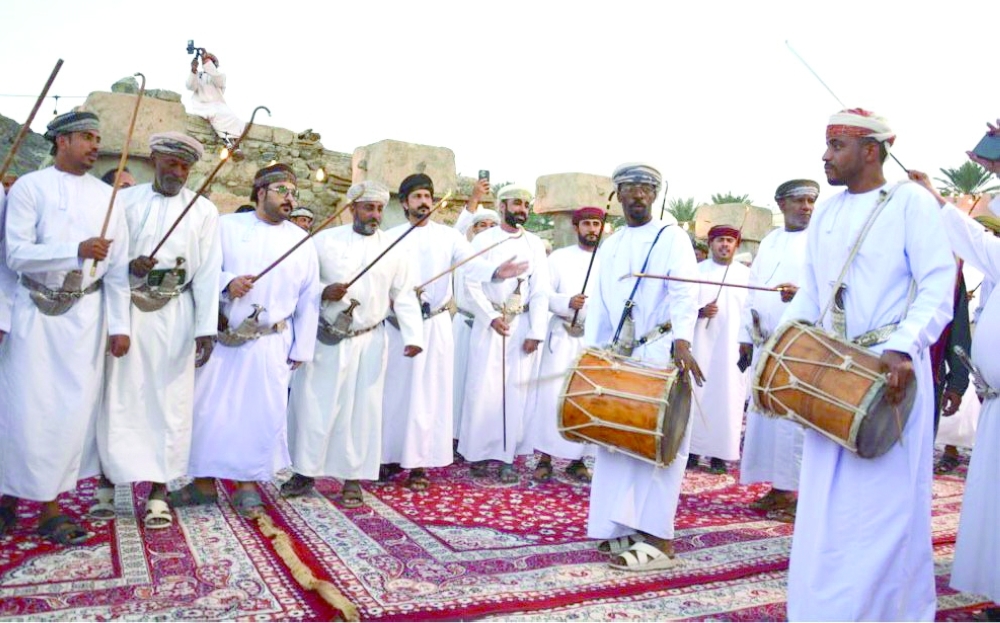
Central to the evening was a renewed focus on the muarribeen of Omani folk arts, those who translate poetry into performance and shape how verses are sung, felt and remembered by folk art troupes. Dedicated segments explored the nuances, melodies and poetic structures of razha and maidan, revealing how each performance is a layered collaboration between poet, performer and community. These discussions bridged academic insight with lived cultural practice, reinforcing that folk arts are not static relics, but evolving expressions of identity.
As theory gave way to practice, Souq Al Qanater transformed into an open-air stage. Live performances of razha, maidan, shahshah and ambam unfolded organically, their beats resonating against ancient walls. The audience did not simply observe, they participated, responding instinctively to rhythms that have long accompanied Omani social life.
Speaking from within this historic setting, Omani poet Al Hakam Tirmah al Hajri emphasised the symbolism of place. Hosting the forum in the old market, he explained, was a deliberate choice, as the souq embodies a deep connection between people and heritage. He described the gathering as a collective effort by Sablat Al Qasaed and its members, united by a shared belief that honouring past poets is also a responsibility towards future generations. Reviving folk arts in such a space, he noted, restores them to their natural environment, where history continues to breathe.
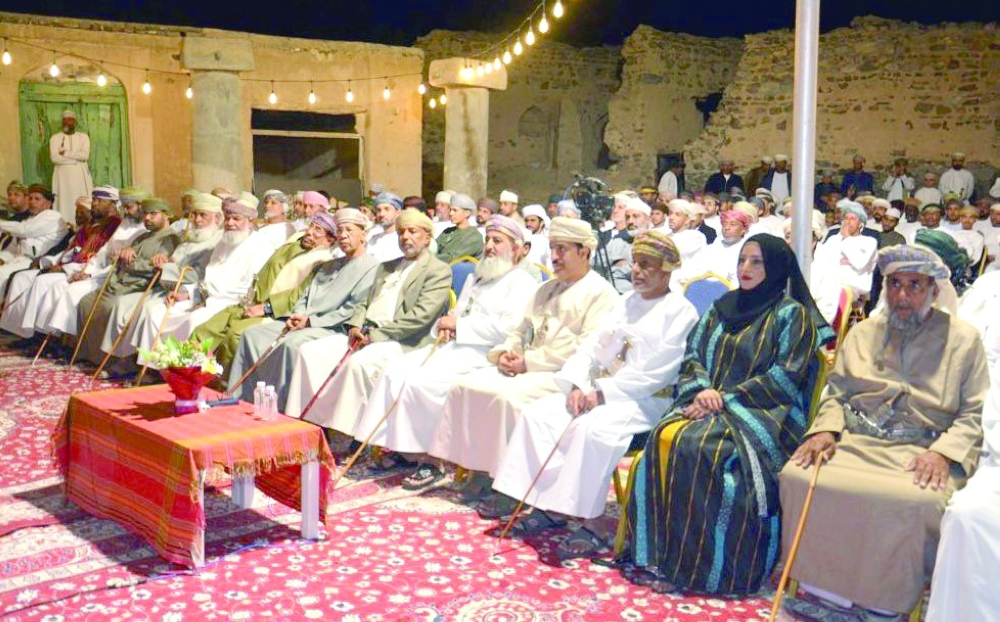
Beyond poetry and performance, the forum embraced cultural sustainability in its widest sense. A handicrafts exhibition and a dedicated corner for productive local families highlighted traditional industries and their enduring economic and social value. These spaces reinforced the idea that preserving heritage is not only about memory, but also about livelihood, continuity and community resilience.
As the night drew to a close, the echoes of poetry lingered long after the final chants faded. In Souq Al Qanater, history did not feel distant or archived. It stood present, spoken, sung and shared. Through this gathering, Sablat Al Qasaed affirmed that Oman’s folk poets are not merely remembered, they continue to speak, through voices willing to listen.
Oman Observer is now on the WhatsApp channel. Click here