For those wishing to marry, the Ministry of Health (MOH) has listed the procedure for the premarital medical examination:
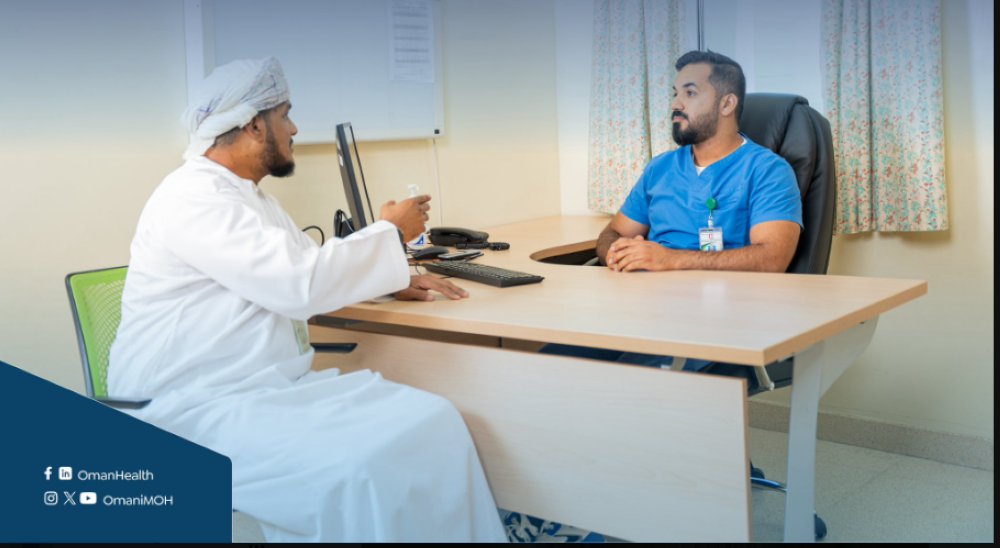
The physician reviews the medical history—including chronic and hereditary diseases—of both parties, informs them of the diseases covered by the examination, and the necessary procedures to complete the premarital medical examination before taking laboratory test samples.
The physician provides appropriate medical advice based on the results of the parties' examinations and explains the preventive and treatment options in case of hereditary or infectious diseases.
The health institution issues the premarital medical examination certificate to both parties after the completion of the examinations and the provision of advice.
The premarital medical examination certificate is valid for three months from the date of the examination.
Go to approved government or private health institutions within the Sultanate of Oman to undergo the premarital medical examination.
The premarital medical examination includes tests for hereditary blood diseases, sexually transmitted infectious diseases, and any other necessary examinations.
Treatment will be provided according to the results of the examinations, and cases that require it will be referred to specialists.
The health institution sends a digital copy of the premarital medical examination certificate to the Notary Public platform at the Supreme Judicial Council to prove that both parties have completed the examination procedures
Premarital medical examination is not just a mandatory procedure, but a conscious step and a decision that ensures a healthier and more stable life for you and them, MOH said.
His Majesty Sultan Haitham bin Tarik on Wednesday issued Royal Decree No 111/2025 on Regulation of Premarital Medical Examination. Article (1) states that every Omani wishing to marry - even if the other party is non-Omani - must undergo a medical examination, along with the other party, before the conclusion of the marriage contract, whether the contract is concluded inside or outside the Sultanate of Oman.
Meanwhile, the premarital tests conducted in the Sultanate of Oman increased from 15 percent in 2024 to 43 percent in 2025, said Dr. Said bin Harab al Lamki, Undersecretary of the Ministry of Health for Health Affairs, in a radio interview.
There has been an increase in the percentage of those opting for premarital screening due to awareness campaigns conducted by the Ministry of Health (MOH) and other competent agencies.
The plans include screening 11th-grade students to provide them sufficient time for making crucial decisions in coordination with relevant authorities.
He added that decisions made before marriage can sometimes be very difficult due to emotional and familial factors that concern both parties. "However, with awareness campaigns, society will fully accept the importance of this screening in the coming years."
As for screening students, the intention is to give them ample time for decision-making right from the early stage in coordination with the Ministry of Social Development. The screening is recorded on their ID cards, and all diseases are identified. Students at this stage have early awareness.