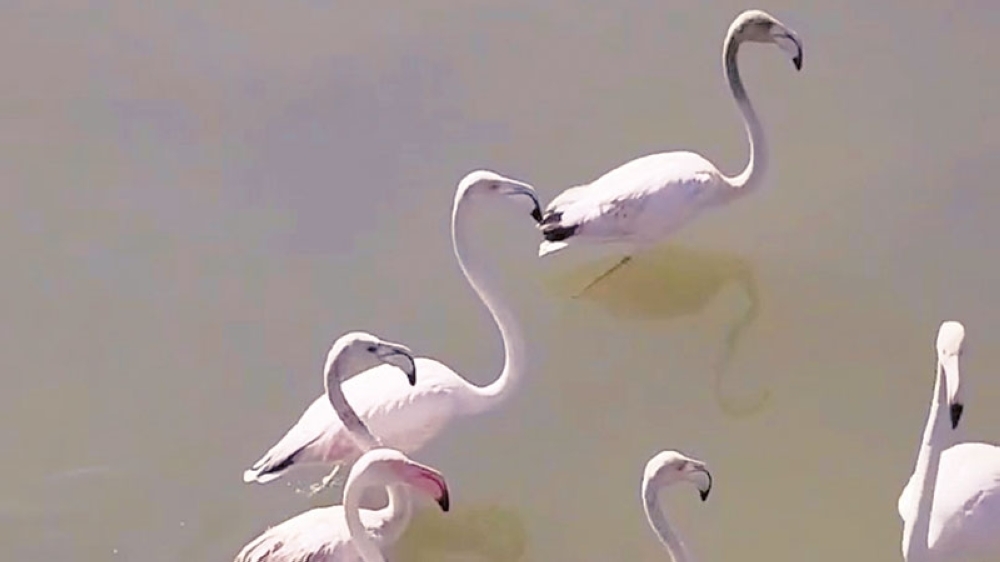





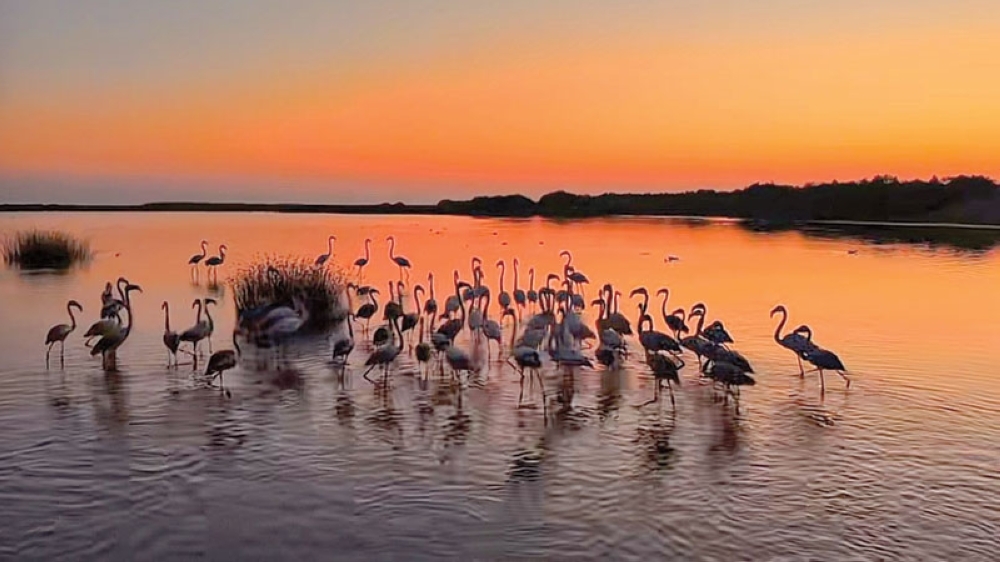
What began as a quiet natural corner in Qurayyat has now become one of Oman’s most talked-about destinations on social media. In recent months, Flamingo Lake has turned into a viral trend, filling timelines with soft pink reflections, synchronized flocks, and serene landscapes that many Omanis never imagined existed so close to home. Through short videos and photographs, the lake emerged not only as a location, but as a shared moment of collective wonder.
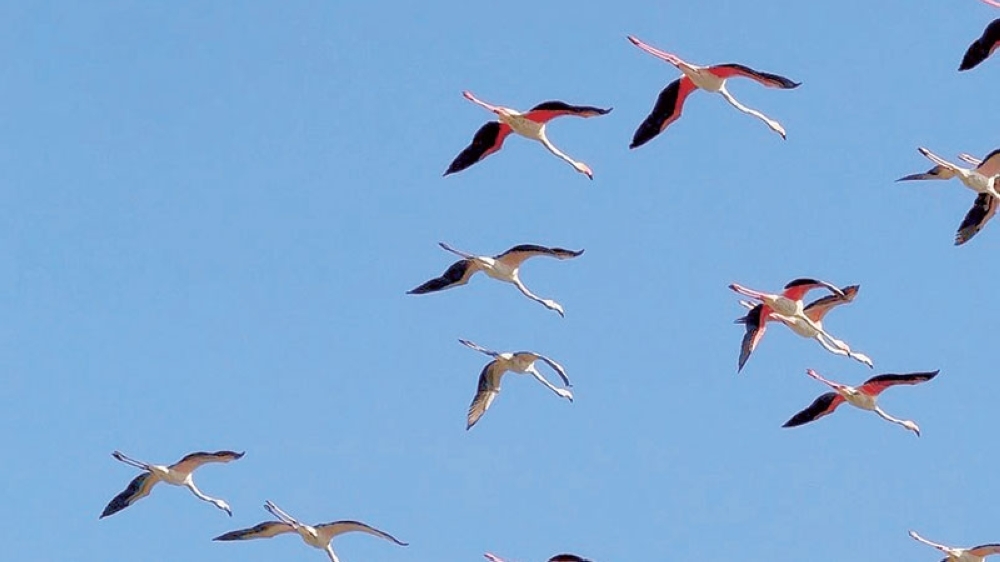
For Ahmed Abdul Latif al Zadjali, a social activist and social media influencer, the attention surrounding the lake feels both exciting and deeply personal. His connection to the site goes back to childhood, long before it appeared on screens across the country. “My first visits were when I was young,” he says. “But returning recently, what truly caught my attention was seeing environmental inspectors actively protecting the birds, and the diversity of species present, especially in the last year.” Watching birds fly, land, and feed by the water, combined with fresh sea air and open space, created what he describes as visual nourishment and a sense of calm. “It was a breathtaking scene.”
The astonishment expressed online reflects how little was previously known about the lake’s natural richness. Many were unaware that Qurayyat held such biodiversity. According to Ahmed, the lake contains clean water, lush vegetation, and a variety of migratory and resident birds, all within an atmosphere of quiet and renewal. Visitors often speak about the mental comfort they feel there, as if the lake offers a pause from daily pressures.
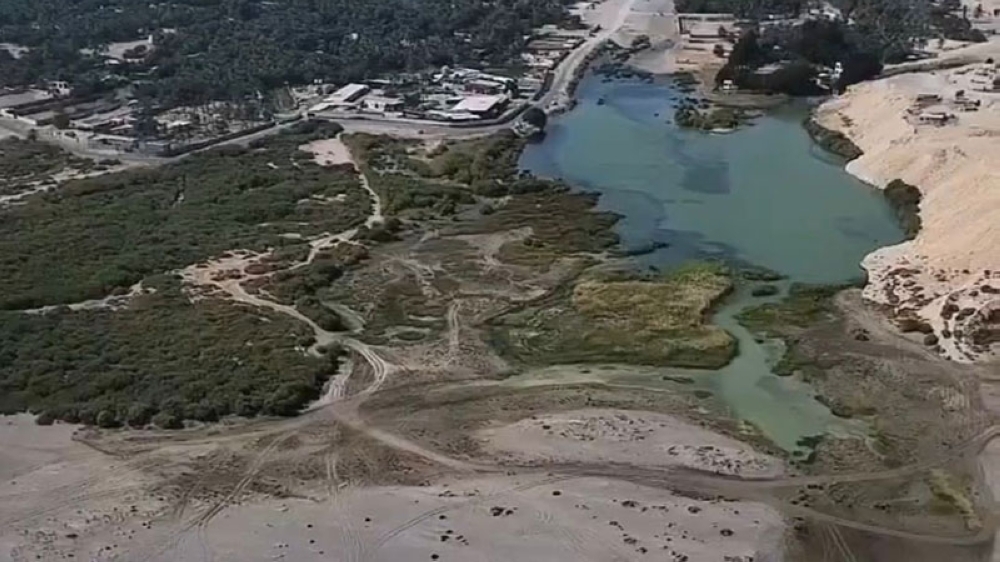
What makes Flamingo Lake especially striking is its geography. It is a meeting point of land, sea, mountain, and plain, forming a wide and balanced landscape. The lake itself is expansive, framed by green plant cover and filled with clear blue water that shifts with the light. “At times, it looks like a painted artwork,” Ahmed says. The area hosts many water birds, including flamingos, ducks, herons, and other species, turning it into a seasonal ecological destination. Flamingos arrive during winter migration and remain for nearly five months, drawn by the lake’s rich food sources and fertile environment, making it one of their most reliable annual stops in Oman.
Social media played a defining role in bringing this hidden ecosystem into the public eye. Platforms such as TikTok and Instagram collapsed distance, allowing people to experience the lake almost instantly. “Social media became the main tool for awareness and promotion,” Ahmed explains. One particular video he filmed, showing an unexpectedly large number of flamingos moving together across the water, became a defining moment. “Even I did not expect that scene,” he admits. “It was rare and unforgettable.”
With popularity came responsibility. Increased visits revealed environmental challenges, particularly waste. During frequent visits with friends who share his interest in nature, Ahmed noticed plastic and other debris polluting the lake. “These materials threaten wildlife and affect the visitor experience,” he says. This led to a volunteer cleanup campaign coordinated with Qurayyat Municipality and specialists from the Environment Authority. The initiative succeeded through cooperation and became a reminder that environmental protection is a shared duty.
Ahmed Salem al Siyabi, an employee at the Environment Authority, stresses the importance of community involvement. “Qurayyat thrives through its youth and its people,” he says. He notes several concerning behaviors observed at the site, including littering, approaching birds too closely for photos, entering protected areas on foot or by vehicle, damaging vegetation, and using drones without permits. Such actions disturb wildlife and violate environmental regulations.
Achieving balance between tourism and conservation remains essential. Promotion, Ahmed believes, must be matched with protection to ensure the lake’s ecological resilience. When managed responsibly, Flamingo Lake stands as a strong model for eco-tourism in Oman. In a relatively short time, it attracted an estimated 70,000 visitors, highlighting both its appeal and the urgency of safeguarding it.
For local resident Abdullah al Ameri, the lake has become a sanctuary. “It is one of the most peaceful places for us,” he says. Early mornings bring still water, fresh air, and soft reflections of the sky, while sunsets bathe the lake in warm light and quiet magic. In winter, the cool breeze and open space transform it into a natural escape for families.
Visitors echo this sentiment. Azza al Busaidi from Nizwa says she discovered the lake through TikTok and felt compelled to see it herself. “I never expected to find such a serene, picture-book place in Oman,” she says. “Now I hope to return every year when the flamingos arrive.”
The message from those closest to Flamingo Lake is clear. It is not just a trend, but a living ecosystem. Preserving its beauty requires awareness, respect, and care, so that what is shared online continues to reflect a place that remains balanced, protected, and alive for generations to come.
Oman Observer is now on the WhatsApp channel. Click here