




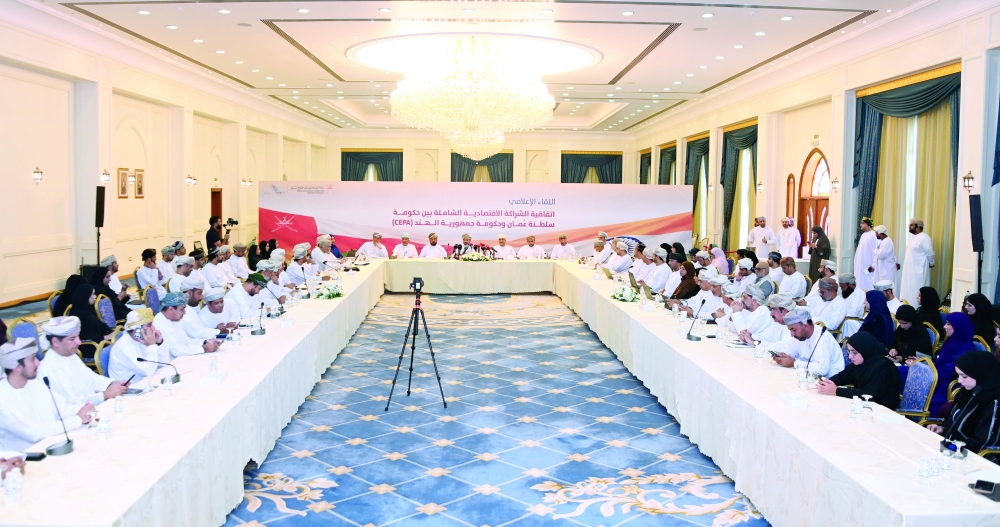
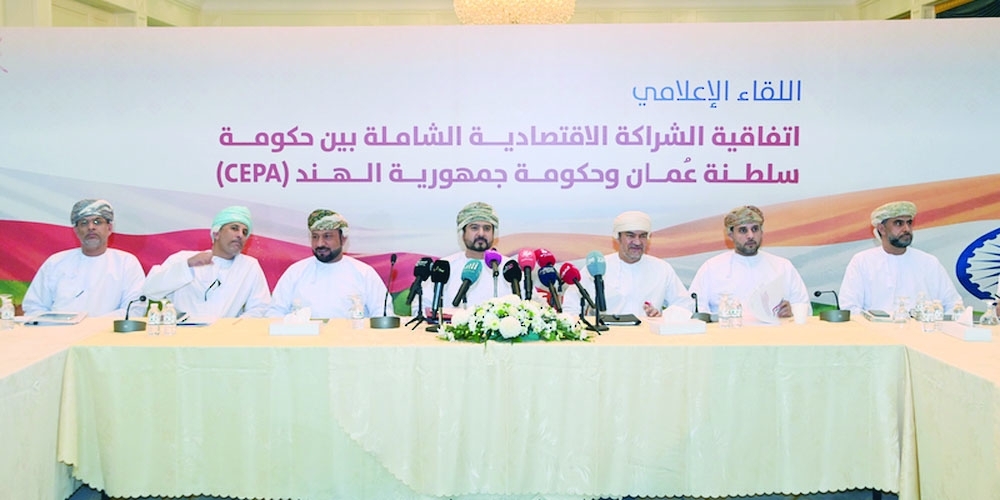
MUSCAT: The Ministry of Commerce, Industry and Investment Promotion affirmed that the Comprehensive Economic Partnership Agreement (CEPA) concluded with the Republic of India does not affect the policies of Omanisation. The ministry said that the agreement is subject to all applicable laws and regulations in the Sultanate of Oman to ensure that priority in employment is accorded to the national cadre, without exception. This was unveiled during a media briefing held by the ministry in Muscat on Tuesday.
During the briefing, the ministry pointed out that the CEPA will contribute in expanding the prospect of commercial exchange and enhancing regional economic integration. It added that the agreement also constitutes an important channel for diversifying non-oil revenues and enhancing the attractiveness of investment.
Qais bin Mohammed al Yousef, Minister of Commerce, Industry and Investment Promotion, reaffirmed that the Sultanate of Oman retains its full sovereign right to apply anti-dumping and countervailing measures. He added that the agreement allows Oman to take protective measures to counteract proven or suspected harm/damage in practices that affect local industries.
Speaking on the occasion, Al Yousef said that CEPA with India will give the Sultanate of Oman a comparative advantage till such time that other GCC states enter into similar agreements. This makes the swift implementation of the agreement a direct strategic and economic gain, he observed.
Al Yousef pointed out that the agreement as a whole constitutes a strategic step, supports the competitiveness and diversification of the national economy, enhances the attractiveness of Oman as an investment destination, opens up vistas for diversifying the base of production, empowers small and medium enterprises (SMEs) and generates employment opportunities for citizens.
Al Yousef said that the CEPA also constitutes an integrated framework for liberalising trade in goods by eliminating or cutting down customs duties, regulating non-tariff barriers, facilitating import and export procedures and establishing precise rules to protect national products.
The CEPA also offers Omani products preferential access to a market of over one billion people — and this will in turn enhance national exports, consolidate their global presence and contribute to enhancing the status of Oman as a regional logistics and industrial hub and a strategic gateway to Asian markets.
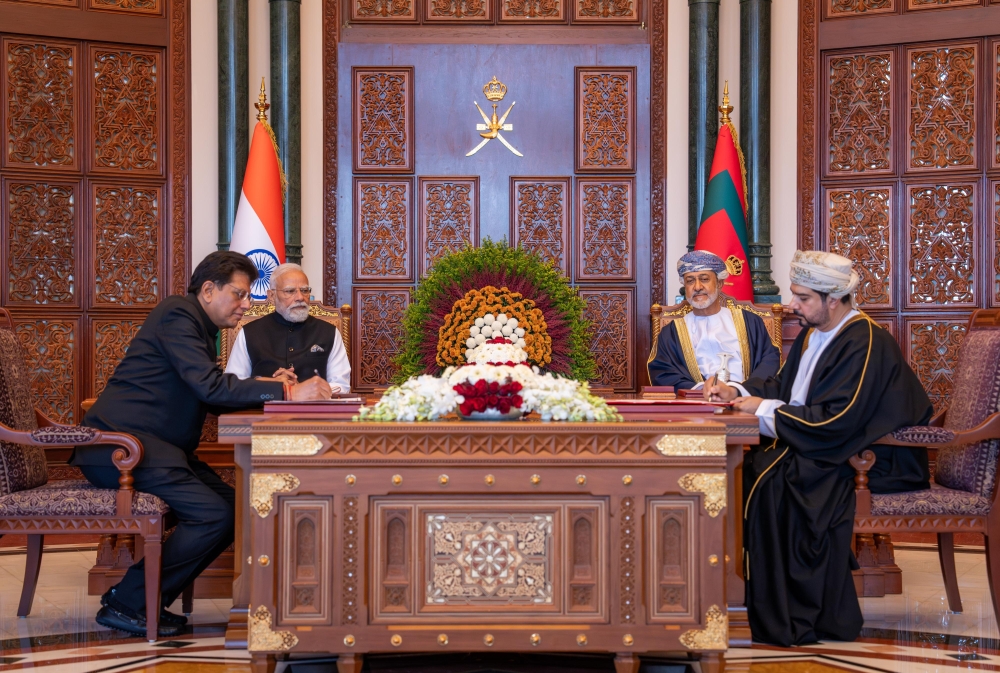
Al Yousef added that the CEPA represents an important step forward in boosting economic cooperation between the Sultanate of Oman and the Republic of India by opening new channels of investment and trade. He said that related negotiations were based on specialised studies, including an economic study prepared by 'Deloitte & Touche', which affirmed the economic feasibility of the CEPA and the pact’s ability to enhance added value and support the competitiveness of Omani exports in global markets.
Al Yousef said that the negotiations took place in five main tours from 2023 to 2025. He added that, under the CEPA, the Sultanate of Oman obtained an advanced rate of trade liberalisation to the tune of 97.4 per cent of the total volume of Omani goods in existing exports, while total access to Indian markets stood at about 77.8 per cent, with special liberalisation for a number of goods of strategic importance to national industries.
In return, Oman granted the Indian side gradual customs liberalisation according to clear-cut timetables, amounting to 99.22 per cent in a manner that fits with national economic policies and requirements for protecting local industries.
For his part, Faisal bin Abdullah al Rawas, Chairman of the Oman Chamber of Commerce and Industry (OCCI), said that to maximise the Omani private sector’s gains from the CEPA, the OCCI would send trade delegations to India and receive Indian trade delegations, in addition to organising workshops in different governorates of Oman (in cooperation with the Ministry of Commerce, Industry and Investment Promotion) to outline the terms of the agreement.
The media briefing included a presentation about the stages of negotiation, right from the start, till such time that the 16-chapter CEPA between the Sultanate of Oman and the Republic of India was concluded. The presentation also stressed that the CEPA with India does not include any clause that compels the Sultanate of Oman to amend its Omanisation policies. It affirmed that Oman national laws are the sole reference point for regulating the labour market. - ONA
Oman Observer is now on the WhatsApp channel. Click here