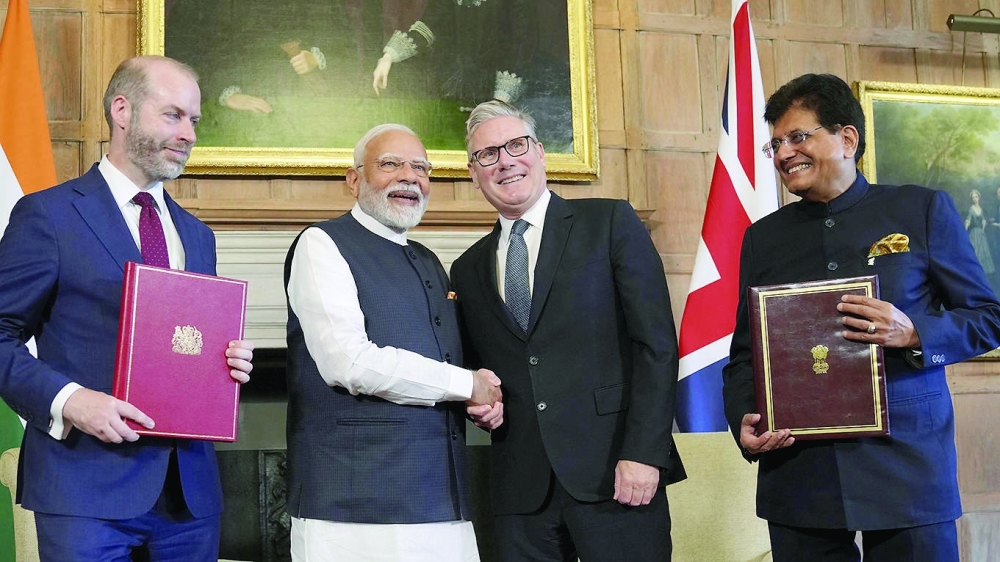
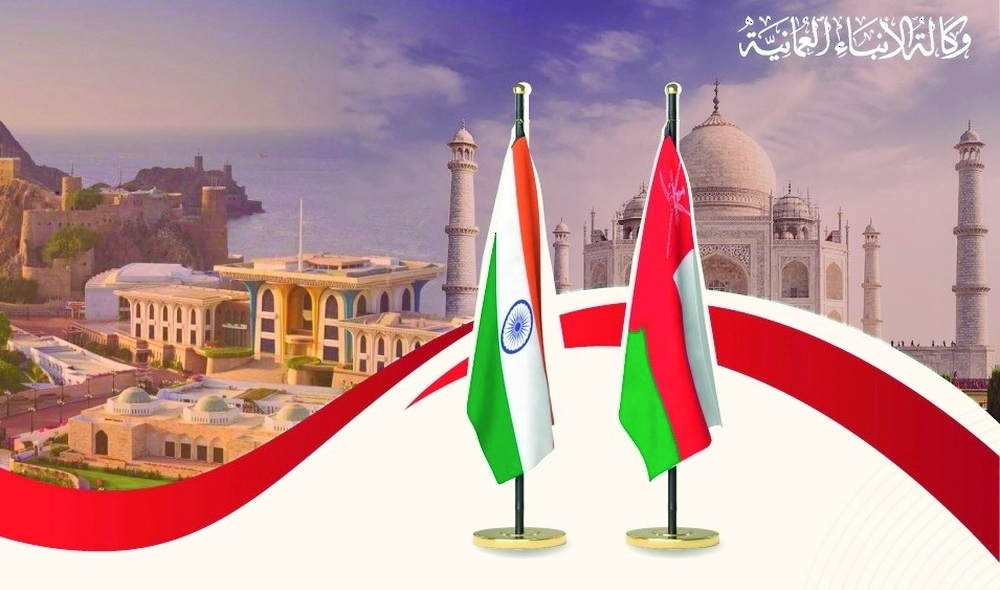
Oman and India have signed the Comprehensive Economic Partnership Agreement (CEPA) in Muscat, a milestone that deserves recognition. But the bigger story starts after the signing. A trade agreement becomes meaningful only when companies use it: when exporters quote new prices, distributors redesign routes, investors commit capital, and service firms open local teams. The next phase is therefore not a policy footnote. It is a business mobilisation exercise.
A familiar comment is, “Oman is a small market.” That view is understandable, yet incomplete. CEPA is not only about market size. It is about proximity and platform. Oman sits across the Arabian Sea from India, within short flight time for business travel and within days for shipping. In today’s world, logistics shocks behave like hidden tariffs. When distance and delays rise, costs rise. When routes are reliable and close, trade becomes easier, faster, and more competitive.
Oman’s strategic location also makes it a practical base. From its ports and free zones, firms can serve not only Oman but also the wider Gulf, East Africa, and the Indian Ocean corridor. For Indian companies, this means a nearby platform for regional distribution and after-sales support. For Omani companies, it means deeper integration into one of the world’s largest growth markets, with a partner that can supply scale, skills, and technology.
The headline terms of CEPA send a strong signal to both business communities. Oman will provide zero-duty access on 98.08% of its tariff lines for Indian goods, covering 99.38% of India’s exports to the Sultanate by value. India, in turn, will liberalise 77.79% of its tariff lines, covering 94.81% of imports from Oman by value, while managing sensitive areas through exclusions and quota-based approaches. For the private sector, this matters because certainty changes behaviour. Companies invest when rules are predictable and disputes are less likely.
The first “driver” is tariff certainty and landed cost. Where duties fall to zero, procurement decisions can change quickly, especially in competitive consumer and industrial categories. Indian exporters are well placed in engineering goods, electrical and mechanical items, healthcare products, selected consumer goods, and food and agro-products. Omani suppliers benefit from clearer access for energy and industrial inputs that India needs at scale, while creating incentives to diversify into higher-value materials and downstream products through joint ventures and new processing capacity.
The second “driver” is services and investment, and it may deliver the biggest multiplier. Oman imports significant services, and India is a global services exporter. CEPA can support new projects in IT and cybersecurity, engineering and project delivery, logistics, healthcare, education, and specialised industrial services. Where mobility commitments make it easier for project teams to work on-site, execution improves. That is not a small detail; it can determine whether a project succeeds, scales, and becomes a long-term relationship. With a large Indian community already contributing to Oman’s economy, people-to-people links can also speed up partnership building and trust.
Electronics is one example of how CEPA can become tangible. India’s electronics manufacturing and exports are rising rapidly. Oman imports a wide range of devices for consumers, industry, and infrastructure. With the right partnerships, Oman can host testing, repair and after-sales service, warehousing, and selective assembly for regional distribution. A similar platform logic applies to renewables and the energy transition. Oman’s ambitions in solar, wind, and green hydrogen can match well with India’s strengths in engineering, power electronics, software, and industrial services. Together, firms can build bankable pipelines that create jobs and skills on both sides.
Yet a signed agreement does not automatically translate into utilisation. The barriers are often practical: product classification, tariff schedules, documentation, standards, and origin certification. This is where the private sector must lead, supported by responsive institutions. Chambers of commerce and sector associations can turn CEPA into a capability agenda by running practical clinics on HS codes, certificates of origin, conformity requirements, and fast routes to resolve bottlenecks. Small and medium enterprises need simple playbooks, not long speeches, because a single missing document can erase the value of a tariff cut.
Rules of origin is the chapter every business leader should take seriously. Preferential access is granted only to genuinely originating goods. This protects legitimate producers and prevents simple transshipment. It also matters because the global trade game is changing. Firms will look for efficient ways to blend inputs from different regions and route products through hubs. Under CEPA, that can work only when there is real value addition that meets the agreement’s rules and can be proven through documentation and audit trails. Done correctly, rules of origin becomes an opportunity: it encourages real assembly, processing, packaging, testing, and regional fulfilment in Oman, linked to India’s scale manufacturing and services.
To convert opportunity into results, business leaders should act early. A practical 90-day plan can help. First, map products and services to CEPA benefits and documentation needs. Second, redesign supply chains for compliance, with traceability and supplier declarations. Third, form partnerships that combine Indian capability with Omani logistics and market access. Fourth, invest in capability, not only trade: servicing, training, testing, and certification build long-term competitiveness.
CEPA can be a win-win if both business communities move together. Oman gains deeper investment, stronger services ecosystems, and a sharper role as a regional platform. India gains a close, reliable partner and a gateway into the Gulf and beyond. The signing was the headline. The sooner implementation begins, the stronger the returns. Implementation will define the legacy.
Oman Observer is now on the WhatsApp channel. Click here