Language is never a neutral instrument. It carries knowledge, shapes imagination and defines the boundaries of culture.
Arabic, throughout its long history, has proven itself to be one of humanity’s major civilisational languages, contributing decisively to literature, science, philosophy and the arts.
Through translation and scholarly engagement, Arabic knowledge once travelled far beyond its geographic origins, influencing intellectual traditions across continents.
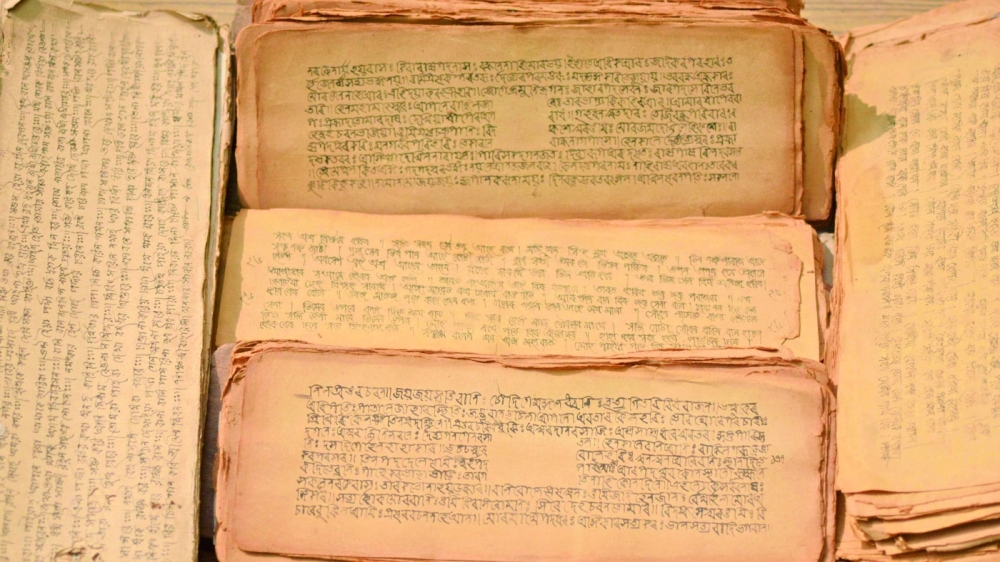
This legacy was built on more than eloquence. Arabic demonstrated a sustained capacity for innovation and discovery. Classical medical works, scientific treatises, philosophical writings and artistic production stand as concrete evidence of the language’s expressive and analytical power.
For centuries, Arabic functioned as a bridge between civilisations, facilitating the exchange of ideas and positioning Arab intellectual output within a shared human framework.
This role was not accidental; it was the result of cultural choices and policies that treated language as a foundation of knowledge, authority and progress.
Today, Arabic faces a different and more complex challenge. Rapid technological transformation and digital lifestyles increasingly favour a narrow group of global languages.
Despite its global reach and hundreds of millions of speakers, Arabic risks marginalisation unless language policy is treated as a strategic issue rather than a ceremonial one. Language is not only heritage; it is a tool of sovereignty, identity and future competitiveness in a knowledge-driven world.
The theme of World Arabic Language Day 2025, 'Innovative Horizons for the Arabic Language: Policies and Practices Shaping a More Inclusive Linguistic Future', reflects growing awareness of this reality. Innovation is no longer optional for Arabic. Languages that fail to adapt to technological and social change gradually retreat into symbolic use, while others dominate education, media, research and innovation ecosystems.
Technological transformation offers Arabic genuine opportunities, but only if supported by clear and decisive policies. Reviewing educational curricula, modernising teaching methods and redefining the role of Arabic in contemporary media are urgent tasks.
Arabic must be presented as a language capable of producing knowledge, supporting research and driving creativity, rather than being confined to cultural preservation alone. When learners associate Arabic with limitation instead of possibility, the problem lies not in the language but in the policies governing its use.
Modern technologies increasingly shape social behaviour, public discourse and even collective values. Language lies at the heart of this transformation. Yet many technological systems promote standardised global models that overlook linguistic diversity and local identities. Digital platforms, applications and artificial intelligence systems privilege certain languages and by extension, the cultures and perspectives embedded within them. Without deliberate intervention, Arabic risks becoming underrepresented in the very spaces where ideas, narratives and social norms are now formed.
Updating Arabic language policies is therefore essential for managing social change. Strengthening Arabic within education systems ensures that younger generations experience it as a functional, enabling language rather than a restrictive one.
Expanding its presence on digital platforms, software environments and innovation tools reinforces its status as a living language capable of adaptation and creativity. Visibility in digital spaces is no longer symbolic; it is a measure of relevance and influence.
The renewed focus on language policy during World Arabic Language Day signals a deeper concern: Arabic has lost ground in technological environments dominated by other languages. Addressing this imbalance is not cultural defensiveness; it is a commitment to linguistic equity. Every language has the right to meaningful participation in global systems of knowledge and innovation, particularly when it carries a civilisational legacy as rich as Arabic’s.
Arabic is not a local or regional language. It is a global language with vast intellectual, cultural and human potential. This reality must be reflected in strategic planning, technological investment and digital infrastructure. The rise of artificial intelligence has further exposed linguistic inequality, as AI systems overwhelmingly prioritise languages supported by economic and political power.
If Arabic is to remain a language of knowledge and innovation, enriching its digital content and integrating it fully into technological platforms is imperative. This requires coherent policies, sustained investment and, above all, a shift in perception.
Arabic must be treated as a language of the future — capable of shaping ideas, producing knowledge and participating confidently in global innovation — rather than being confined to the role of memory or symbolism.
Translated by Badr al Dhafari
Oman Observer is now on the WhatsApp channel. Click here