Every few years, I am reminded of one of my cardinal rules of journalism: Whenever you see elephants flying, don’t laugh, take notes. Because if you see elephants flying, something very different is going on that you don’t understand but you and your readers need to.
I bring that up today in response to the Trump administration’s 33-page National Security Strategy, released last week. It has been widely noted that at a time when our geopolitical rivalry with Russia and China is more heated than at any other time since the Cold War — and Moscow and Beijing are more and more closely aligned against America — the Trump 2025 national security doctrine barely mentions these two geopolitical challengers.
While the report surveys US interests across the globe, what intrigues me most about it is how it talks about our European allies and the European Union. It cites activities by our sister European democracies that “undermine political liberty and sovereignty, migration policies that are transforming the continent and creating strife, censorship of free speech and suppression of political opposition, cratering birthrates, and loss of national identities and self-confidence.” “Should present trends continue,” it goes on, “the continent will be unrecognisable in 20 years or less.” Indeed, the strategy paper warns, unless our European allies elect more “patriotic” nationalist parties, committed to stemming immigration, Europe will face “civilisational erasure.” Unstated but implied is that we will judge you not by the quality of your democracy but by the stringency by which you stem the migration flow from Muslim countries to Europe’s south.
That is a flying elephant no one should ignore. It is a language unlike any previous US national security survey, and to my mind it reveals a deep truth about this second Trump administration: how much it came to Washington to fight America’s third civil war, not to fight the West’s new Cold War.
Yes, in my view, we are in a new civil war over a place called home.
Humans have an enduring, structural need for home, not only as a physical shelter, but as a psychological anchor and moral compass, too. That is why Dorothy in “The Wizard of Oz” (my favourite movie) got it exactly right: “There’s no place like home.” And when people lose that sense of home — whether by war, rapid economic change, cultural change, demographic change, climate change or technological change — they tend to lose their centre of gravity. They may feel as if they are being hurtled around in a tornado, grabbing desperately for anything stable enough to hold onto — and that can include any leader who seems strong enough to reattach them to that place called home, however fraudulent that leader is or unrealistic the prospect.
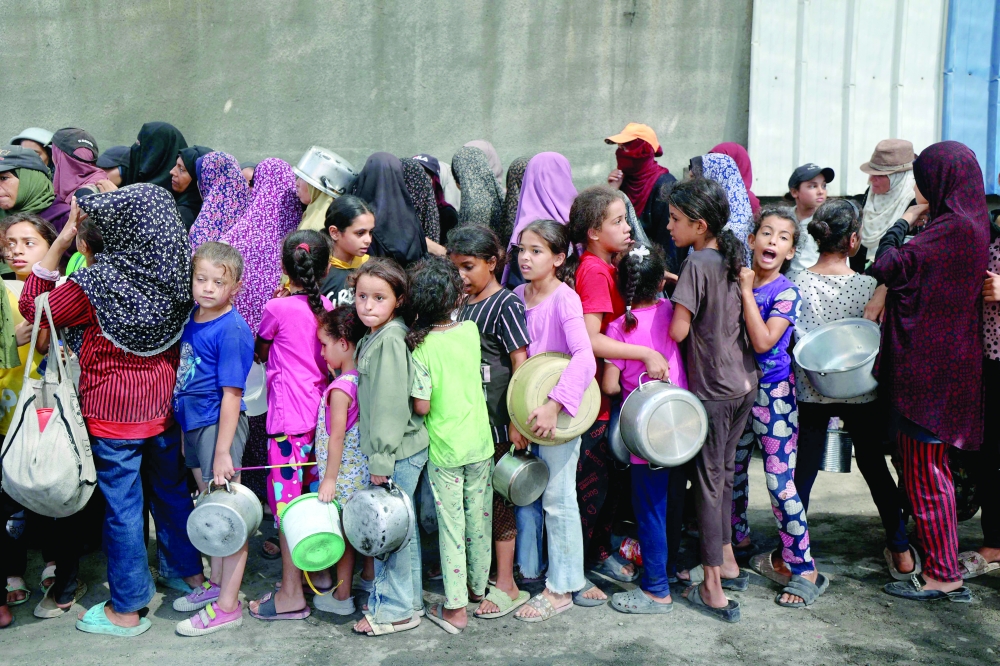
With that as background, I cannot remember another time in the past 40 years when I have travelled around America, and the world, and found more people asking the same question: “Whose country is this anyway?” Or as Itamar Ben-Gvir, the far-right nationalist Israeli minister, put it, in Hebrew, in his political banner ads during Israel’s 2022 election: “Who is the landlord here?” And that is not an accident. Today, more people are living outside their country of birth than at any point in recorded history. There are approximately 304 million global migrants — some seeking work, some seeking education, some seeking safety from internal conflicts, some fleeing droughts and floods and deforestation. In our own hemisphere, the US Customs and Border Protection office reports that migrant encounters at our southern border hit historical highs in 2023, while estimates from the Pew Research Center suggest that the total unauthorised population in America grew to 14 million in the same year, breaking a decade-long period of relative stability.
But this is not just about immigrants. America’s third civil war is being fought on multiple fronts. On one front it is white, predominantly Christian Americans resisting the emergence of the minority-dominated America that is now baked into our future sometime in the 2040s, driven by lower birthrates among white Americans and growth in Hispanic, Asian and multiracial American populations.
On another front are Black Americans still struggling against those who would raise new walls to keep them from a place called home. Then there are Americans of every background trying to steady themselves amid cultural currents that seem to shift by the week: new expectations about issues like identity, bathrooms and even a typeface, as well as how we acknowledge one another in the public square.
On yet another front, the gale-force winds of technological change, propelled now by artificial intelligence, are sweeping through workplaces faster than people can plant their feet. And on a fifth front, young Americans of every race, creed and colour are straining to afford even a modest home — the physical and psychological harbour that has long anchored the American dream.
My sense is that we now have millions of Americans waking up each morning unsure of the social script, the economic ladder or the cultural norms that are OK to practice in their home. They are psychologically homeless.
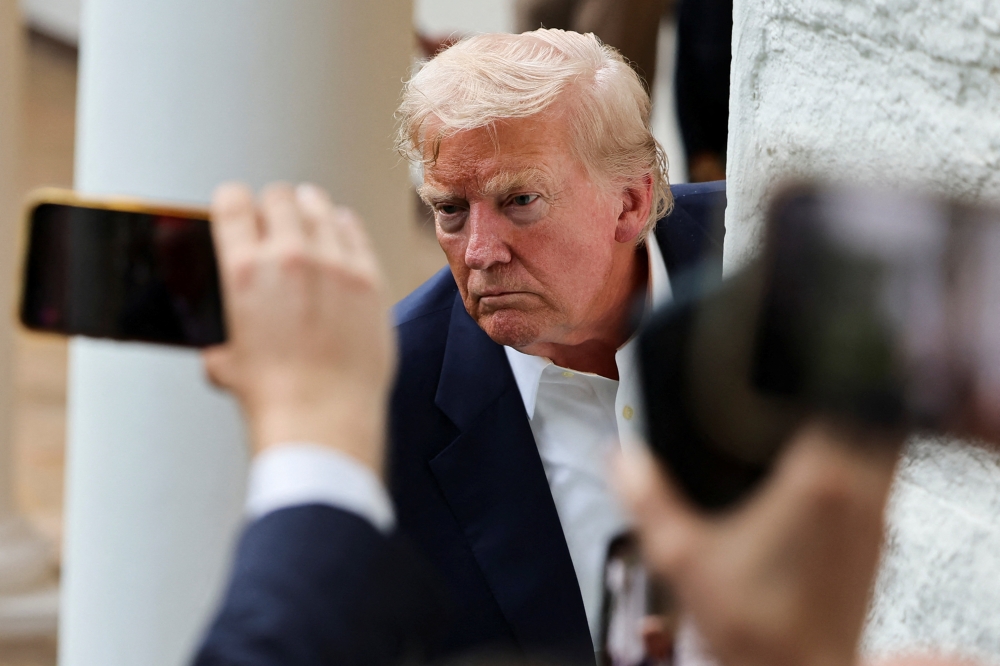
When Donald Trump made building a wall along the Mexican border the central motif of his first campaign, he instinctively chose a word that did double duty for millions of Americans. “Wall” meant a physical barrier against uncontrolled immigration that was accelerating our transition to a minority-majority-led America. But it also meant a wall against the pace and scope of change: the cultural, digital and generational whirlwinds reshaping daily life.
That, to me, is the deep backdrop to Trump’s National Security Strategy. He is not interested in refighting the Cold War to defend and expand the frontiers of democracy. He is, in my view, interested in fighting the civilisational war over what is the American “home” and what is the European “home,” with an emphasis on race and Christian-Judeo faith — and who is an ally in that war and who is not.
In other words, when protecting “Western civilisation” — with a focus on race and faith — becomes the centrepiece of US national security, the biggest threat becomes uncontrolled immigration into America and Western Europe — not Russia or China. And “protecting American culture, ‘spiritual health’ and ‘traditional families’ are framed as core national security requirements,” as defence analyst Rick Landgraf pointed out on the defence website “War on the Rocks.” And that’s why the Trump National Security Strategy paper is no accident or the work of a few low-level ideologues. It is, in fact, the Rosetta Stone explaining what really animates this administration at home and abroad. — The New York Times
Oman Observer is now on the WhatsApp channel. Click here