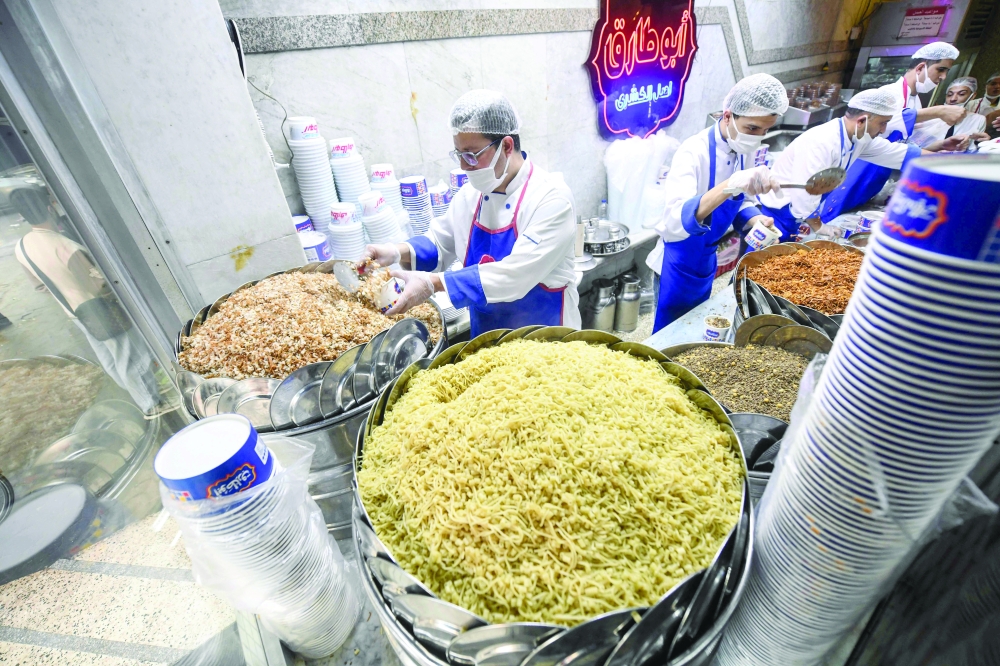





CAIRO: Unesco recognised Egypt's favourite daily dish as intangible cultural heritage, to the delight of Egyptians digging into the spicy staple at every corner.
"We grew up eating koshary in plastic bags. It's a heritage we grew up with", Emad Yassin said during the lunch rush of a popular downtown Cairo joint, Koshary Abou Tarek.
The budget-friendly, carb-loaded bowl of noodles, rice, lentils and fried onions doused in a blazing hot sauce is a culinary staple in the Arab world's most populous country.
Irina, a Spanish tourist who had stopped in for a bite, said the Unesco nod was a good call.
"It's a really good decision because when you're eating koshary, you can feel and taste the country here, all the mixes of flavours", she said.
Behind her and in corner shops across the country, mountains of noodles, rice and lentils are piled high in adjoining pots.
With choreographed precision, vendors ladle scoop, after scoop, after scoop at lightning speed.
They pour tomato sauce all over, sprinkle fried onions, then leave it to each customer to season to taste: blazing hot sauce, tangy garlic-vinegar drizzle.
The humble meal has been passed down in many forms — varying by region — for centuries. It was first recorded, by British writer Richard Burton in 1866, as a winter breakfast in the eastern city of Suez.
At that point only lentils and rice, it wasn't until the mid-20th century that noodles were added to even further "cut costs after the price of rice skyrocketed", food archaeologist and archaeobotanist Mennat-Allah El Dorry said.

Urban Staple
The dish's precise origin is not known, but "versions of koshary can be found all along the trade route from India to Egypt", El Dorry said.
In Egypt, it has become an urban staple over the past century and a half, as metropolises grew and city workers needed quick, cheap and filling meals.
For many Egyptians, the comfort food is at its best made and served at home, but dedicated establishments are a dime a dozen, from humble little carts to multi-storey restaurants like Koshary Abou Tarek.
Laila Hassaballa, co-founder of Cairo food tour Bellies En-route, said the dish is a highlight for visitors, though at first they can be "a bit surprised at the combination of ingredients".
That much is true for Greek tourist Lefteris, who said he was excited by "so many textures and tastes simultaneously. I know each individual taste but I haven't tried the combination before".
From Hassaballa's experience, "no trip to Egypt feels complete without trying it at least once".
Unesco's decision, according to El Dorry, is the latest in a growing recognition of Egyptian food heritage, which has historically taken a back seat to other regional cuisines, such as Lebanese.
"It's a very important message that there is a very, very, very rich Egyptian kitchen that shouldn't be underestimated", she said.

Swiss Yodelling
Yodelling, the traditional singing of herders in the Swiss Alps, was also recognised as part of the world's cultural heritage.
"As the emblematic song of Switzerland, yodelling encompasses a wide variety of artistic expressions and is deeply rooted in the population", the Swiss culture ministry said.
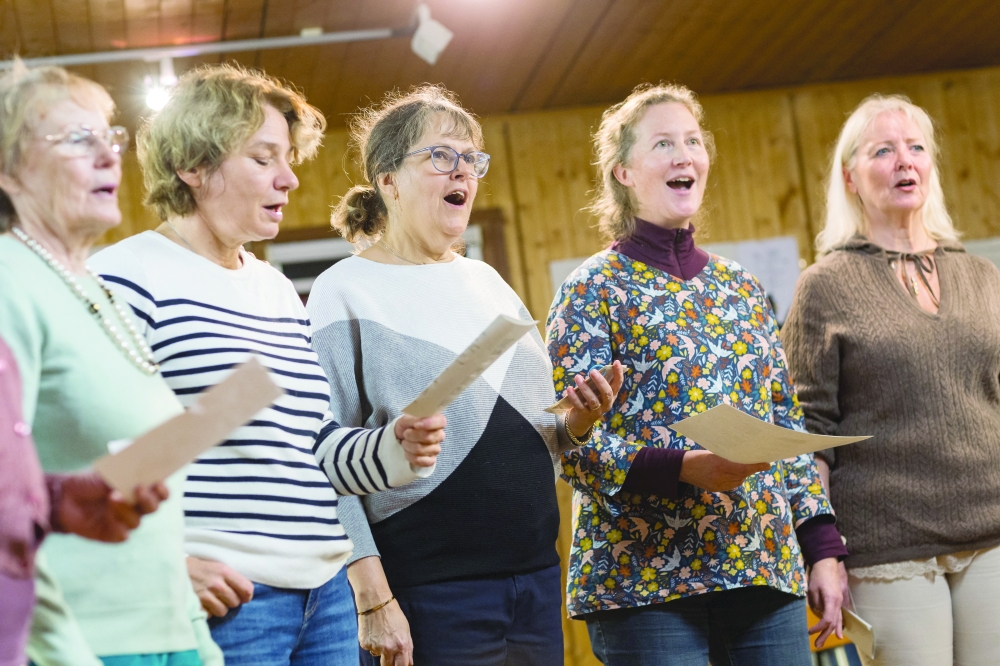
Yodelling is passed on in families, clubs, music schools or simply between singers.
More than 12,000 yodellers are members of one of the 711 groups of the country's Federal Yodelling Association.
"As a characteristic vocal technique, yodelling alternates between chest and head voice and uses meaningless syllables that are often associated with local dialects," the culture ministry explained.
Natural yodelling consists of melodies without lyrics, while the yodelling song combines verses and refrains and often touches on nature and everyday experiences, it added.
"Whether soloist, in small groups or in choirs — sometimes accompanied by instruments such as the accordion — the yodel is characterised by its rich sound and its presence at concerts, festivals and competitions, which are often associated with the wearing of regional costumes".
Mountain Link
For Markus Egli, choir director of the Burgerturner-Jodler club in Lucerne, Unesco recognition is a good way to bolster the continuation of yodelling.
Dressed in traditional attire and wearing a felt hat, 79-year-old Max Britschgi, a member of the choir for nearly 50 years, saw it as a celebration of nature, explaining that he felt "connected to the mountains" through yodelling.
Switching between chest voice and the higher head voice is "the most complicated" aspect, according to Yvonne Eichenberger, 35, the choir's soprano.
"It requires time and practice", she said.
Degrees and 'Yodelton' —
Julien Vuilleumier, who advised the Swiss culture ministry on the Unesco application, said the origins of yodelling were unclear.
However, "yodelling as we know it today was codified in the 19th and 20th centuries", with "cross-influences" from southern Germany and the Tyrolean mountains of Austria and Italy, he said.
The reach of yodelling extends beyond Switzerland. Through waves of emigration, it has become integrated into US folk music, including country.
It is continuing to evolve, extending into "more experimental forms, bordering on jazz, pop and rock", Vuilleumier explained, highlighting "yodelton" — a creation by a Swiss artist that blends yodelling with reggaeton rhythms. — AFP
Oman Observer is now on the WhatsApp channel. Click here