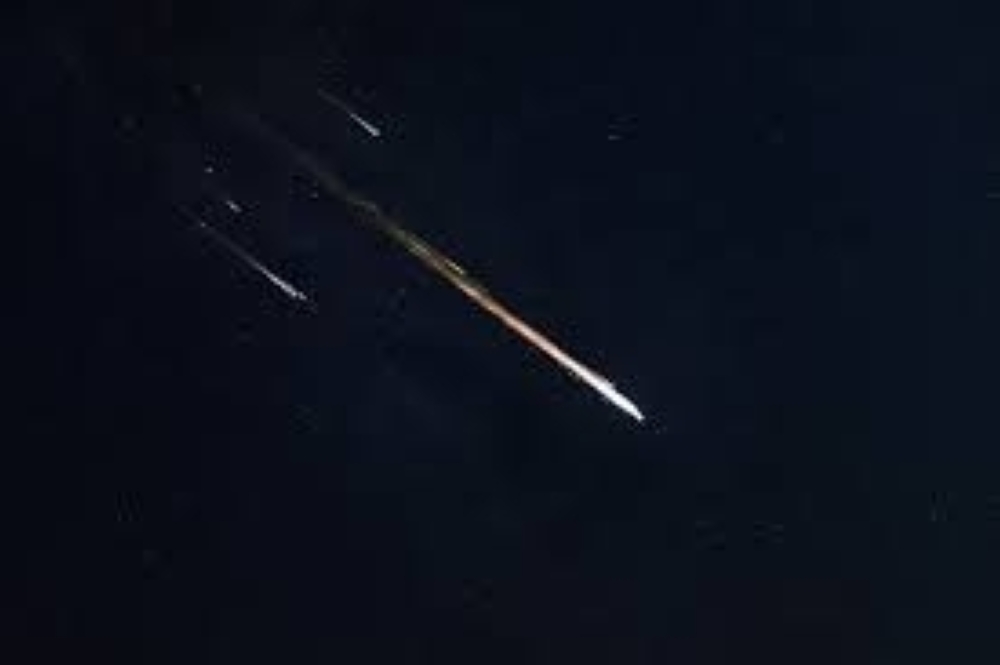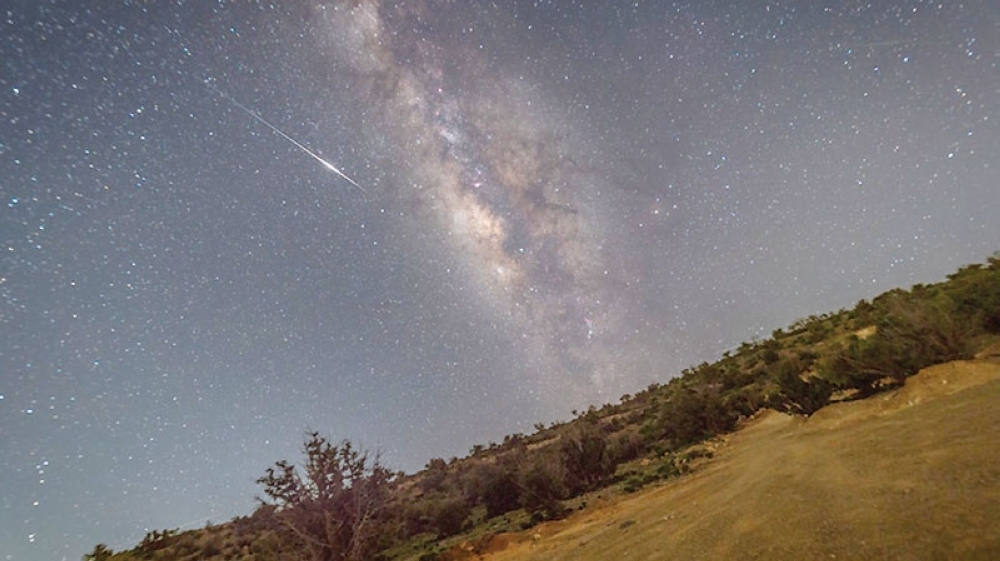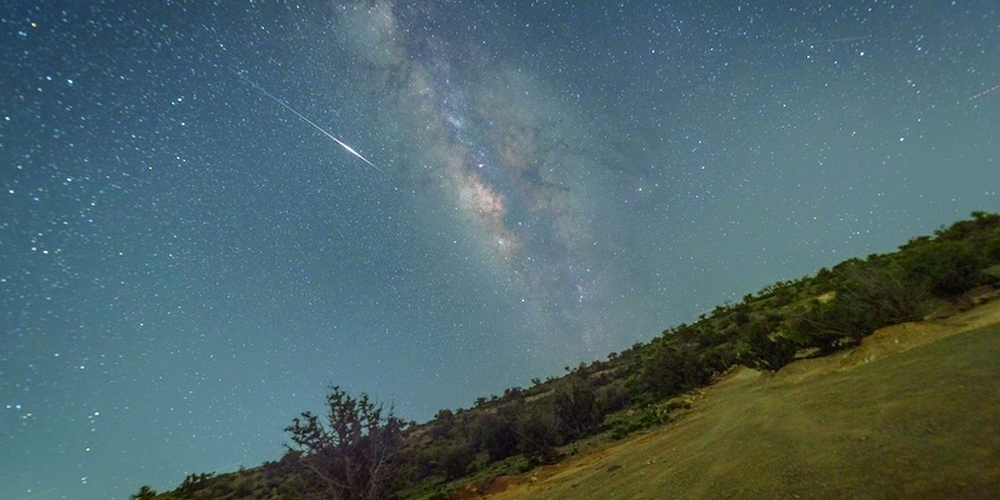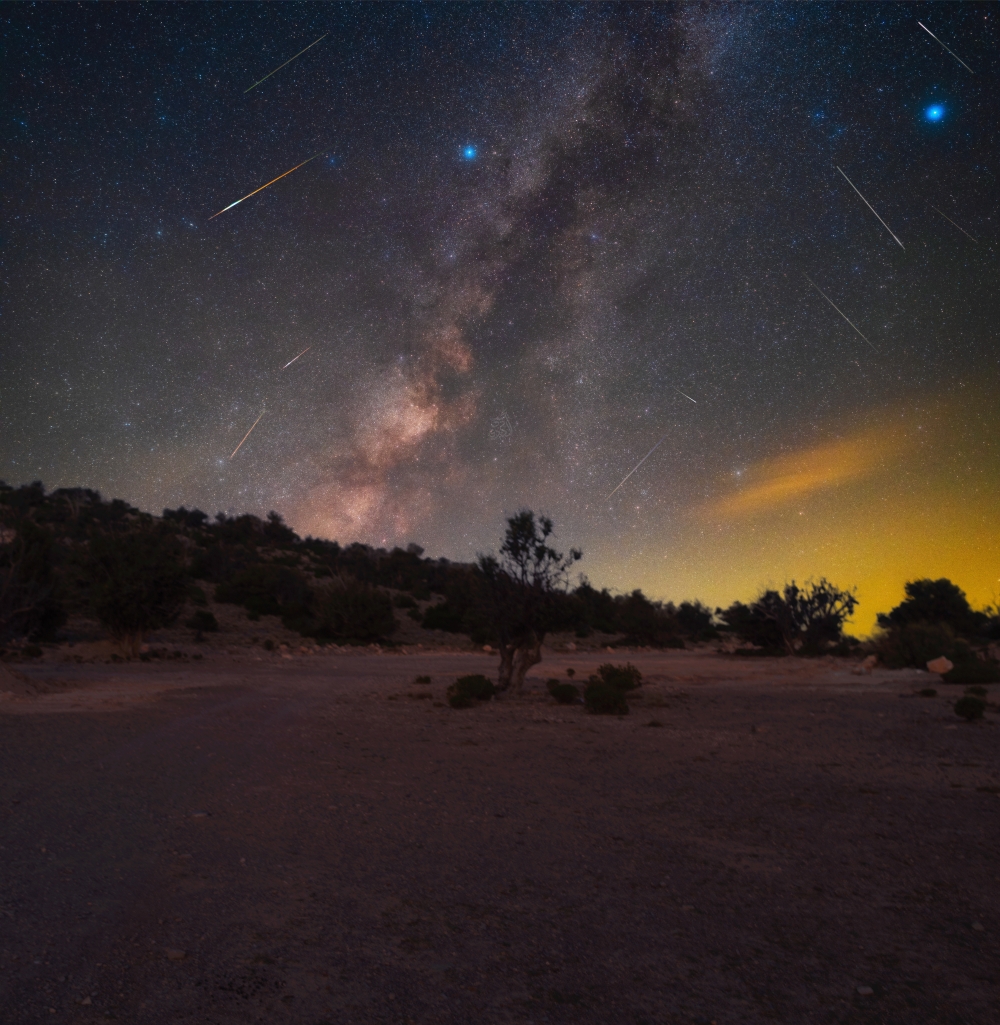





Muscat: The skies over the Sultanate of Oman are set to feature one of the year’s most striking celestial displays as the Geminid meteor shower reaches its peak on Saturday night and early Sunday morning, 13–14 December. Astronomers are anticipating favourable viewing conditions before moonrise, offering enthusiasts an excellent opportunity to witness the annual event.
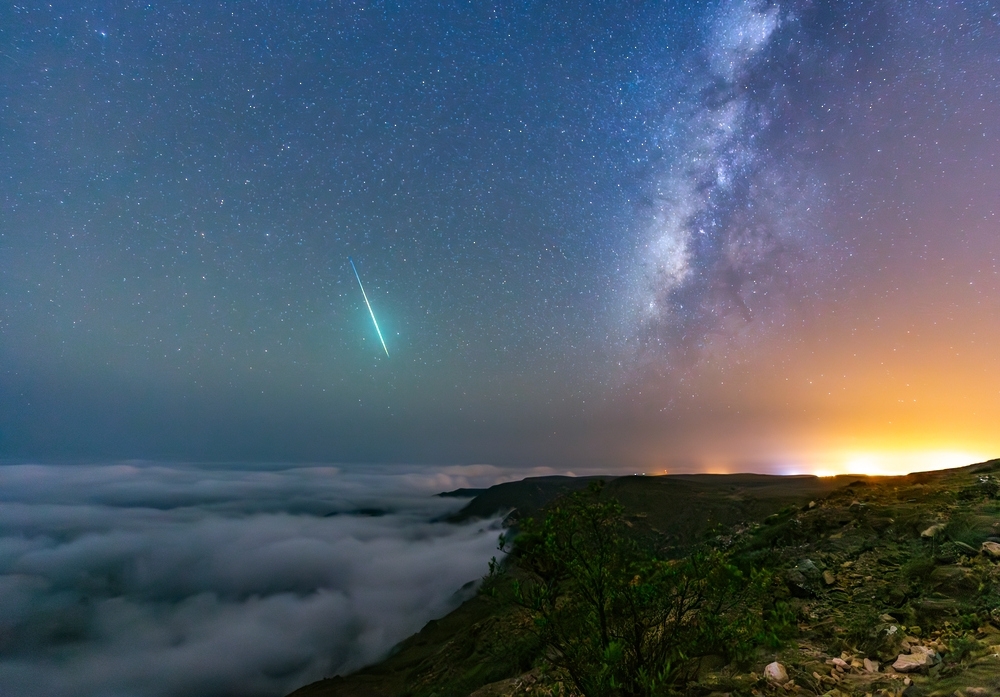
Qasim bin Hamad al Busaidi, an official at the Oman Society of Astronomy and Space, said the Geminids are expected to be “among the best in recent years”, noting that the Moon will be in its last-quarter phase with around 40 per cent illumination, allowing darker skies before it rises at 12:50am. He added that the Geminids are renowned for their intensity and bright trajectories, with peak activity potentially reaching up to 120 meteors per hour under ideal conditions.
Al Busaidi explained that the meteors often display vivid yellow and green colours due to the burning of chemical elements such as magnesium and sodium as they enter the atmosphere. He noted that their relatively slow entry speed allows for long, graceful arcs that may remain visible for up to two seconds before fading at altitudes between 70 and 100 kilometres.
"Throughout the night, the radiant point of the Geminids in the constellation Gemini rises steadily, creating an exceptional viewing window between 1am and 4am when so-called “Earth-grazers”, which are long meteors sweeping across the entire horizon", he clarified.
Observers will also be able to view several bright stars and planets during the event, including Regulus, Sirius, Aldebaran, Capella, the stars of Gemini and Taurus, and the Pleiades cluster. Venus will appear as the brightest object in the sky after the Sun and the Moon, while Jupiter and Saturn will also be visible, the latter displaying its characteristic golden hue.
Al Busaidi urged the public to observe the shower from dark locations away from light pollution, recommending an unobstructed view toward the eastern horizon before dawn. He described the event as an ideal opportunity for astrophotography enthusiasts, noting that the Geminids can be enjoyed with the naked eye without the need for specialised equipment.
Oman Observer is now on the WhatsApp channel. Click here