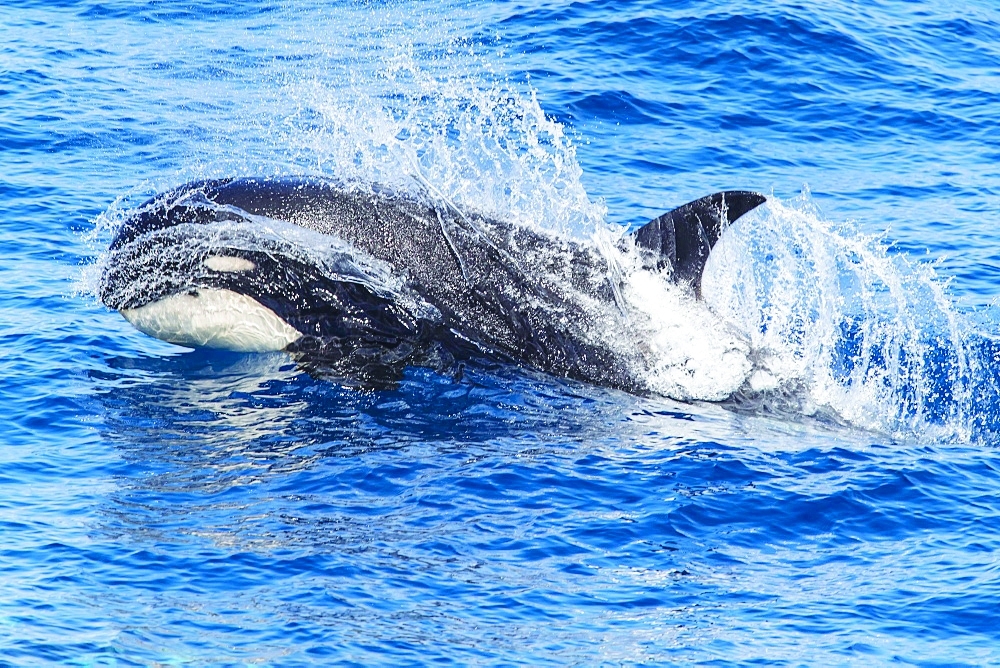





When orcas are spotted off Oman’s coast, the moment feels almost mythic. Their tall dorsal fins and stark black-and-white forms break the surface with a presence that is both powerful and strangely calm. Orcas are not regular inhabitants of Omani waters, and every sighting carries a sense of significance that lingers long after they vanish into the blue.
Oman’s coastline is already known for its extraordinary marine life. Most remarkable among them is the Arabian Sea humpback whale, a genetically distinct and non-migratory subspecies found nowhere else on Earth. These whales have lived in isolation for tens of thousands of years, surviving entirely within the Arabian Sea. Dolphins, sea turtles and rich coral systems complete a picture of vibrant and evolving marine biodiversity. But the sudden appearance of orcas belongs to a different category of wonder. Their presence signals ecological connections that extend far beyond the Sea of Oman and the Arabian Sea, linking Oman to vast oceanic networks that span continents.
Scientists know that orcas occasionally pass through the region, but the reasons behind these rare visits remain uncertain. Orcas travel in close-knit matrilineal families, communicate in dialects unique to each pod and adapt their hunting techniques to the environments they explore. Some specialise in fish, others in squid or marine mammals. Whether the orcas seen in Oman were following prey, caught in shifting currents or simply travelling through a wider migratory route is still unknown, but each sighting offers a valuable clue into the complexities of ocean life.

For Oman, these encounters are more than fleeting moments. They invite reflection on the country’s place within a larger marine narrative. The Arabian Sea has long been a sanctuary for unique species, yet it exists within a dynamic system shaped by climate, monsoon cycles and changing ocean conditions. The presence of orcas reminds us that the sea is constantly in motion, carrying with it stories from far beyond our horizon. It pushes us to consider how global ocean health, shifting ecosystems and human activity intertwine in ways we are only beginning to understand.
There is also an increasing need for mindful stewardship. As more people take to the water for tourism, recreation and exploration, encounters with large marine animals become more delicate. Orcas depend heavily on sound to communicate, navigate and hunt, making them extremely sensitive to disturbance. Maintaining respectful distances and reducing noise are simple choices that help protect these rare visits from becoming harmful interactions.
Above all, an orca sighting in Oman restores a sense of wonder that is easy to lose in a fast-moving world. It reminds us that our seas still hold mysteries, and that even familiar coastlines can surprise us. At a time when environmental conversations often focus on loss, the appearance of these giants feels like a quiet reminder of resilience and possibility. It encourages curiosity, humility and a renewed commitment to safeguarding the waters that continue to amaze us.
Oman Observer is now on the WhatsApp channel. Click here