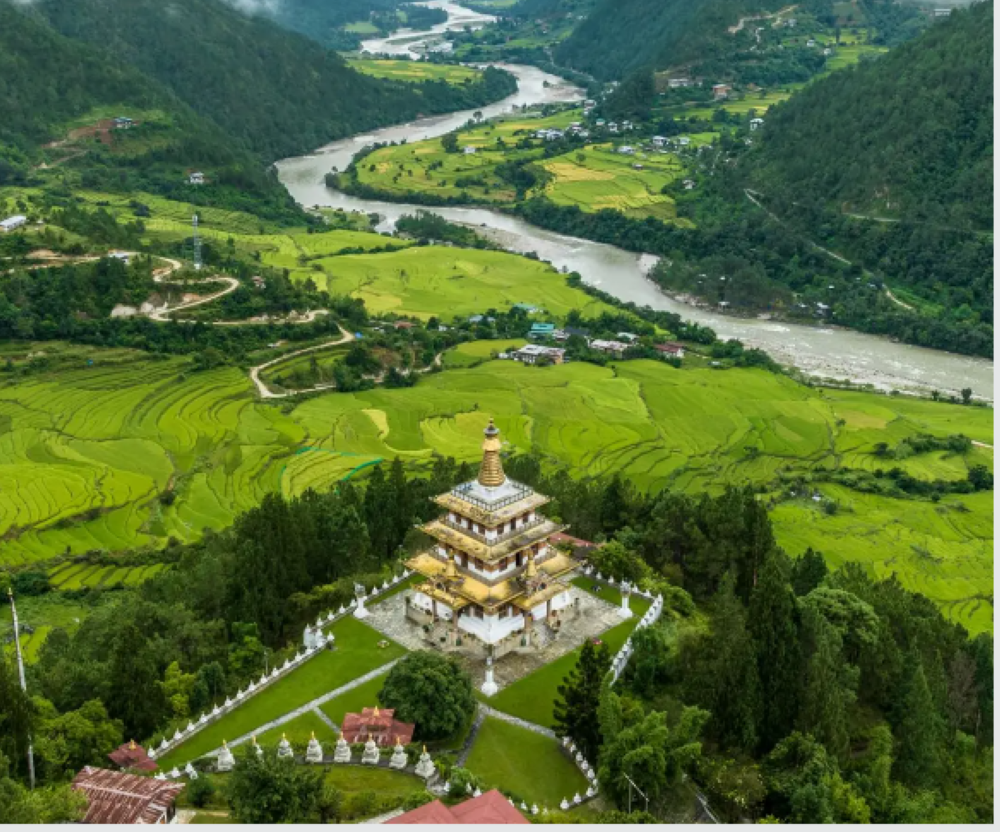





Bhutan is a kingdom nestling in the Himalayas between India and China.
The Bhutanese name for Bhutan, Druk Yul, means "Land of the Thunder Dragon,".
The Wangchuck hereditary monarchy has been in power since 1907. But Bhutan became a two-party parliamentary democracy after elections in March 2008.
With its capital, Thimphu, the country is spread over 38,394 sq km, and has a population of around 777,400. The language spoken is Dzongkha.
There are 19 languages spoken in Bhutan, but the national language is Dzongkha. English is used throughout Bhutan’s education system, so it is widely used and understood.
Bhutan is a year-round destination. There are four seasons: summer (June to August), autumn (September to November), winter (December to February), and spring (March to May). But because of the range of altitudes in the country, and the influence of the north Indian monsoons, the climate is incredibly varied.
Bhutan, Panama, and Suriname are the only carbon-negative countries in the world. This means they absorb more carbon dioxide than they produce. In Bhutan, this is due to its extensive forest cover, as more than 70% of the country is covered in trees. Bhutan also offsets its emissions by exporting renewable energy.
Bhutan has a law wherein mountaineers are prohibited from climbing a mountain higher than 6,000m as they are considered a home for gods and spirits. Gangkhar Puensum is the highest mountain in Bhutan and the highest unclimbed mountain in the world, with an elevation of 7,570m (24,836 ft).
How to visit Bhutan
Bhutan has two national airlines. Direct flights to and from the international airport in Paro connect to Bangladesh, India, Thailand, Singapore, and Nepal.
Oman Observer is now on the WhatsApp channel. Click here