




MUSCAT, DEC 1
Hydrom — the orchestrator of Oman’s energy transition — doubled down on its long-term ambitions on Monday, December 1, 2025, during the first day of the 2025 Green Hydrogen Summit Oman (GHSO).
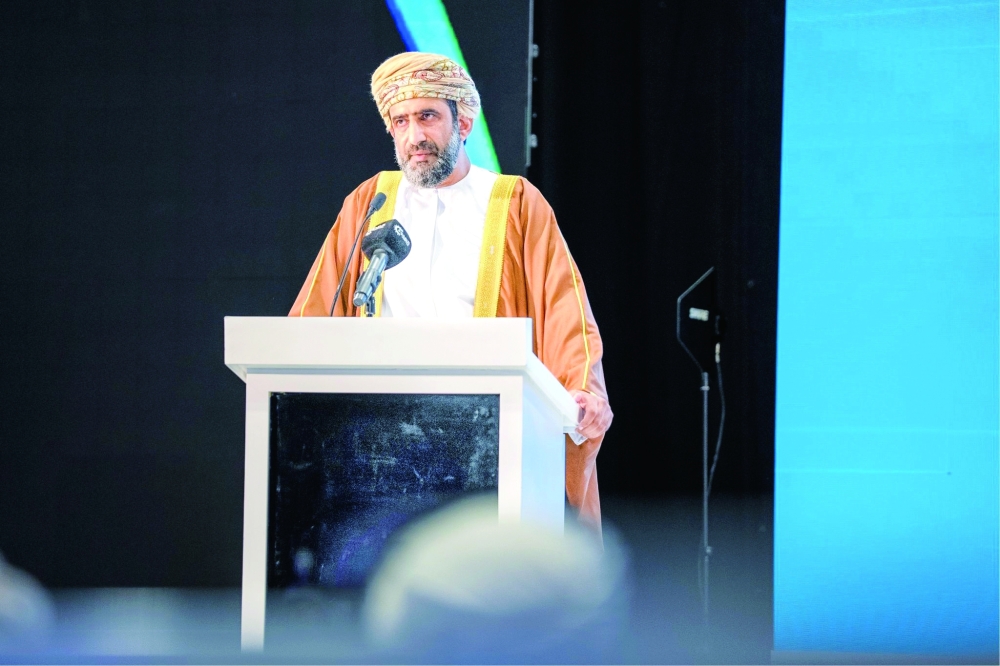
Speaking at the summit, Eng Abdulaziz al Shidhani, Managing Director of Hydrom, reflected on how quickly global sentiment shifted. “Two years ago, during the last edition of Green Hydrogen Summit Oman 3, when we spoke about green hydrogen in Oman, the world was energised. The promise was enormous and the momentum was global and the expectations were sky-high”.
“As the months unfolded, reality set in. Markets cooled, timelines shifted and many around the world began asking hard questions about the pace of hydrogen transition”, he added.
For Oman, however, the response was measured and intentional. “But last year, around the same time, during Hydrogen’s Investors Day, Oman did something different. Oman decided to stay the course. While others paused to assess, we continued to move forward, not blindly, but steadily, deliberately and with clarity of purpose”.
Al Shidhani added, “Because from the very beginning, we understood something fundamental; green hydrogen is not a short-term opportunity, it is a long-term national priority and a global necessity”.
In a statement, the Managing Director explained that Oman’s green hydrogen journey is guided by a long-term national vision that resolves the “competitive trilemma“ of global hydrogen production, balancing cost, execution and market proximity.
“While most markets are working to solve for two, Oman is building for all three. Our renewable resources deliver cost advantage, our governance and infrastructure bring execution certainty and our geographic position connects us directly to key demand centres. This combination defines Oman’s strength and ensures that progress translates into real, lasting competitiveness”, he shared.
Some of the company’s most notable achievements include the signing of the world’s first liquid hydrogen corridor in Q2 of 2025,
“We signed the world’s first liquid hydrogen corridor. It’s an end-to-end liquid hydrogen export pathway formed by 11 partners representing the entire value chain — from the production of the molecules, to their liquefaction on the shores of Oman, all the way to shipping these molecules to Amsterdam, receiving regasification of the molecules and putting them back into the pipelines of the Netherlands and Germany’s hydrogen pipeline network, all the way to the end customers”, he shared.
Additionally, the MD unveiled that he is currently in the process of establishing the groundwork for an Oman-South Korea hydrogen corridor, following an MOU between the two nations in the field of green energy transition.
In regards to current hydrogen projects, the MD shared that despite the exit of two projects (BP Oman Block Duqm) and (POSCO–ENGIE Block), Oman is well on its way to achieving its target of producing 1 million tonnes of GH2 by 2030/2031.
“Our portfolio today consists of nine projects. Two have concluded by mutual agreement, while six remain under development and one is under construction. Our target to produce one million tonnes of green hydrogen by 2030–31 remains fully intact. The active pipeline now includes Amnah, YAMNA, ENACTUS, GEO, ACME, HyPort and Salalah H2, distributed across Al Duqm and Salalah”.
The MD unveiled that the first phase of the ACME project in Al Duqm has already begun construction, marking the country’s first large-scale hydrogen development to reach construction. The project is expected to produce 100,000 tonnes of green ammonia and 17,000 tonnes of green hydrogen annually by 2027.
Furthermore, Al Shidhani shared that the government introduced major incentives for hydrogen projects valued at $3.6 billion earlier this year. “In response to shifting market dynamics, the government introduced major reductions in land fees during the development phase, cutting them by nearly half, with an additional 50 per cent reduction once projects enter FEED. Royalties were reduced from 3 per cent to 1 per cent, providing 3.12 billion in savings across the six major projects”.
He also added that contractual frameworks were enhanced to allow for operational flexibility, including phased implementation and monetisation of surplus power. Capitalising on the country’s natural wind and solar resources, which according to him are capable of generating “one hundred times the country’s grid demand”.
Beyond project level progress, the MD shared that the broader hydrogen ecosystem is also flourishing. He shared that the national infrastructure and supply chain development accelerated over the past year with Mawarid Turbine Company breaking ground on Oman’s first wind-turbine manufacturing plant, with an expected annual production capacity of up to 1,000 megawatts (MW). Meanwhile state-owned OQGN, Belgium’s Fluxys and ERNE have aligned on plans for a national hydrogen pipeline network, as part of the government’s common infrastructure plan.
Additionally, the first hydrogen refueling station was launched earlier this year.
“Local demand pathways are also taking shape in green steel, mobility and the replacement of grey hydrogen in downstream industries”, he added.
Oman Observer is now on the WhatsApp channel. Click here